
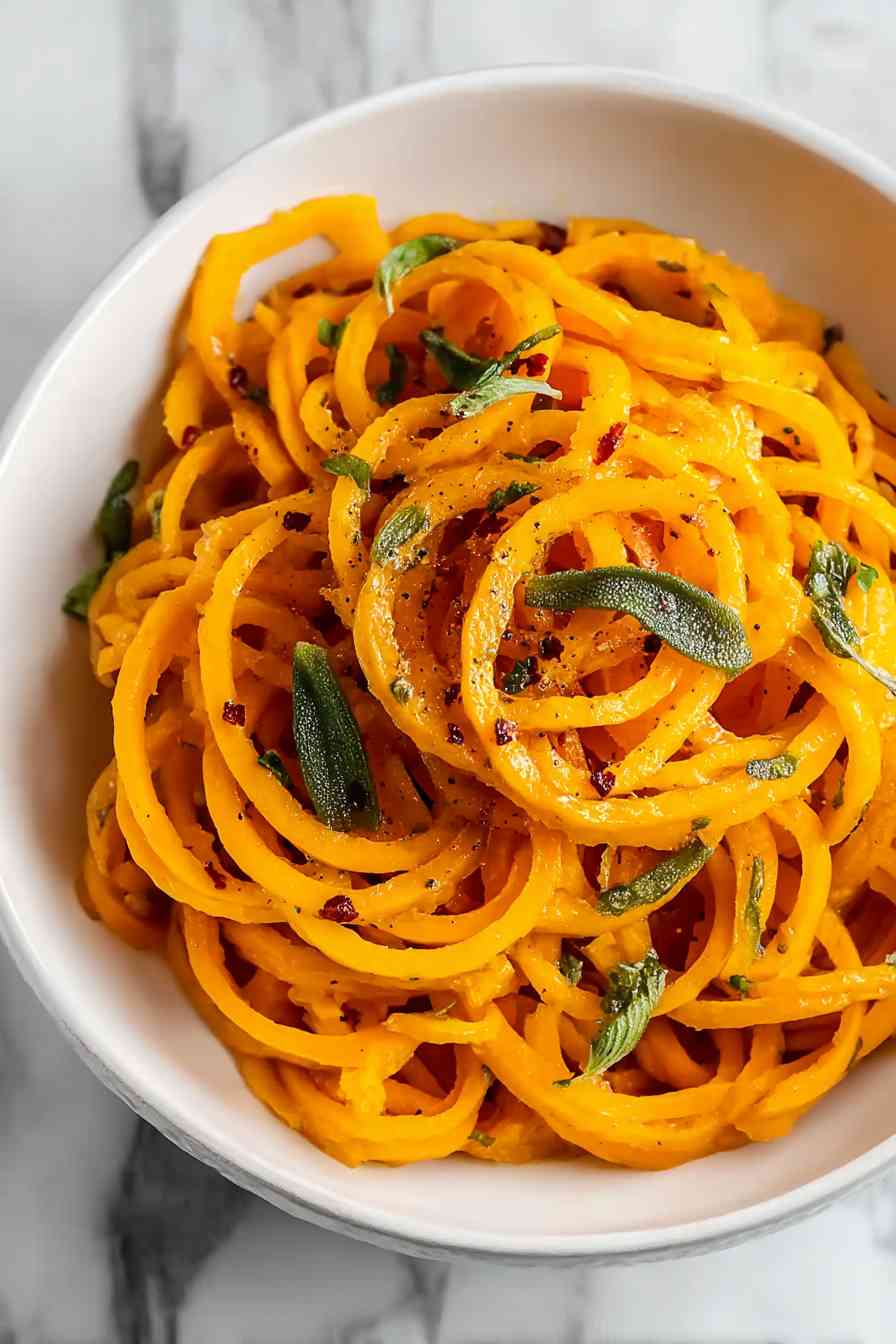
Best Roasted Butternut Squash Noodles deliver tender, caramelized strands in just 32 minutes.
Spiralizing butternut squash transforms dense winter produce into delicate ribbons that roast beautifully at high heat. The 425°F oven creates golden edges while keeping the interior fork-tender, and tossing halfway through ensures even browning without any mushy spots. Butter or olive oil coats each strand, while optional garlic adds a subtle aromatic layer that mellows during roasting.
This approach works as a lighter pasta alternative or a standalone side, and the parmesan-parsley finish brings just enough richness without overwhelming the squash’s natural sweetness. The whole process fits neatly into a weeknight timeline, and cleanup stays simple with just one sheet pan.
What Goes Into Roasted Butternut Squash Noodles
The ingredient lineup stays short, letting the squash itself take center stage while a few supporting players add depth and finish.
- Spiralized butternut squash – provides the base texture and mild sweetness that caramelizes under high heat.
- Butter or olive oil – coats the noodles for even browning and adds richness without heaviness.
- Garlic – optional but recommended for a gentle aromatic backdrop that mellows as it roasts.
- Kosher salt and black pepper – season the squash and bring out its natural flavor during roasting.
- Parmesan cheese – adds a salty, nutty finish that clings to the warm noodles.
- Parsley – offers a fresh, bright garnish that balances the richness of butter and cheese.
How to Roast Butternut Squash Noodles in the Oven
STEP 1: Preheat your oven to 425°F and spread the spiralized butternut squash noodles in a single layer on a large baking sheet. Add the minced garlic if using, dot or drizzle with butter or olive oil, and sprinkle with kosher salt and black pepper. Toss everything together until the noodles are evenly coated.
STEP 2: Roast the noodles for 10 to 15 minutes, tossing them halfway through to redistribute the garlic and fat. This midpoint toss prevents clumping and ensures the noodles brown evenly without any burnt garlic spots.
STEP 3: Check for doneness by piercing a noodle with a fork. It should feel tender but still hold its shape, with some golden edges visible. If the noodles seem too firm, roast for another 2 to 3 minutes.
STEP 4: Transfer the roasted noodles to a serving dish and top generously with freshly shredded parmesan cheese and chopped parsley. The residual heat will slightly melt the cheese, creating a light coating that clings to each strand.
Pro Tips for Perfectly Roasted Squash Noodles

- Spread noodles in a single layer – overlapping strands trap steam and lead to soggy texture instead of caramelized edges.
- Toss at the halfway mark – this redistributes oil and garlic, prevents scorching, and ensures even browning across all strands.
- Watch the final minutes closely – noodles can shift from golden and tender to overcooked quickly, so pull them when they still have a slight bite.
What to Serve with Roasted Butternut Squash Noodles
Pair with roasted chicken thighs or pan-seared pork chops for a balanced plate that keeps the squash as the lighter component. Serve alongside a simple arugula salad dressed with lemon and olive oil to add peppery contrast and brightness. Use as a base for sautéed shrimp or white beans tossed with garlic and spinach to turn the noodles into a more substantial main dish.
Roasted Butternut Squash Noodles: Common Questions
Can I spiralize my own butternut squash or should I buy it pre-spiralized?
Either option works well. Spiralizing your own squash gives you more control over strand thickness and freshness. Pre-spiralized packages save time but may contain slightly drier noodles that need a bit more oil during roasting. If spiralizing at home, peel the squash first and use the neck portion for the most uniform strands.
How do I prevent the noodles from getting soggy?
Spread the noodles in a single layer without overlapping, and avoid covering the pan with foil during roasting. Excess moisture needs to evaporate for the noodles to develop golden edges. Crowding the pan or trapping steam will result in limp strands. Tossing halfway through also helps release any trapped moisture.
Is there a vegan option for the parmesan topping?
Replace the parmesan with nutritional yeast for a nutty, savory finish that mimics the umami depth of cheese. You can also use a cashew-based parmesan alternative or finish with extra olive oil, lemon zest, and toasted pine nuts for richness without dairy.
Can I make these noodles ahead of time for meal prep?
Roasted squash noodles soften considerably when stored, so they work better prepared fresh. If you need to prep ahead, spiralize and season the raw noodles, then store them in the fridge for up to a day before roasting. This keeps the texture intact while cutting down on active cooking time.
Storing and Reheating Your Butternut Squash Noodles
Store leftover roasted noodles in an airtight container in the fridge for up to 3 days. The texture will soften as they sit, but they still work well reheated gently in a skillet over medium heat with a small drizzle of olive oil. Stir frequently to warm them through without turning them mushy.
Freezing is not recommended, since the high water content in butternut squash leads to a watery, limp texture once thawed. If you have excess raw spiralized squash, freeze that instead and roast it directly from frozen, adding a few extra minutes to the cooking time.
For reheating in the oven, spread the noodles on a baking sheet and warm at 350°F for 5 to 7 minutes. This method helps restore some of the roasted texture, though they will never be quite as crisp as when freshly made.
Best Roasted Butternut Squash Noodles
Ingredients
Equipment
Method
- Preheat the oven to 425°F (220°C). Arrange the spiralized butternut squash noodles in a single even layer on a large baking sheet. If using, add the minced garlic, then either dot with butter or drizzle with olive oil. Sprinkle with kosher salt and ground black pepper, then toss thoroughly to coat all the noodles.
- Roast in the preheated oven for 10–15 minutes, tossing the noodles at the midpoint to redistribute the garlic and fat evenly. Continue roasting until the noodles become fork-tender with golden caramelized spots. If you prefer them softer, roast an additional 2–3 minutes.
- Transfer the roasted butternut squash noodles to a serving dish. Top generously with freshly shredded parmesan cheese and a sprinkle of chopped parsley. Serve immediately while warm.