
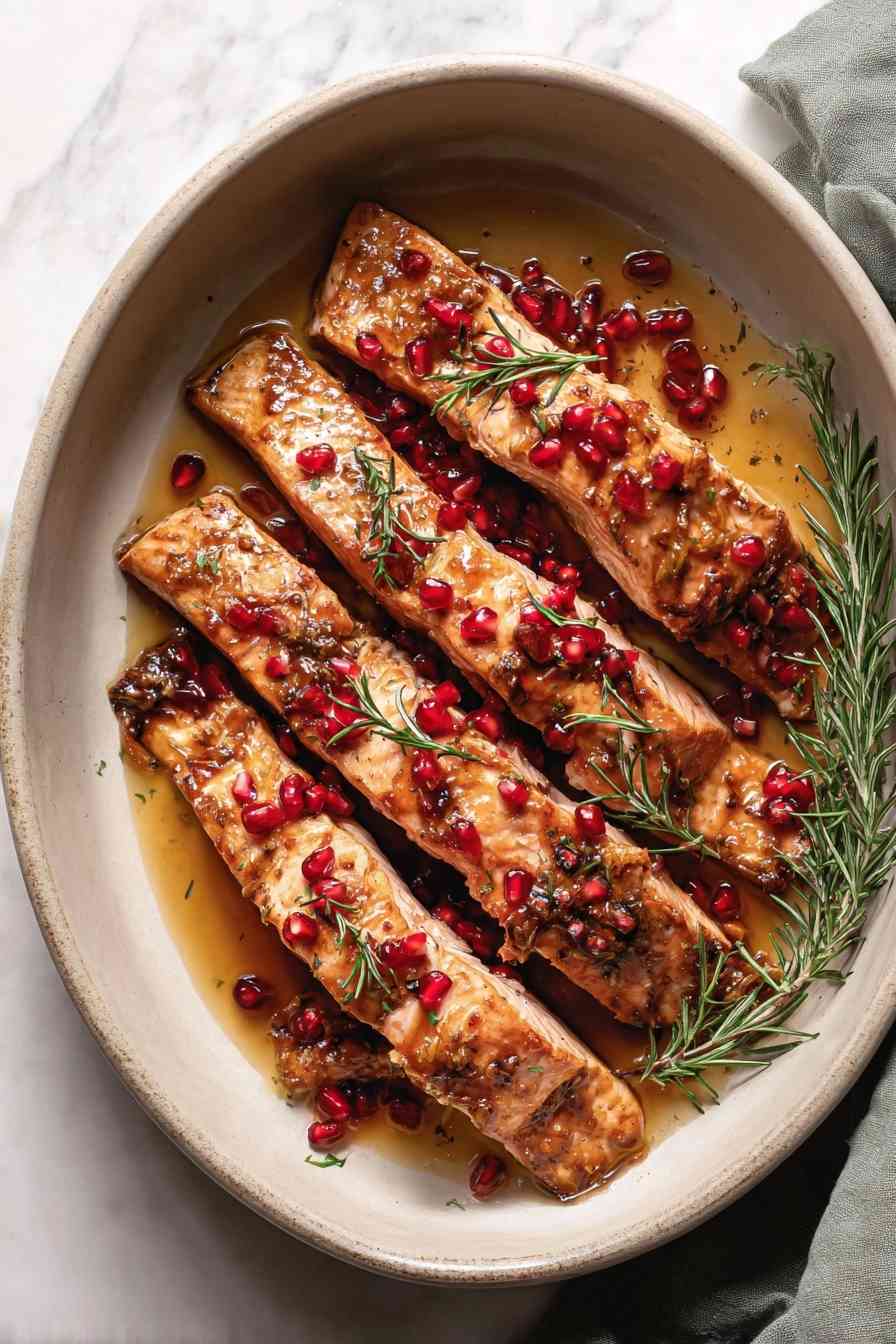
Christmas Salmon with a sweet-tart pomegranate glaze is a festive holiday main.
When you want a holiday main that feels special but doesn’t weigh you down, this is the one. It’s individual salmon fillets baked with a glaze made from pomegranate molasses and maple syrup, then topped with fresh pomegranate seeds and rosemary sprigs for that classic red-and-green look. The whole thing comes together fast, smells incredible, and looks stunning on the table.
The glaze is where the magic happens. You simmer pomegranate molasses, maple syrup, butter, vanilla, and rosemary until it thickens into a glossy, pourable sauce that clings to the salmon as it bakes. If you haven’t worked with pomegranate molasses before, think of it like a fruitier, brighter version of balsamic reduction, tangy and sweet at the same time. It pairs beautifully with the richness of the salmon and the warmth of maple.
Baking at high heat keeps the salmon tender and moist, and the glaze caramelizes just enough to give you that beautiful finish. This is a lighter alternative to heavy holiday roasts, and it’s quick enough to pull off even when you’re juggling a dozen other dishes.
What Goes Into Christmas Salmon
This recipe relies on a short list of ingredients that work together to create a sweet, tangy glaze with just enough warmth and richness to feel festive.
- Pomegranate molasses – the base of the glaze, bringing a concentrated sweet-tart flavor that tastes bright and fruity.
- Maple syrup – adds natural sweetness and helps the glaze thicken into a glossy coating.
- Butter – provides richness and helps the glaze cling to the salmon as it bakes.
- Vanilla – a subtle background note that rounds out the sweetness and adds warmth.
- Dried rosemary – brings a piney, earthy flavor that balances the sweetness of the glaze.
- Salt and pepper – season the glaze and enhance the natural flavor of the salmon.
- Salmon fillets – the star of the dish, baked until just tender and flaky.
- Pomegranate seeds and rosemary sprigs – fresh garnishes that add color, texture, and a festive finish.
How to Make Festive Pomegranate Salmon
STEP 1: Preheat your oven to 425 degrees Fahrenheit and line a baking sheet with parchment paper. In a medium frying pan over medium-high heat, combine the pomegranate molasses, maple syrup, butter, vanilla, rosemary, salt, and pepper. Bring to a boil and continue for 4 minutes, then remove from heat and let cool until it reaches the consistency of thick molasses.
STEP 2: Lay the salmon fillets on the prepared baking sheet and spread the thickened glaze over each fillet. Don’t worry if it doesn’t spread smoothly at first—it will loosen and spread as the salmon bakes.
STEP 3: Bake the salmon for 8 to 9 minutes, until it reaches an internal temperature of 140 degrees Fahrenheit. The salmon should be opaque and flake easily with a fork.
STEP 4: Remove the salmon from the oven and spoon some of the glaze that has pooled on the pan back over the fillets for extra shine and flavor.
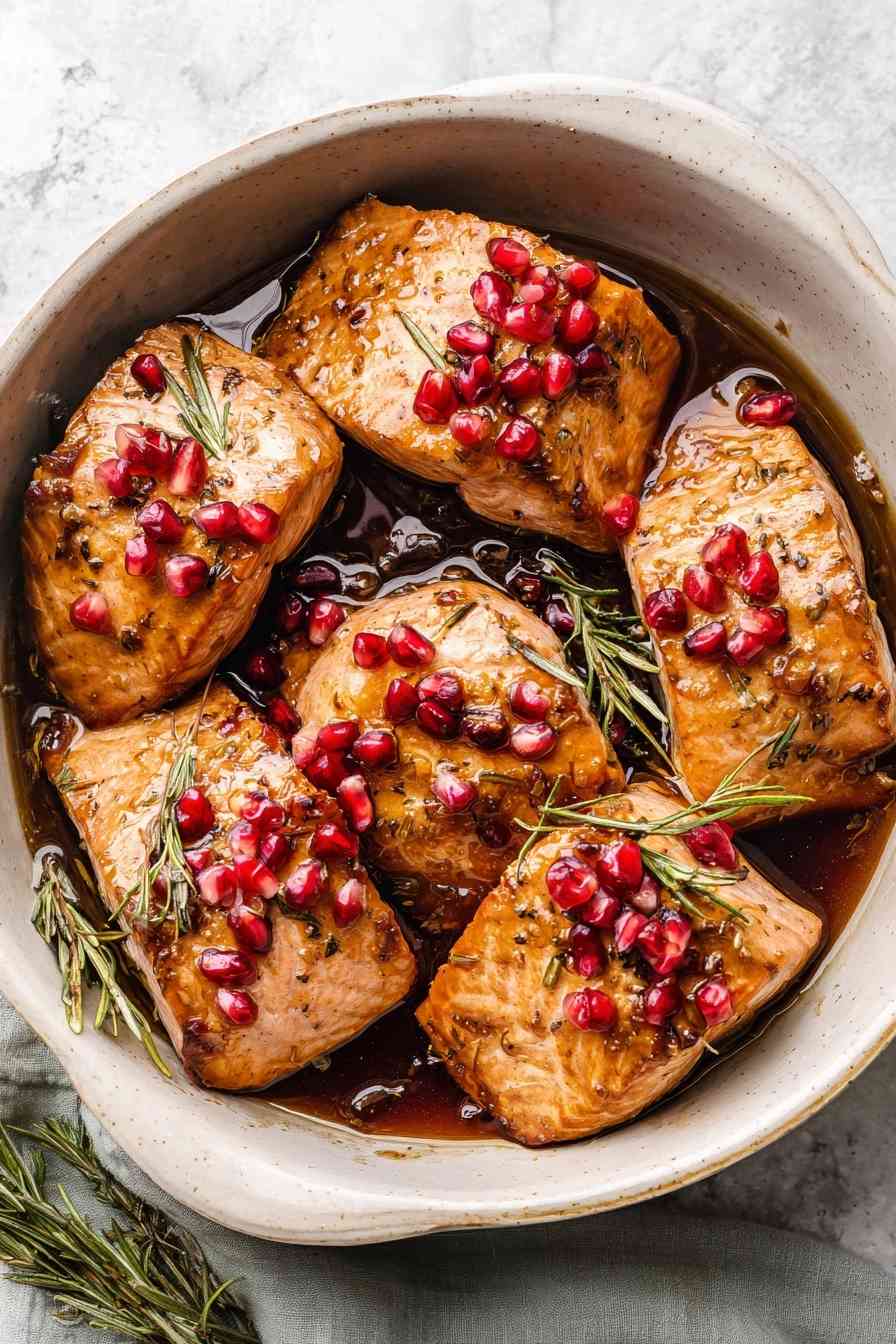
STEP 5: Transfer the salmon to a serving platter, tuck rosemary sprigs around the fillets, and scatter fresh pomegranate seeds over the top.
Tips for a Gorgeous Glaze and Perfect Salmon
- Cool the glaze completely – If it’s still hot, it will slide off the salmon and pool on the pan instead of coating the fish.
- Use an instant-read thermometer – Pull the salmon at 140 degrees Fahrenheit to keep it tender and moist as it continues cooking slightly while resting.
- Space fillets on the baking sheet – Leave a little room between each fillet so heat circulates evenly and the glaze caramelizes properly.
Holiday Sides to Serve with Christmas Salmon
This salmon pairs beautifully with lighter sides that don’t compete with the sweet-tart glaze. Roasted Brussels sprouts with balsamic, a simple arugula salad with lemon vinaigrette, or garlic herb rice pilaf all work well. For something heartier, try roasted sweet potatoes or a quinoa salad with cranberries and pecans.
Christmas Salmon: Your Questions Answered
Can I substitute something for pomegranate molasses?
If you can’t find pomegranate molasses, mix equal parts balsamic vinegar and honey, then simmer until it reduces by half. It won’t taste exactly the same, but it will give you a similar sweet-tart glaze that works well with the salmon.
How do I know when the salmon is cooked perfectly?
Use an instant-read thermometer and pull the salmon when it reaches 140 degrees Fahrenheit in the thickest part. The flesh should be opaque and flake easily with a fork, but still feel slightly tender in the center, not dry or chalky.
Can this be prepped ahead for a holiday meal?
You can make the glaze up to two days ahead and store it in the fridge, then rewarm it gently before spreading. The salmon itself is best baked fresh, since it only takes about 8 minutes in the oven and doesn’t hold well once cooked.
What’s the best way to reheat leftovers without drying out the salmon?
Reheat leftover salmon gently in a 275-degree oven for about 10 minutes, covered loosely with foil. You can also reheat individual portions in the microwave on 50 percent power in 30-second intervals, checking frequently to avoid overcooking.
Storing and Reheating Leftover Salmon
Store leftover salmon in an airtight container in the fridge for up to three days. The glaze may firm up slightly in the cold, but it will soften again when you reheat. To reheat, place the salmon in a baking dish, cover loosely with foil, and warm in a 275-degree oven for about 10 minutes, just until heated through. You can also reheat individual portions in the microwave at 50 percent power in 30-second intervals, checking frequently to avoid overcooking. Freezing isn’t recommended, since the texture of the salmon can become mushy and the glaze may separate when thawed.
Christmas Salmon
Ingredients
Equipment
Method
- Set the oven to preheat at 425°F (220°C) and line a baking sheet with parchment paper.
- Combine the pomegranate molasses, maple syrup, butter, vanilla, dried rosemary, salt, and black pepper in a medium frying pan over medium-high heat. Bring to a boil and let it continue boiling for 4 minutes. Remove the pan from the heat and allow the glaze to cool until thickened and syrupy.
- Arrange the salmon fillets on the prepared baking sheet and spoon the cooled glaze evenly over the top of each piece. The glaze may be thick but will spread while baking.
- Bake the salmon fillets for 8 to 9 minutes, or until they reach an internal temperature of 140°F (60°C).
- Once baked, spoon any glaze that has pooled onto the baking sheet back over the salmon fillets for extra flavor.
- Transfer the glazed salmon to a serving platter. Garnish with fresh rosemary sprigs and scatter pomegranate seeds on top to serve.