
Hot and Sour Soup (Suan La Tang) is a tangy, warming Chinese classic that combines bold flavors with surprising textural complexity.
This soup has become a staple on Chinese restaurant menus around the world, yet most home cooks assume it’s too complex to replicate. The truth is that authentic Suan La Tang relies on a thoughtful lineup of ingredients, each contributing a distinct flavor or texture, and a few simple techniques that keep the broth silky without turning gluey. You’ll work with a blend of shiitake and wood ear mushrooms, plus dried lily buds, soft tofu cut into thin strips, and egg ribbons created by pouring in beaten egg slowly. The result is a soup that feels both hearty and refined, with layers of flavor that reveal themselves spoonful by spoonful.
What sets this soup apart is the balance. The heat comes from ground white pepper, not chili, giving it a pungent warmth that doesn’t overpower. The sourness comes from halal black rice vinegar, which has a mellow complexity that regular white vinegar can’t match. And the texture, that distinctive thickened broth from cornstarch slurry, coats each ingredient without feeling heavy. When you get the proportions right, the soup tastes clean, bold, and deeply satisfying.
What You’ll Need for Real Hot and Sour Soup
The ingredient list might look long, but each component plays a specific role in building flavor and texture. Traditional Suan La Tang calls for eight main ingredients beyond the seasonings, and that variety is what makes the soup feel substantial rather than thin.
- Dried shiitake mushrooms – provide deep umami and a meaty chew after rehydrating.
- Dried wood ear mushrooms – add a crisp, slightly crunchy texture that contrasts with the softer ingredients.
- Dried lily buds – bring a subtle floral sweetness and a tender bite once soaked.
- Lean chicken breast or beef – offer protein and substance; marinating with cornstarch keeps the meat tender.
- Soft tofu – cut into thin strips for a delicate, slippery texture that absorbs the broth.
- Carrot – adds color and a slight crunch that holds up during cooking.
- Bamboo shoots – contribute a mild, earthy flavor and a firm bite.
- Egg – creates silky ribbons that float through the soup, adding richness without heaviness.
- Unsalted chicken or vegetable stock – forms the base; water works if stock isn’t available, though the flavor will be lighter.
- Cornstarch slurry – thickens the broth to a glossy, coating consistency.
- Halal black rice vinegar – delivers the signature tang with no alcohol content.
- Light soy sauce – adds saltiness and depth without darkening the broth too much.
- Ground white pepper – provides the hot, pungent warmth that defines the soup.
- Sesame oil – finishes the dish with a nutty aroma.
- Coriander or scallions – garnish with freshness and a pop of green.
How to Make Suan La Tang Step by Step
STEP 1: Rehydrate the dried shiitake mushrooms, wood ear mushrooms, and lily buds by soaking them in warm water until soft, then drain and slice the shiitakes and wood ear into thin strips. Marinate the sliced chicken or beef with cornstarch, water, and neutral oil, mixing until the meat is evenly coated.
STEP 2: Bring the unsalted chicken or vegetable stock to a full boil in a large pot. Add the marinated meat, using chopsticks to separate the strands, then skim off any foam that rises to the surface with a spoon.
STEP 3: Add the shiitake mushrooms, wood ear mushrooms, lily buds, carrot, and bamboo shoots to the pot. Let everything cook together for about 2 minutes, allowing the vegetables to soften slightly and the flavors to meld.
STEP 4: Turn the heat down to a gentle simmer. Mix the cornstarch with water to form a slurry, then slowly pour it into the soup while stirring constantly. Stop when the broth reaches a glossy, coating consistency.
STEP 5: Once the soup thickens, gently slide in the julienned tofu. Lightly beat the egg in a small bowl, then slowly pour it into the soup in a thin stream while stirring gently to create soft, fluffy ribbons.
STEP 6: When the soup returns to a boil, turn off the heat immediately. Add the halal black rice vinegar, light soy sauce, ground white pepper, and sesame oil, stirring gently to combine. Garnish with chopped coriander or scallions before serving.
Secrets to Hot and Sour Soup with Perfect Consistency
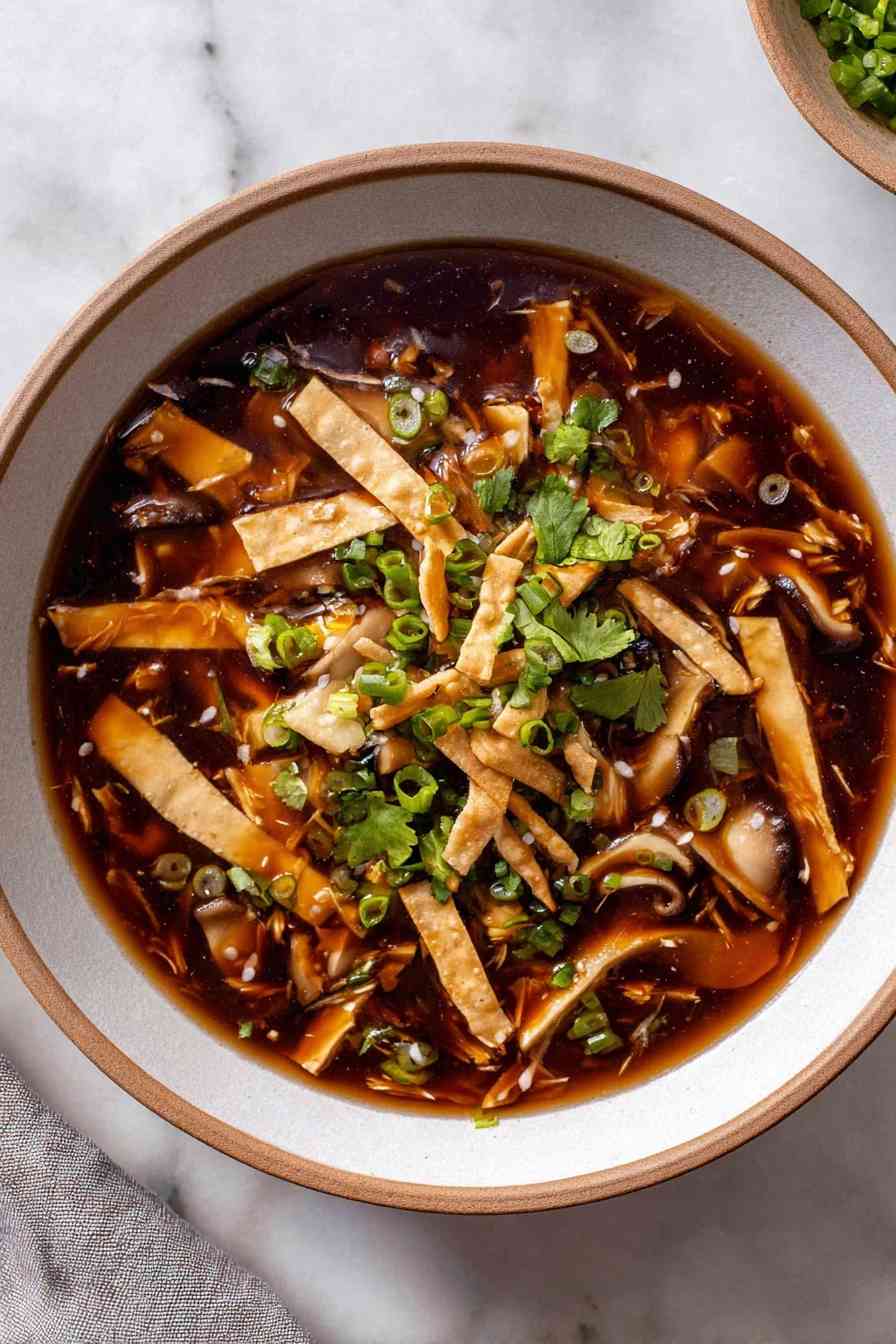
- Pour the cornstarch slurry in slowly while stirring, and stop as soon as the broth coats the back of a spoon. Adding too much at once can turn the soup gluey, and you can always add more if needed.
- Turn the heat down to a gentle simmer before adding the egg. If the broth is boiling hard, the egg will clump into rubbery chunks instead of forming delicate ribbons.
- Add the vinegar and white pepper at the very end, after you’ve turned off the heat. Prolonged cooking dulls the sharpness of both, and you want that pungent, tangy punch to hit clearly.
- Slice all the ingredients into thin, uniform strips. This ensures everything cooks evenly in the short time the soup simmers, and it makes the dish easier to eat with a spoon.
What Goes Well with Hot and Sour Soup
Suan La Tang is often served as part of a larger meal, but it’s substantial enough to stand on its own with a simple side. Steamed jasmine rice or a bowl of plain white rice balances the bold, tangy flavors and soaks up the thickened broth. For a more complete spread, pair the soup with pan-fried dumplings or scallion pancakes, which add a crispy, savory contrast. If you’re serving it as a starter, follow with a lighter stir-fry or a dish of ginger-scallion noodles to keep the meal from feeling too heavy.
Hot and Sour Soup: Common Questions
Can I make Hot and Sour Soup vegetarian?
Yes, simply omit the chicken or beef and use vegetable stock instead of chicken stock. The mushrooms, tofu, and egg provide enough substance and protein to keep the soup satisfying, and the flavors remain bold and layered without the meat.
What’s the best way to rehydrate dried mushrooms and lily buds?
Soak them in warm water for about 20 to 30 minutes until they’re fully soft and pliable. Drain them well before slicing, and if the shiitakes still have tough stems, trim those off. Proper rehydration ensures the mushrooms and lily buds have a tender bite rather than a chewy, undercooked texture.
How do I prevent the egg from clumping or becoming stringy?
Turn the heat down to a gentle simmer before adding the egg, and pour it in slowly while stirring the soup in one direction. The key is to avoid a hard boil, which causes the egg to seize up into rubbery lumps instead of forming soft, silky ribbons.
Can I use a different vinegar if I can’t find halal black rice vinegar?
Regular black rice vinegar works if you’re not concerned about alcohol content, but avoid substituting with white vinegar or apple cider vinegar, which taste too sharp and lack the mellow complexity. Rice vinegar diluted with a tiny splash of balsamic can approximate the flavor in a pinch, though it won’t be quite the same.
What’s the secret to achieving a thick but not gluey broth?
Add the cornstarch slurry gradually, stirring constantly, and stop as soon as the broth reaches a glossy, coating consistency. The soup should cling lightly to the ingredients without feeling starchy or heavy. If it gets too thick, thin it with a little stock or water and adjust the seasoning.
Storing and Reheating Your Soup
Store leftover Hot and Sour Soup in an airtight container in the fridge for up to 3 days. The broth may thicken further as it sits, so when reheating, add a splash of stock or water to loosen it back to the right consistency. Reheat gently on the stovetop over medium-low heat, stirring occasionally, until warmed through. Avoid boiling the soup aggressively, which can make the egg ribbons rubbery and the tofu grainy. If the vinegar and pepper flavors have faded, add a small splash of vinegar and a pinch of white pepper just before serving to bring the tang and heat back.
Freezing is not recommended, as the tofu and egg do not hold up well once thawed. For best results, enjoy the soup fresh or within a few days of making it. The interplay of textures and the balance of sour and spicy are most pronounced when the soup is at its peak, and reheating on the stovetop preserves the quality far better than freezing.

Hot and Sour Soup (Suan La Tang, 酸辣汤)
Ingredients
Equipment
Method
- Soak the dried shiitake mushrooms, wood ear mushrooms, and lily buds in warm water until fully softened. Drain well, then slice the shiitakes and wood ear mushrooms into thin strips.
- Cut the chicken breast or beef into thin slices. In a bowl, combine with ½ teaspoon cornstarch, 1 teaspoon water, and ½ teaspoon neutral oil. Toss well to coat and set aside to marinate.
- Pour the chicken or vegetable stock into a large pot and bring to a full boil. Add the marinated meat, stirring gently with chopsticks to separate the slices. Skim off any foam that rises to the surface.
- Add the sliced shiitake mushrooms, wood ear mushrooms, rehydrated lily buds, carrots, and bamboo shoots to the pot. Let everything cook together for about 2 minutes.
- Reduce the heat to a gentle simmer. In a small bowl, mix 4 tablespoons cornstarch with 4 tablespoons water to create a slurry. Slowly pour the slurry into the soup while stirring, until the broth thickens.
- Carefully add the julienned tofu to the pot. Lightly beat the egg and pour it slowly into the simmering soup, stirring gently so it forms ribbons.
- When the soup returns to a boil, turn off the heat. Add halal black rice vinegar, light soy sauce, ground white pepper, and sesame oil. Stir to combine, then sprinkle with chopped coriander or scallions before serving.