
Why You’ll Love This Buttery Homemade German Spatzle
Comfort on a plate. That’s exactly what you get with homemade spätzle, those tender little German dumplings that dance between pasta and dumpling.
I’m obsessed with how simple they are—just flour, eggs, milk, and salt transform into something magical. The pillowy texture soaks up butter and sauce like nothing else, while the slightly chewy bite keeps you coming back for more.
Trust me, once you’ve had fresh spätzle, those dry packaged versions will never satisfy.
The best part? You can have them ready in minutes, not hours. Perfect for weeknights when you need something cozy but quick.
What Ingredients are in Buttery Homemade German Spatzle?
Making authentic German spätzle requires just a handful of simple pantry ingredients that transform into the most comforting little dumplings you can imagine. The beauty of this traditional recipe lies in its simplicity—no fancy ingredients needed, just wholesome basics that come together to create something truly special. And while the ingredient list might seem basic, the flavor and texture are anything but.
- 1 cup all-purpose flour
- 1/4 teaspoon salt
- 1/4 cup milk or water
- 2 eggs
- Butter (for sautéing, optional)
- Grated Parmesan cheese (optional)
When selecting your ingredients, quality matters even with something this simple. Fresh eggs will give your spätzle a richer color and flavor, and I prefer using milk over water for a slightly more tender result. The butter and Parmesan cheese aren’t technically part of the dough itself but are worth keeping on hand for serving—they transform these humble dumplings into something truly indulgent. And while the recipe is perfect as is, some cooks like to add a tiny pinch of nutmeg or white pepper to the dough for a subtle flavor boost.
How to Make This Buttery Homemade German Spatzle
Making spätzle is one of those kitchen projects that feels like a beautiful connection to generations past—simple ingredients coming together through time-honored techniques.
To begin, sift 1 cup of flour with 1/4 teaspoon of salt in a medium bowl. This might seem like an unnecessary step, but trust me, this brief moment guarantees your spätzle will be free of lumps and have that perfect, tender texture we’re after.
Next comes the wet ingredients. Crack 2 eggs directly into your flour mixture, and pour in your 1/4 cup of milk (or water if that’s what you have on hand).
Now, grab a wooden spoon and beat the mixture vigorously by hand until a smooth, slightly sticky dough forms. The consistency should be somewhere between pancake batter and cookie dough—thick enough to hold its shape momentarily when dropped from a spoon, but still soft enough to be pushed through holes.
Need a visual? Think about the way honey slowly drips from a spoon.
Now for the fun part—cooking these little dumplings! Bring a large pot of salted water to a rolling boil. Traditional methods involve placing the dough on a wooden board and scraping off small pieces directly into the boiling water, or forcing the dough through a large-holed colander.
Either way works beautifully. Cook the spätzle in small batches (overcrowding leads to sticking) for about one minute, or until they float to the surface.
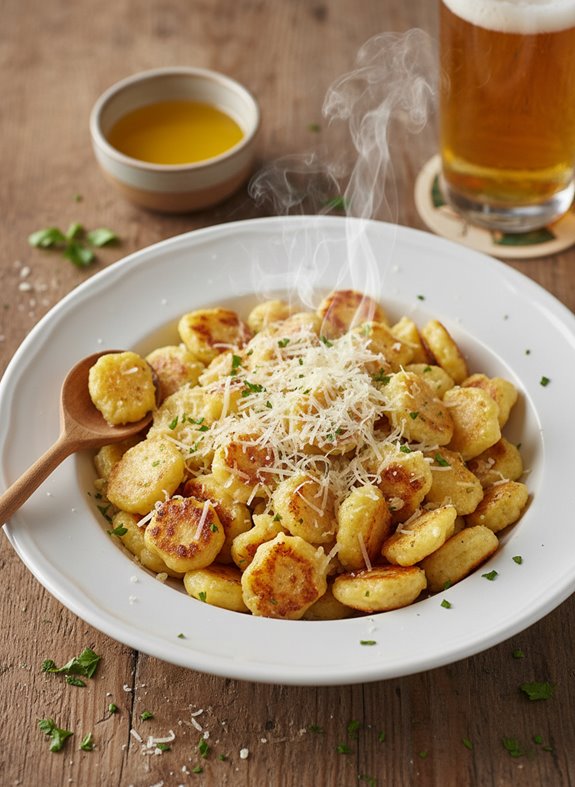
You can serve them immediately with a sprinkle of herbs, or take them to the next level by sautéing briefly in butter until the edges get slightly crispy, then finishing with a generous dusting of grated Parmesan cheese.
Those crispy buttery edges with the tender centers? Pure comfort on a plate.
Buttery Homemade German Spatzle Substitutions and Variations
While traditional spätzle holds a special place in German cuisine, one of the joys of this humble dish lies in its adaptability.
I love swapping in whole wheat flour for a nutty flavor, or mixing in herbs like parsley and chives for a fresh twist.
Not feeling dairy-friendly? Replace milk with water (exactly as the recipe allows) or try unsweetened almond milk.
For a richer version, I sometimes fold in a spoonful of sour cream to the batter.
My favorite variation? Tossing the cooked spätzle with caramelized onions and crispy bacon, then finishing with a sprinkle of Gruyère instead of parmesan.
What to Serve with Buttery Homemade German Spatzle
Four classic German dishes pair perfectly with buttery homemade spätzle, making it the ultimate comfort food sidekick.
I always serve my spätzle alongside a rich Jägerschnitzel with mushroom gravy—the noodles soak up that savory sauce like little flavor sponges.
Can’t go wrong with Sauerbraten either, its tangy-sweet gravy is divine with spätzle.
For something simpler, try a traditional Bratwurst with sauerkraut. The acidity cuts through the buttery noodles beautifully.
And when I’m feeling fancy? Beef Rouladen, those thin beef rolls with mustard and pickles. Pure German heaven.
Final Thoughts
After mastering this classic German spätzle recipe, you’ll never look at pasta the same way again. There’s something deeply satisfying about transforming such simple ingredients—just flour, eggs, salt, and milk—into these tender, rustic little dumplings.
I still remember my first attempt, a messy kitchen disaster that somehow still tasted amazing. That’s the beauty of spätzle—it’s forgiving yet impressive. Whether you serve them buttered alongside schnitzel, or sautéed with cheese as käsespätzle, they’re the ultimate comfort food.
Trust me, once you’ve made them from scratch, store-bought pasta might lose its appeal entirely.
Buttery Homemade German Spatzle
Ingredients
Equipment
Method
- Sift flour and salt together in a medium bowl.
- Add eggs and milk to the flour mixture.
- Beat the mixture vigorously by hand until a smooth, slightly sticky dough forms. The consistency should be between pancake batter and cookie dough.
- Bring a large pot of salted water to a rolling boil.
- Using a wooden board and scraper or a large-holed colander, push small portions of dough into the boiling water.
- Cook spätzle in small batches until they float to the surface, about 1 minute.
- Optional: Sauté cooked spätzle in butter until edges are slightly crispy, then finish with grated Parmesan cheese.