
Learn to make Authentic Louisiana Seafood Gumbo with a deep chocolate roux.
This is Cajun cooking at its most essential, where patience matters as much as ingredients. The roux takes time, the base simmers low and slow, and the payoff is a pot of gumbo with flavors so layered you can taste the bayou in every spoonful. No tomatoes here, just the holy trinity of onions, bell pepper, and celery, plus andouille and smoked sausage for that signature smoky backbone.
If you’ve never made a dark roux before, this recipe will walk you through it. The technique is simple but unforgiving: you stir constantly until the flour and oil turn the color of dark chocolate, and if it burns, you start over. Once you nail that step, the rest of the recipe flows naturally. You’ll simmer the base for about ninety minutes, add the seafood at the end, and serve it all over fluffy white rice.
This gumbo feeds a crowd, holds up beautifully as leftovers, and tastes even better the next day once the flavors have had time to settle. It’s the kind of dish that turns a regular dinner into something memorable.
Step-by-Step: Making Louisiana Seafood Gumbo
STEP 1: Heat the canola oil in a large stockpot or Dutch oven over medium heat, then whisk in the flour. Stir continuously with a wooden spoon, scraping the bottom and sides, until the roux reaches a deep chocolate brown. This takes about twenty to thirty minutes, and you cannot walk away during this step.
STEP 2: Once the roux is dark enough, add the chopped onions, green bell pepper, and celery. Cook over medium-high heat, stirring frequently, until the vegetables are completely soft and translucent. Add the minced garlic and cook for another minute until fragrant.
STEP 3: Stir in the sliced andouille and smoked sausage, cooking for three to four minutes to render some of the fat and develop a light sear on the edges.
STEP 4: Slowly pour in the seafood stock and chicken broth, stirring constantly to incorporate the roux without lumps. Add the Creole seasoning, dried thyme, garlic powder, onion powder, and bay leaves. Bring the mixture to a low boil, then reduce the heat and let it simmer uncovered for ninety minutes, stirring occasionally.
STEP 5: After the base has simmered and the flavors have deepened, add the whole crabs, large shrimp, and lump crab meat. Stir in the chopped parsley and green onions, then cook for another fifteen minutes until the shrimp are pink and firm and the crab is heated through.
STEP 6: Remove the bay leaves, taste for seasoning, and adjust with more Creole seasoning or salt if needed. Ladle the gumbo over bowls of hot white rice and serve immediately.
What You Need for Authentic Louisiana Seafood Gumbo
This gumbo relies on a carefully chosen lineup of ingredients that work together to build deep, smoky, and seafood-forward flavor without a single tomato in sight.
- All-purpose flour and canola oil – the foundation of the dark roux that gives gumbo its signature color and nutty richness.
- Yellow onions, green bell peppers, and celery – the holy trinity of Cajun cooking, providing aromatic sweetness and structure.
- Andouille sausage and smoked sausage – dual sausages add layers of smoky, spiced, and savory depth throughout the pot.
- Creole seasoning, dried thyme, garlic powder, and onion powder – the spice blend that seasons the base and ties the flavors together.
- Fresh minced garlic – adds sharp, aromatic punch after the vegetables soften.
- Bay leaves – infuse the simmering broth with subtle herbal complexity.
- Seafood stock and chicken broth – a combination that balances briny seafood flavor with savory richness.
- Fresh parsley and green onions – brighten the finished gumbo with fresh, grassy notes.
- Whole crabs, large shrimp, and lump crab meat – the seafood trio that makes this gumbo luxurious, briny, and deeply satisfying.
Secrets for Deep Flavor and the Perfect Roux
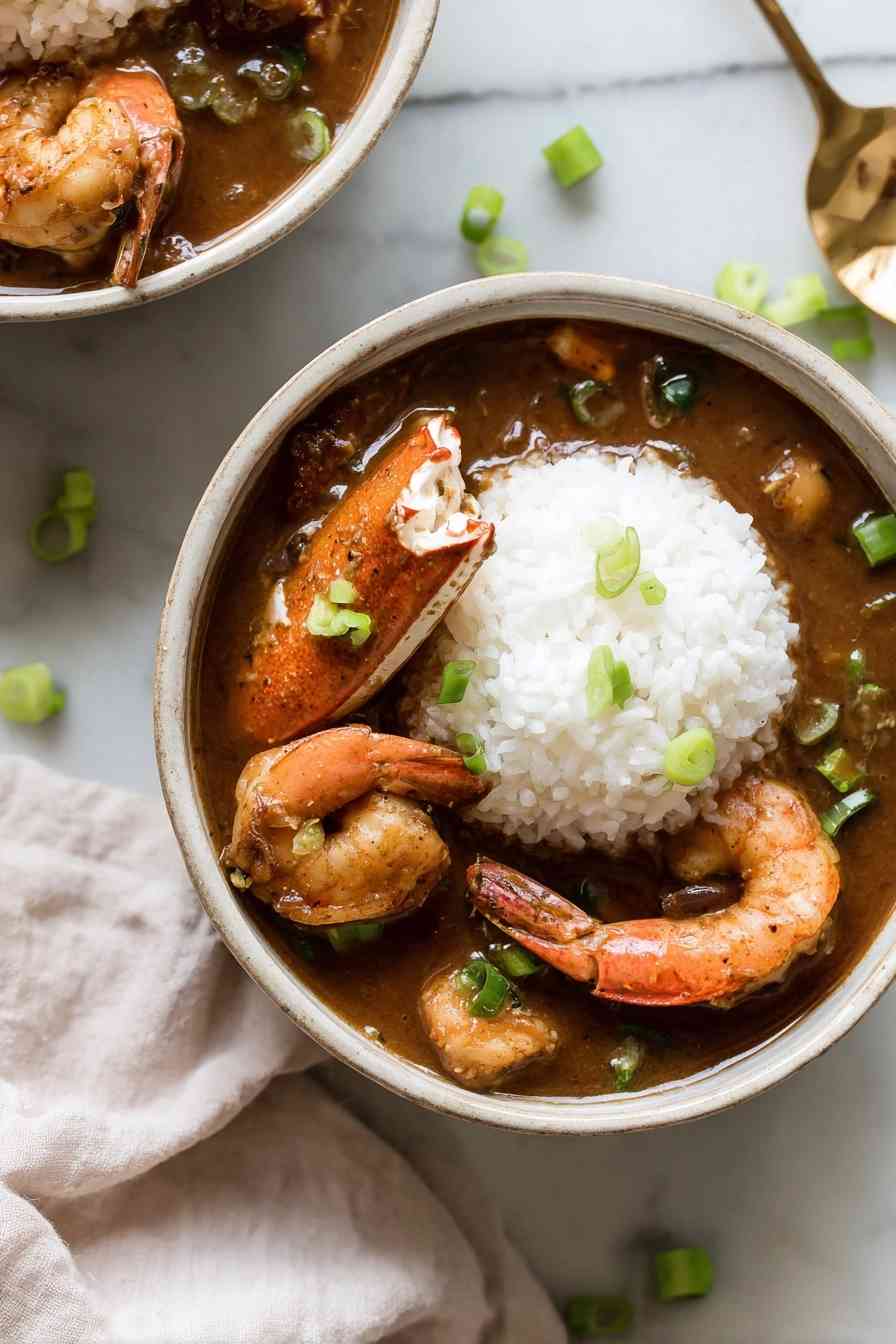
- Stir the roux constantly and scrape the bottom of the pot to prevent scorching. If you see black specks or smell anything burnt, dump it and start fresh, there’s no saving a burned roux.
- Let the gumbo base simmer for the full ninety minutes. Rushing this step means you’ll miss out on the layered, concentrated flavor that defines a great gumbo.
- Add the seafood at the very end and cook just until the shrimp turn pink and opaque. Overcooking shrimp or crab makes them rubbery and tough.
- Taste the gumbo before serving and adjust the seasoning. Gumbo should be bold, so don’t be shy with the Creole seasoning or a pinch of cayenne if you want more heat.
Serving Louisiana Seafood Gumbo: Rice, Sides, and More
- Hot white rice – the essential base that soaks up the rich broth and balances the intensity of the roux and spices.
- Green salad with tangy vinaigrette – cuts through the richness and provides a fresh contrast.
- Warm cornbread – perfect for dipping and soaking up every last drop of broth.
- Collard greens or sautéed okra – traditional Louisiana sides that round out the meal.
Louisiana Seafood Gumbo FAQs: Troubleshooting and Variations
Can I substitute other seafood or use only shrimp or crab?
You can absolutely swap in other seafood like crawfish tails, oysters, or firm white fish, or simplify the recipe by using only shrimp or only crab. Just keep the total seafood weight around four pounds and add it during the final fifteen minutes of cooking.
What should I do if my roux burns?
If your roux burns, you must discard it and start over. Burned roux tastes bitter and acrid, and there’s no way to fix it once the flour has scorched. Clean the pot thoroughly, then begin again with fresh oil and flour, stirring constantly over medium heat.
Is it possible to make gumbo ahead of time?
Gumbo is an excellent make-ahead dish. You can prepare the entire pot up to two days in advance, let it cool, then refrigerate it. The flavors deepen overnight, and many people argue gumbo tastes better on day two. Reheat gently on the stovetop before serving.
How spicy is authentic Louisiana gumbo, and how can I adjust the heat?
This gumbo has moderate heat from the Creole seasoning and andouille sausage, but it’s not overwhelmingly spicy. To increase the heat, add cayenne pepper or hot sauce to taste. To tone it down, use mild smoked sausage instead of andouille and reduce the Creole seasoning slightly.
What’s the difference between Cajun and Creole gumbo?
Cajun gumbo, like this recipe, relies on a dark roux and omits tomatoes, resulting in a rich, brown, deeply savory stew. Creole gumbo typically includes tomatoes, which add acidity and a slightly lighter, brighter flavor profile. Both styles are delicious, but this version stays true to the Cajun tradition.
How to Store and Reheat Seafood Gumbo
Store leftover gumbo in an airtight container in the refrigerator for up to three days. The flavors will continue to meld and deepen, making leftovers especially delicious.
Reheat gently on the stovetop over low heat, stirring occasionally, until warmed through. Add a splash of chicken broth or water if the gumbo has thickened too much in the fridge.
Freezing is not recommended for this recipe because the seafood and texture of the broth can break down during thawing, resulting in a watery or mushy consistency.
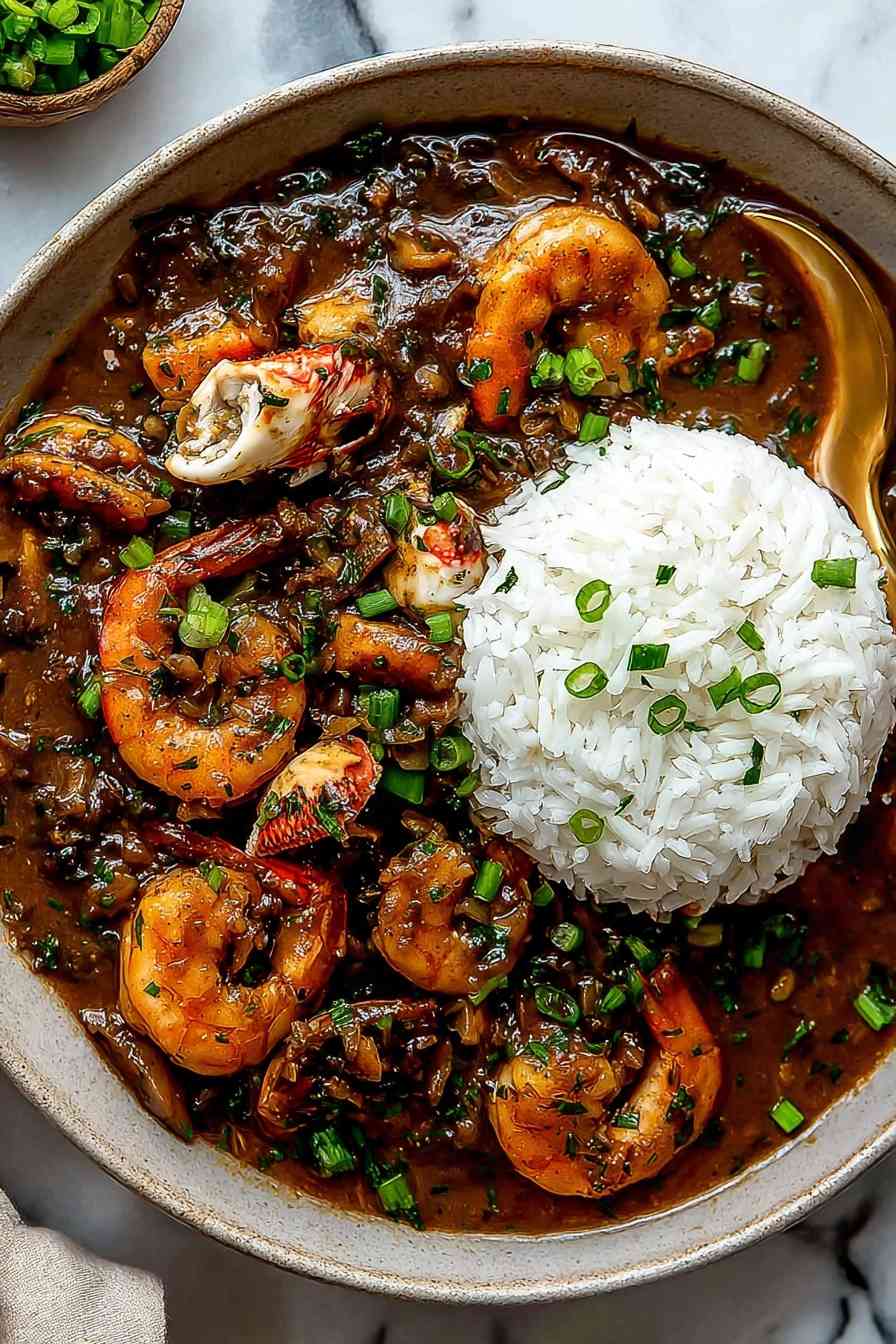
Authentic Louisiana Seafood Gumbo Recipe
Ingredients
Equipment
Method
- Pour the canola oil into a large stockpot or Dutch oven over medium heat. Sprinkle in the flour and stir nonstop with a wooden spoon until the mixture darkens to the color of chocolate, about 20 to 30 minutes. Be careful not to let it burn.
- Add the chopped onions, green bell peppers, and celery to the pot. Turn the heat up to medium-high and cook, stirring, until the vegetables are completely soft. Stir in the minced garlic and let it cook until fragrant.
- Combine in the andouille and smoked sausage slices. Let them cook with the vegetables for several minutes, stirring occasionally.
- Gradually add the seafood stock and chicken broth while stirring to combine. Mix in the Creole seasoning, dried thyme, garlic powder, onion powder, and bay leaves.
- Raise the heat to bring the mixture to a gentle boil, then lower the heat and let it simmer, uncovered, for about 90 minutes. Stir once in a while as it cooks.
- Add the whole crabs, large shrimp, and fresh lump crab meat to the pot, along with the chopped parsley and green onions. Cook for another 15 minutes until the shrimp are pink and all the seafood is thoroughly heated.
- Remove the bay leaves before serving. Spoon the gumbo over hot cooked white rice and enjoy immediately.