
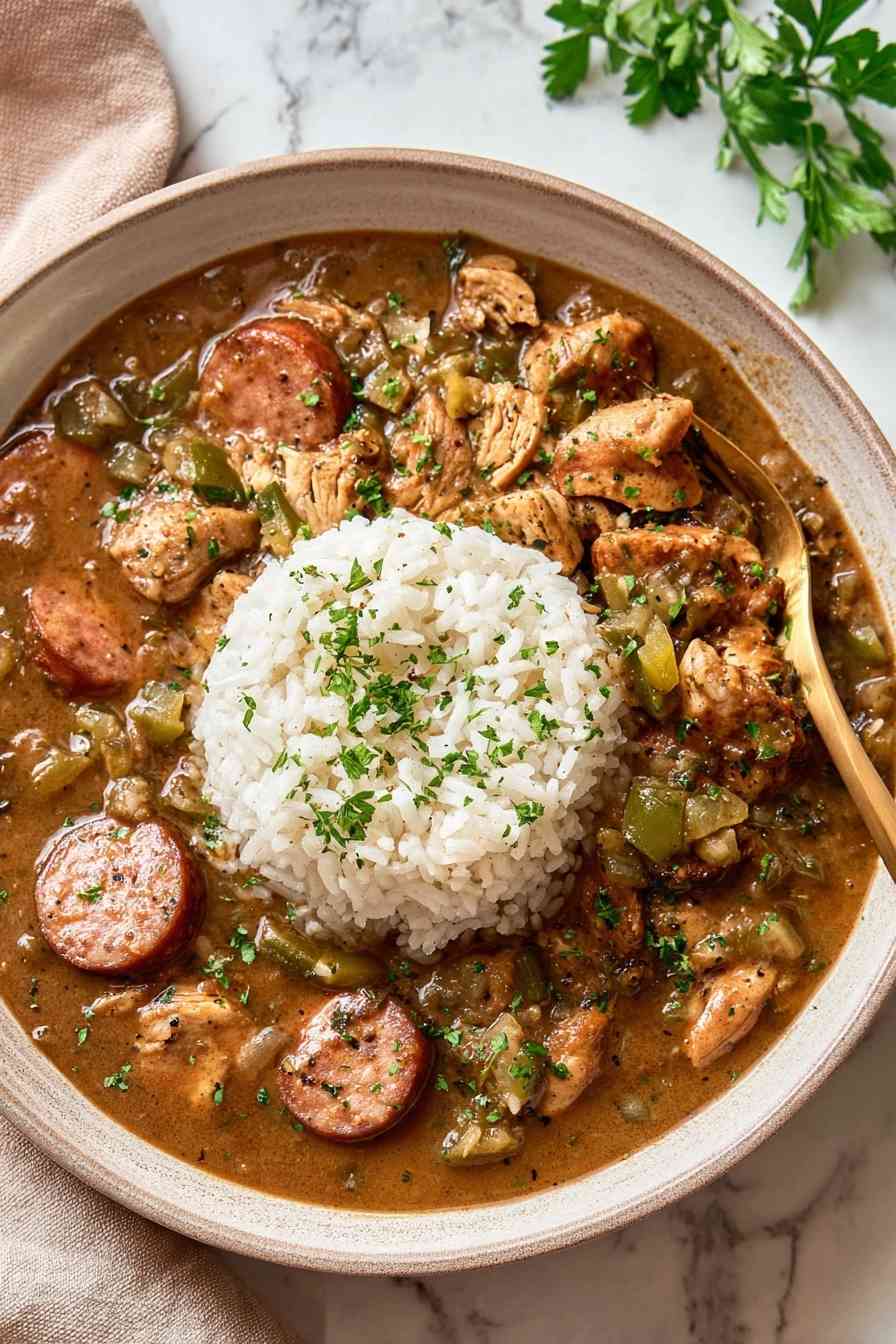
Authentic New Orleans Chicken Gumbo starts with a copper-brown roux simmered for two hours.
The magic is in the details. That slow-stirred roux, the holy trinity of onion, celery, and bell pepper, the smoky bite of andouille sausage, and the earthy finish from filé powder all work together to create something genuinely special. This is a patient, rewarding process that fills your kitchen with unmistakable Creole aroma and delivers a bowl of gumbo that tastes like Louisiana.
Getting the roux right is the single most important step. You’ll stand at the stove for about 20 minutes, stirring constantly, watching the mixture transform from pale blonde to a rich, chocolate-like brown. That’s where all the flavor lives. Once you’ve nailed the roux, the rest of the recipe flows naturally, building layers of savory depth as the gumbo simmers low and slow.
Serve it ladled over fluffy white rice, and you’ve got a bowl that’s worth every minute of effort.
What You Need for Authentic New Orleans Chicken Gumbo
This ingredient lineup is classic Louisiana through and through, from the roux base to the finishing touch of filé powder.
- Vegetable oil and all-purpose flour – the foundation of your roux, providing the rich, toasted flavor that defines the entire dish.
- Onions, celery, and green bell pepper – the Cajun holy trinity that adds aromatic depth and sweetness to the base.
- Garlic – brings sharp, savory warmth that complements the other vegetables.
- Andouille or smoked sausage – delivers smoky, spicy richness and meaty texture throughout the gumbo.
- Boneless chicken meat – adds tender, shredded protein that soaks up all the flavorful broth.
- Cajun seasoning – provides the signature spice blend that gives gumbo its bold, layered heat.
- Chicken broth or stock – forms the liquid base that carries all the flavors and creates the thick, coating consistency.
- Bay leaves – infuse subtle herbal notes during the long simmer.
- Filé powder – adds earthy flavor and helps thicken the gumbo right before serving.
- Rice – serves as the traditional base for ladling the gumbo over.
Making Chicken Gumbo: Step-by-Step
STEP 1: Combine the vegetable oil and flour in a large pot over medium heat, preferably cast iron. Stir slowly and constantly for 15 to 20 minutes until the roux reaches a deep copper-brown color, similar to melted chocolate, and thickens noticeably.
STEP 2: Add the chopped onions, celery, bell pepper, and minced garlic to the roux. Continue stirring for 4 to 5 minutes until the vegetables soften and release their aroma.
STEP 3: Stir in the sliced sausage and shredded chicken, mixing well to coat everything in the roux. Add the Cajun seasoning and fold until evenly distributed.
STEP 4: Pour in the chicken broth and add the bay leaves. Stir slowly and thoroughly, making sure the roux incorporates completely into the liquid without separating.
STEP 5: Increase the heat to medium-high and bring the gumbo to a boil. Once boiling, reduce the heat to low, cover the pot, and simmer for 2 hours, stirring occasionally to prevent sticking.
STEP 6: Turn off the heat and skim any fat that has risen to the surface. Stir in the filé powder for added flavor and thickening, then remove the bay leaves. Serve the gumbo ladled over cooked white rice.
Secrets to Rich, Flavorful Gumbo Every Time
- Never rush the roux. Stir constantly and keep the heat at medium to avoid scorching. If you see black specks or smell burning, start over, the roux is the backbone of the dish and there’s no recovering from a burnt one.
- Use a heavy-bottomed pot. Cast iron or thick stainless steel distributes heat evenly and prevents hot spots that can burn the roux or cause uneven cooking during the long simmer.
- Don’t skip the fat-skimming step. After two hours of simmering, fat from the sausage and chicken will rise to the top. Removing it before serving keeps the gumbo from tasting greasy and improves the overall texture.
- Add filé powder off the heat. Stirring it in while the pot is still boiling can make the gumbo stringy and unpleasant. Let the gumbo cool slightly, then stir in the filé for the best results.
What to Serve with Your Chicken Gumbo
Gumbo pairs beautifully with simple sides that complement its rich, savory depth without overwhelming it.
- Cornbread or crusty French bread – perfect for soaking up every bit of that rich, flavorful broth.
- Simple green salad with vinaigrette – adds a crisp, refreshing contrast to the hearty, savory gumbo.
- Potato salad – a classic Southern pairing that balances the spice and adds creamy texture to the meal.
Chicken Gumbo Questions Answered
Can I substitute the andouille sausage with another type of sausage?
Yes, you can use kielbasa, hot links, or even chorizo if andouille isn’t available. The flavor will shift slightly, but smoked sausage is key for that authentic depth. Avoid mild Italian sausage, it won’t deliver the same smoky, spicy punch that makes gumbo taste right.
Is it possible to make gumbo without filé powder?
Absolutely. Filé powder adds earthy flavor and thickening, but it’s optional. If you skip it, your gumbo will still taste rich and delicious, especially if your roux is dark enough. Some cooks prefer okra as a thickener instead, though this recipe doesn’t call for it.
What’s the best way to thicken gumbo if my roux is too light?
If your roux didn’t darken enough, you can simmer the gumbo uncovered for an extra 20 to 30 minutes to reduce the liquid and concentrate the flavors. Adding a bit more filé powder at the end also helps. Next time, just cook the roux longer before adding vegetables.
How spicy is this gumbo and can I adjust the heat?
The heat level depends on your Cajun seasoning blend and the type of sausage you use. Most versions have a moderate kick, not overwhelming but definitely present. To dial it down, use a milder seasoning or reduce the amount. To turn it up, add cayenne pepper or hot sauce to taste.
Can I freeze leftover chicken gumbo?
Yes, gumbo freezes beautifully. Let it cool completely, then transfer to airtight containers and freeze for up to three months. Thaw overnight in the fridge and reheat gently on the stovetop, adding a splash of broth if it’s too thick. The flavors often deepen after freezing, making leftovers even better.
How to Store & Reheat New Orleans Chicken Gumbo
Store leftover gumbo in an airtight container in the fridge for up to four days. The flavors continue to meld and deepen as it sits, so day-two gumbo often tastes even richer than the first bowl. Reheat gently on the stovetop over low heat, stirring occasionally and adding a splash of chicken broth if the consistency has thickened too much.
For freezing, portion the cooled gumbo into freezer-safe containers, leaving a bit of headspace for expansion. Freeze for up to three months. Thaw overnight in the refrigerator, then reheat slowly on the stove, stirring frequently to prevent sticking. Avoid reheating in the microwave if possible, stovetop reheating preserves the texture and keeps the broth silky.
If you’re planning to freeze, consider cooking the rice fresh when you’re ready to serve rather than freezing it with the gumbo. Rice can get mushy after freezing and reheating, so keeping them separate ensures the best texture.

Authentic New Orleans Chicken Gumbo
Ingredients
Equipment
Method
- Heat the vegetable oil and flour together in a large pot over medium heat, stirring constantly for 15 to 20 minutes until the mixture becomes a deep copper-brown and thickens like melted chocolate.
- Stir in the onions, celery, green bell pepper, and garlic, continuing to cook and stir for about 4 to 5 minutes until the vegetables have softened.
- Add the sliced sausage and shredded chicken to the pot, sprinkle with Cajun seasoning, and fold everything together until it is well combined.
- Pour in the chicken broth or stock and add the bay leaves. Mix the ingredients thoroughly to ensure the roux fully incorporates with the liquid.
- Increase the heat to medium-high and bring the gumbo to a boil. Once boiling, lower the heat to a simmer, cover, and cook for 2 hours, stirring occasionally.
- When ready to serve, turn off the heat and skim off any fat that has risen to the top. Stir in the file powder, if using, to thicken and flavor the gumbo. Remove the bay leaves and serve hot over cooked rice.