
Beef Tenderloin with Red Wine Sauce looks fancy but relies on a simple sear-and-roast technique.
Serving a perfectly roasted beef tenderloin at a holiday dinner or special occasion feels like a culinary victory, especially when you drape it in a silky, concentrated red wine sauce that looks like it took hours of chef-level skill. The truth is far more forgiving. This recipe uses a simple sear-and-roast method for the beef, while the sauce builds flavor through reduction and gets its luxurious body from a quick butter-and-flour paste whisked in at the end. Because the sauce can be made up to three days ahead, you’re free to focus on the roast itself when guests arrive.
The tenderloin cooks at a precise 400°F oven temperature after an initial stovetop sear, and resting the roast before slicing ensures every piece stays juicy. Deglazing the pan with broth captures all those caramelized bits, which then fold back into the sauce for an extra layer of depth. It’s the kind of dish that earns compliments without requiring you to camp out in the kitchen all evening.
What You Need for Beef Tenderloin with Red Wine Sauce
The ingredient list divides neatly into two parts: the sauce base and the roast itself, with each component playing a specific role in flavor and texture.
- Unsalted butter – provides richness in the sauce and forms the thickening paste with flour.
- Shallots – deliver a mild, sweet allium backbone that mellows during the long simmer.
- Non-alcoholic red wine substitute – builds the sauce’s tangy, fruity depth without any alcohol content.
- Beef broth – reinforces savory umami and helps reduce the sauce to a concentrated glaze.
- Fresh thyme sprigs – add herbal aroma that complements the beef and wine flavors.
- Kosher salt and black pepper – season both the sauce and the roast for balanced flavor.
- Sugar – rounds out acidity in the sauce and balances the wine substitute’s tartness.
- All-purpose flour – combines with butter to thicken the sauce without clumping.
- Center-cut beef tenderloin roast – the star protein, prized for its tenderness and even shape.
- Vegetable oil – creates a high-heat sear on the stovetop without burning.
How to Prepare Beef Tenderloin with Red Wine Sauce: Step-by-Step
STEP 1: Melt 5 tablespoons of butter in a medium saucepan over medium-low heat, then add the chopped shallots and cook for 7 to 8 minutes, stirring occasionally, until they turn soft and translucent. Add the non-alcoholic red wine substitute, beef broth, thyme sprigs, salt, pepper, and sugar, then bring the mixture to a boil and let it simmer over medium heat for about 30 minutes, reducing the liquid by roughly half.
STEP 2: While the sauce reduces, soften the remaining 3 tablespoons of butter in a small bowl, adding the flour and mixing with a spoon until you have a smooth, paste-like consistency. Set this aside for later.
STEP 3: Once the sauce has reduced, lower the heat and remove the thyme sprigs. Whisk in the butter-flour paste one tablespoon at a time, letting the sauce simmer for a few minutes until it thickens noticeably. Set the sauce aside, and if you’re working ahead, refrigerate it for up to three days at this point.
STEP 4: Let the beef tenderloin rest at room temperature for one hour before roasting. Preheat your oven to 400°F with the rack in the middle position, then season the beef all over with kosher salt and black pepper, using about ½ teaspoon of salt and ¼ teaspoon of pepper per pound of meat.
STEP 5: Heat the vegetable oil in an oven-safe skillet over medium-high heat until it’s almost smoking. Sear the tenderloin on all sides except one, turning with tongs, until you achieve a deep brown crust in about 10 minutes total. Flip the roast so the unseared side faces down, then transfer the skillet directly to the oven and roast until an instant-read thermometer reads 120°F to 125°F for medium-rare, roughly 15 minutes.
STEP 6: Move the tenderloin to a carving board with a juice well and tent it loosely with foil, letting it rest for 10 to 15 minutes. Place a towel over the skillet handle as a hot-pan reminder.
STEP 7: Discard the fat from the skillet, set it on the stovetop, and add ¼ cup of beef broth. Bring the broth to a boil, scraping up all the caramelized fond from the pan bottom with a wooden spoon. Pour this flavorful liquid into the red wine sauce and bring the sauce back to a simmer.
STEP 8: Slice the tenderloin into ½-inch-thick pieces and serve with the sauce passed at the table.
Expert Tips for Perfect Beef Tenderloin
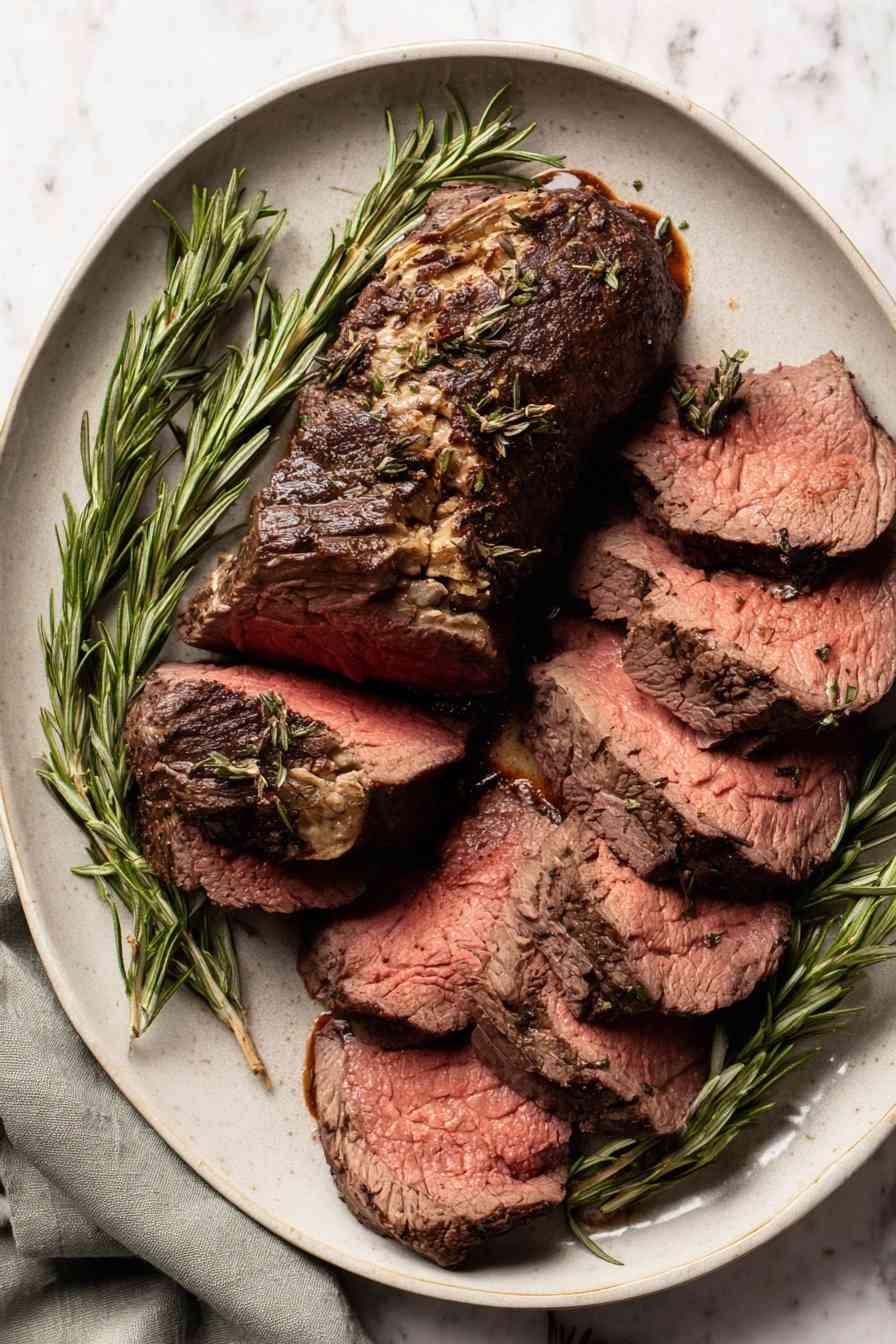
- Use an instant-read thermometer – Check the internal temperature in the thickest part of the roast, pulling it from the oven a few degrees below your target since the temperature will climb during resting.
- Whisk the butter-flour paste gradually – Add it one tablespoon at a time and let the sauce simmer after each addition to avoid lumps and ensure a smooth, glossy finish.
- Don’t skip the resting step – Cutting into the meat too soon releases juices onto the board instead of keeping them inside each slice.
Serving Ideas for Beef Tenderloin and Sauce
Pair the tenderloin with creamy mashed potatoes or a smooth potato gratin to soak up the rich red wine sauce. Roasted root vegetables like carrots, parsnips, or Brussels sprouts add earthy contrast and color. A simple arugula salad dressed with lemon and olive oil cuts through the richness of the beef and sauce.
Beef Tenderloin with Red Wine Sauce: Your Questions Answered
Can I use regular red wine instead of a non-alcoholic substitute in the sauce?
You can absolutely swap in regular red wine if you prefer. Use the same quantity and follow the same reduction process. The alcohol will cook off during the 30-minute simmer, leaving behind concentrated wine flavor. Choose a dry red wine you’d enjoy drinking for the best results.
How far in advance can I make the red wine sauce?
The sauce holds beautifully in the fridge for up to three days when stored in an airtight container. Reheat it gently on the stovetop over low heat, whisking occasionally, and add the deglazed pan juices from the roast just before serving to keep the sauce fresh and vibrant.
What temperature should beef tenderloin be for medium-rare?
Pull the roast from the oven when an instant-read thermometer registers 120°F to 125°F in the center. The temperature will rise another 5 degrees or so during resting, landing you right in the ideal medium-rare zone with a warm, rosy-pink center throughout.
Do I need to tie the beef tenderloin before roasting?
A center-cut tenderloin typically has an even shape and doesn’t require tying. If your roast has a thinner tail end or uneven thickness, you can tuck the tail under and tie it with kitchen twine to promote more uniform cooking and prevent the thinner sections from overcooking.
What’s the best way to reheat leftovers without drying out the beef?
Reheat sliced tenderloin gently in a covered skillet over low heat with a splash of broth or sauce to add moisture. Alternatively, wrap the slices in foil and warm them in a 250°F oven for 10 to 15 minutes. Avoid high heat or microwaving on full power, which can turn the meat tough.
Storing and Reheating Beef Tenderloin with Sauce
Store leftover beef tenderloin and sauce separately in airtight containers in the refrigerator for up to three days. Keep the sliced beef in a shallow container to minimize air exposure, and pour any collected juices over the top to help retain moisture. The sauce will thicken slightly when cold, so reheat it gently on the stovetop over low heat, whisking occasionally, until it loosens and becomes glossy again.
For reheating the beef, use a covered skillet over low heat with a splash of broth or sauce to add moisture. Alternatively, wrap the slices in foil and warm them in a 250°F oven for 10 to 15 minutes. If you’re serving the dish to guests again, warm the sauce first, then add the beef slices to the pan for just a minute or two to heat through without overcooking. Freezing isn’t recommended for cooked tenderloin, as the delicate texture can turn grainy and dry after thawing.

Beef Tenderloin with Red Wine Sauce
Ingredients
Equipment
Method
- Set 5 tablespoons of the butter in a medium saucepan over medium-low heat. Add the shallots and cook, stirring occasionally, until they are soft and translucent, about 7 to 8 minutes.
- Pour in the non-alcoholic red wine substitute, 3 cups beef broth, thyme sprigs, 1/4 teaspoon salt, 1/8 teaspoon pepper, and the sugar. Raise the heat, bring to a boil, then let it simmer over medium heat for about 30 minutes until the liquid has reduced by half.
- While the sauce simmers, put the remaining 3 tablespoons butter in a small bowl and soften if needed. Mix in the flour with a spoon to create a smooth paste.
- When the sauce is reduced, lower the heat and remove the thyme sprigs. Gradually whisk the flour-butter mixture into the simmering liquid, a tablespoon at a time, allowing the sauce to thicken over a few minutes. Once thickened, remove from heat and set aside. (You can refrigerate the sauce at this stage for up to 3 days if preparing in advance.)
- Let the beef sit at room temperature for 1 hour before roasting. Position an oven rack in the middle and preheat the oven to 400°F (205°C).
- Season the tenderloin all over with kosher salt and black pepper, using 1/2 teaspoon salt and 1/4 teaspoon pepper for each pound of meat.
- Heat vegetable oil in a large oven-safe skillet over medium-high heat until shimmering. Sear the beef on all sides except one, turning with tongs, until a deep brown crust forms, about 10 minutes in total.
- Place the tenderloin with the un-seared side down, and move the skillet directly into the preheated oven. (If your skillet isn't oven-safe, transfer the beef to a greased roasting pan.) Roast until an instant-read thermometer inserted in the center registers 120°F to 125°F (49°C to 52°C) for medium-rare, about 15 minutes, or to your preferred doneness (115°F to 120°F/46°C to 49°C for rare, 130°F to 135°F/54°C to 57°C for medium).
- Take the tenderloin out of the oven and set it on a carving board with a juice groove. Loosely cover with aluminum foil and let the meat rest for 10 to 15 minutes. As a reminder, cover the hot pan handle with a towel or oven mitt.
- Pour off the fat from the skillet. Place the pan on the stovetop and add 1/4 cup beef broth. Bring to a boil, scraping any browned bits off the bottom with a wooden spoon. Stir this into the red wine sauce and bring the sauce to a simmer.
- Carve the tenderloin into 1/2-inch-thick slices. Serve with the red wine sauce offered on the side at the table.