
Beef Wellington for Christmas Dinner is the showstopping centerpiece that transforms holiday dinner into an unforgettable occasion.
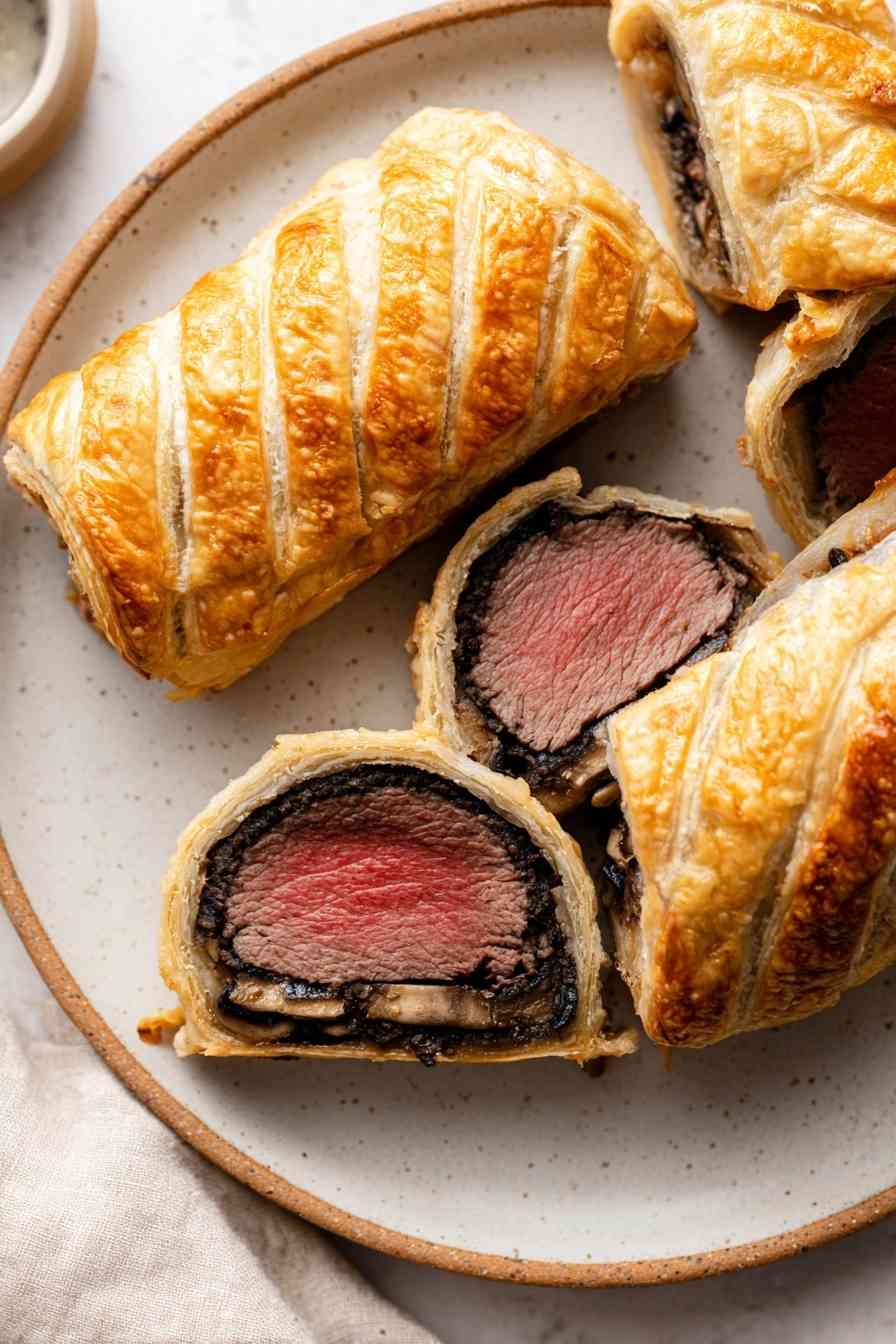
This is the dish that makes guests pause mid-conversation when you bring it to the table. A perfectly seared beef tenderloin wrapped in earthy mushroom duxelles, halal beef bacon or smoked beef, and golden, crisp puff pastry creates layers of flavor and texture that feel both luxurious and surprisingly achievable with a little planning. The real magic happens when you slice into it and reveal that rosy pink medium-rare center surrounded by savory mushrooms and flaky pastry.
Yes, Beef Wellington has a reputation for being complicated, but the process breaks down into manageable steps that you can tackle over a couple of days if needed. The key is understanding how each layer works together: the seared beef stays juicy, the mushroom duxelles adds earthy depth without making things soggy, and the wrapping technique ensures clean, impressive slices. With the right approach, you can pull off a restaurant-quality centerpiece that turns Christmas dinner into an occasion worth remembering.
Gathering Everything for Beef Wellington’s Holiday Layers
Each component in this recipe plays a specific role in building flavor and structure, so choosing quality ingredients makes a real difference.
- Beef tenderloin – the star protein, prized for its tender texture and mild flavor that lets the other layers shine.
- Olive oil – creates the hot searing surface that locks in juices and builds a flavorful crust.
- Mushrooms – cook down into a concentrated paste called duxelles that adds earthy richness without excess moisture.
- Shallots and garlic – provide aromatic depth to the mushroom mixture without overpowering the beef.
- Dijon mustard – acts as a flavor bridge between the beef and mushrooms while adding subtle tang.
- Halal beef bacon or smoked beef – wraps around the tenderloin to seal in moisture and contribute savory, smoky notes.
- Puff pastry – bakes into a buttery, flaky shell that holds everything together and provides textural contrast.
- Egg – brushed on the pastry for a glossy, golden finish that looks as good as it tastes.
- Fresh thyme or rosemary – optional herbs that brighten the mushroom duxelles with aromatic complexity.
Step-by-Step: Building Your Christmas Beef Wellington
STEP 1: Season the beef tenderloin generously with salt and pepper, then heat olive oil in a pan over medium-high heat until it shimmers. Sear the beef on all sides until deeply browned, about 2 minutes per side, then remove it from the pan and let it cool completely. Brush the cooled beef with a thin, even layer of Dijon mustard.
STEP 2: Add the finely chopped mushrooms, minced shallots, and garlic to the same pan over medium heat. Sauté, stirring frequently, until the mushrooms release their liquid and cook down into a thick, concentrated paste, about 10 to 15 minutes. Season with salt, pepper, and fresh thyme or rosemary, then set aside to cool completely before using.
STEP 3: Lay out a large sheet of plastic wrap on a flat work surface. Arrange the halal beef bacon or smoked beef slices in a slightly overlapping layer on the wrap, then spread the cooled mushroom duxelles evenly over the top. Place the mustard-coated beef tenderloin in the center and use the plastic wrap to help you roll the bacon and mushroom layers tightly around the beef. Refrigerate for 15 to 20 minutes to firm up the layers.
STEP 4: Roll out the puff pastry on a lightly floured surface until it’s large enough to fully enclose the beef. Remove the beef from the plastic wrap and place it seam-side down in the center of the pastry. Fold the pastry over the beef, trim any excess, and press the edges firmly to seal. Place the wrapped Wellington seam-side down on a parchment-lined baking sheet and brush the entire surface with beaten egg.
STEP 5: Preheat your oven to 400°F. Bake the Wellington for 25 to 30 minutes, or until the puff pastry turns golden and crisp. The internal temperature should reach 125°F for medium-rare. Let the Wellington rest for 10 minutes before slicing to allow the juices to redistribute and ensure clean, beautiful layers when you cut into it.
What to Serve with Beef Wellington for Christmas Dinner

The richness of Beef Wellington pairs beautifully with sides that offer brightness or earthy contrast. Roasted root vegetables like carrots, parsnips, and fingerling potatoes bring natural sweetness and caramelized edges that complement the savory beef. A simple arugula salad with lemon vinaigrette cuts through the richness and adds a fresh, peppery note to the plate. Creamy mashed potatoes or potato gratin provide comforting texture and help soak up any juices from the sliced Wellington.
Holiday Beef Wellington Success: Tips for Best Results
- Cool the duxelles completely – Any residual heat will create steam that softens the pastry from the inside and leads to a soggy bottom.
- Chill the wrapped beef – This firming step makes the final pastry wrapping much easier and helps the Wellington hold its shape during baking.
- Use a meat thermometer – Check doneness rather than relying on timing alone, since oven temperatures vary and beef thickness affects cooking time.
- Don’t skip the rest – Those 10 minutes after baking allow the juices to settle, which prevents a flood of liquid when you slice and ensures clean layers.
Beef Wellington for Christmas Dinner: Common Questions, Answered
Can I assemble Beef Wellington ahead of time for Christmas?
You can assemble the Wellington up to 24 hours in advance and refrigerate it, wrapped tightly in plastic, until you’re ready to bake. Brush with egg wash just before it goes into the oven. This make-ahead approach actually helps the layers firm up and makes slicing even cleaner.
What cut of beef works best for Beef Wellington?
Beef tenderloin is the traditional choice because of its tender texture and uniform shape, which makes wrapping and slicing straightforward. Look for a center-cut piece that’s evenly thick from end to end. Avoid cuts with a tapered tail, which will cook unevenly and make portioning difficult.
How do I prevent a soggy bottom on the puff pastry?
The key is removing as much moisture as possible from the mushroom duxelles by cooking it down thoroughly until it forms a thick paste. Also, make sure both the beef and mushroom mixture are completely cool before assembly. Any warmth creates steam that softens the pastry before it has a chance to crisp.
Is it possible to make Beef Wellington without alcohol?
This recipe doesn’t call for alcohol in the first place, so you’re already set. Some traditional versions include wine or brandy in the mushroom mixture, but this version relies on the natural umami from the mushrooms, shallots, and garlic to build depth without any alcohol at all.
What’s the ideal doneness for Beef Wellington?
Medium-rare, with an internal temperature of 125°F, is the sweet spot for tenderloin wrapped in pastry. The beef continues cooking slightly as it rests, and this doneness keeps the meat tender and juicy. If you prefer medium, aim for 135°F, but be aware the edges may cook more than the center.
Storing and Reheating Leftover Beef Wellington
Store leftover Wellington in an airtight container in the refrigerator for up to 3 days. The pastry will soften as it sits, but the flavors remain delicious. To reheat, place slices on a baking sheet in a 350°F oven for about 10 minutes, or until warmed through. This method helps the pastry crisp up slightly, though it won’t fully return to its original texture. Avoid the microwave, which turns the pastry rubbery and heats the beef unevenly.
Freezing isn’t recommended for baked Wellington, as the pastry becomes soggy and the beef texture suffers when thawed. If you want to prep ahead, freeze the assembled but unbaked Wellington for up to a month, then bake directly from frozen, adding about 10 extra minutes to the cooking time.
Beef Wellington for Christmas Dinner
Ingredients
Equipment
Method
- Pat the beef tenderloin dry and season it thoroughly with salt and pepper. Heat olive oil in a pan over medium-high. Once hot, sear the beef on all sides until a deep brown crust forms, about 2 minutes per side. Remove from the pan and let it fully cool. Brush the cooled beef with an even layer of Dijon mustard.
- In the same pan, add finely chopped mushrooms, minced shallots, and minced garlic. Cook over medium heat, stirring frequently, until the mushrooms lose their moisture and the mixture becomes a thick paste, 10 to 15 minutes. Season with salt, pepper, and some fresh thyme or rosemary if using. Set aside to cool completely.
- Lay a large piece of plastic wrap flat on your work surface. Arrange the halal beef bacon or smoked beef slices in a slightly overlapping layer on the plastic wrap. Spread the cooled mushroom mixture evenly over the top. Place the mustard-coated tenderloin in the center, then use the plastic wrap to help roll the bacon and mushroom mixture tightly around the beef. Chill the wrapped beef in the refrigerator for 15–20 minutes to firm up.
- Lightly flour your surface and roll out the thawed puff pastry sheet so it's large enough to enclose the wrapped beef. Unwrap the chilled beef from the plastic and place it in the center of the pastry. Fold the pastry over the beef, trimming away any excess, and press to seal the edges tightly. Put the seam side down on a baking sheet lined with parchment. Brush the surface of the pastry with the beaten egg.
- Preheat your oven to 400°F (200°C). Bake the Beef Wellington for 25–30 minutes, until the pastry is golden and crisp and a thermometer inserted into the center of the beef reaches 125°F (52°C) for medium-rare. Remove from the oven and let it rest for 10 minutes before slicing. Garnish with fresh thyme or rosemary if desired.