Why You’ll Love This Classic Roman-Style Cacio e Pepe
There are three magical reasons you’ll fall in love with this classic Roman pasta dish. First, it’s ridiculously simple—just pasta, cheese, butter, and pepper. That’s it.
Second, the technique creates a silky, luxurious sauce without cream, using just starchy pasta water and cheese. I still remember my first perfect bite in Rome, where the pepper hit my tongue before the creamy cheese coated it.
Third, it’s your new back-pocket recipe for impressing dinner guests or treating yourself on busy weeknights. Who needs complicated when four ingredients can transport you straight to Italy?
What Ingredients are in Classic Roman-Style Cacio e Pepe?
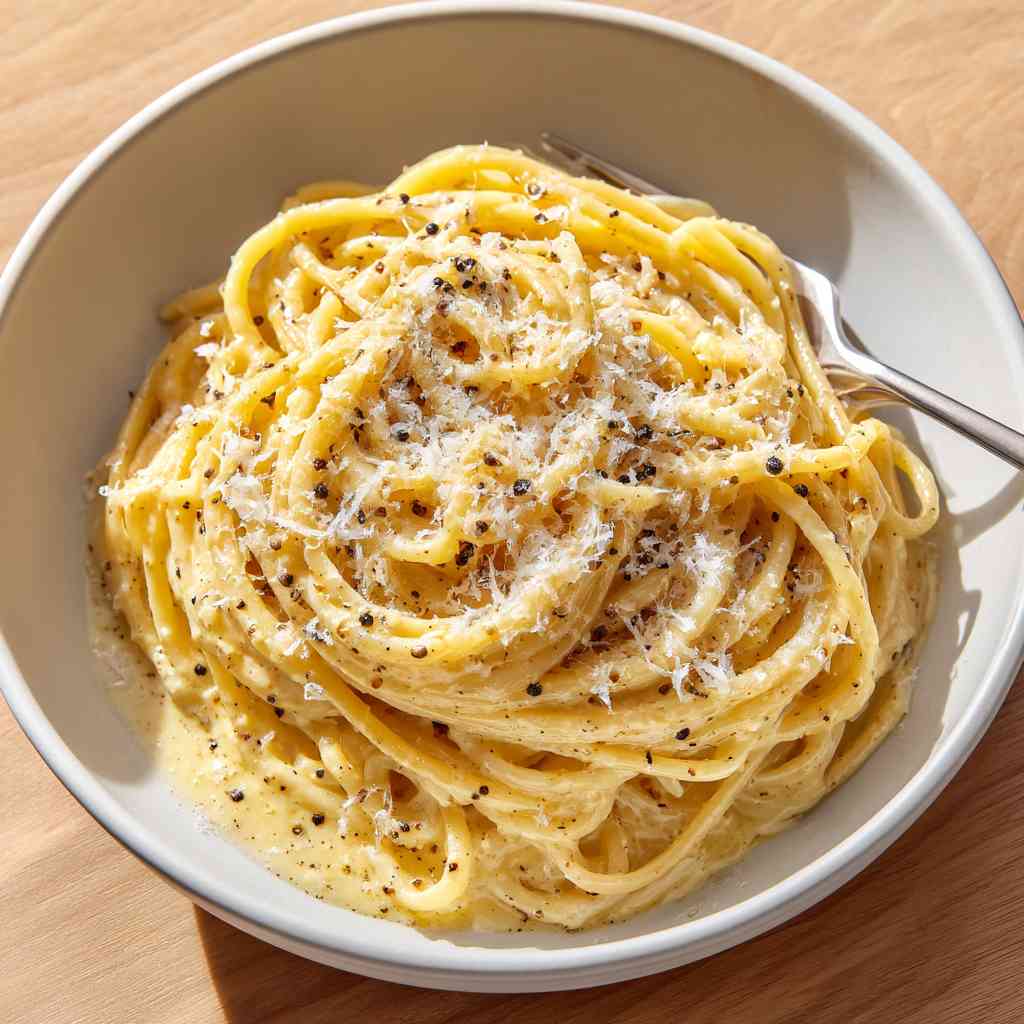
The beauty of Cacio e Pepe lies in its stunning simplicity. This iconic Roman pasta dish proves that sometimes fewer ingredients create the most magnificent flavors.
With just a handful of high-quality components, you’ll create a creamy, peppery pasta that tastes like it came straight from an Italian trattoria. The magic happens when the starchy pasta water combines with cheese and butter to create that silky sauce that clings to every strand of spaghetti.
- 12 ounces spaghetti
- 4 tablespoons unsalted butter, at room temperature
- 1 tablespoon extra-virgin olive oil
- 2/3 cup grated Pecorino Romano cheese
- Salt, to taste
- Freshly ground black pepper, to taste (lots of it!)
When shopping for these ingredients, quality matters tremendously. Look for authentic Pecorino Romano, which has a sharp, salty bite that defines this dish—Parmesan can work in a pinch, but it won’t deliver that distinctive Roman flavor.
For the pepper, freshly ground is non-negotiable, as pre-ground pepper loses those volatile oils that give this dish its signature aroma and heat. I recommend using a pepper mill with a coarse grind setting to create those little flavor bombs that burst with each bite.
And remember, the name literally means “cheese and pepper,” so don’t be shy with either!
How to Make This Classic Roman-Style Cacio e Pepe
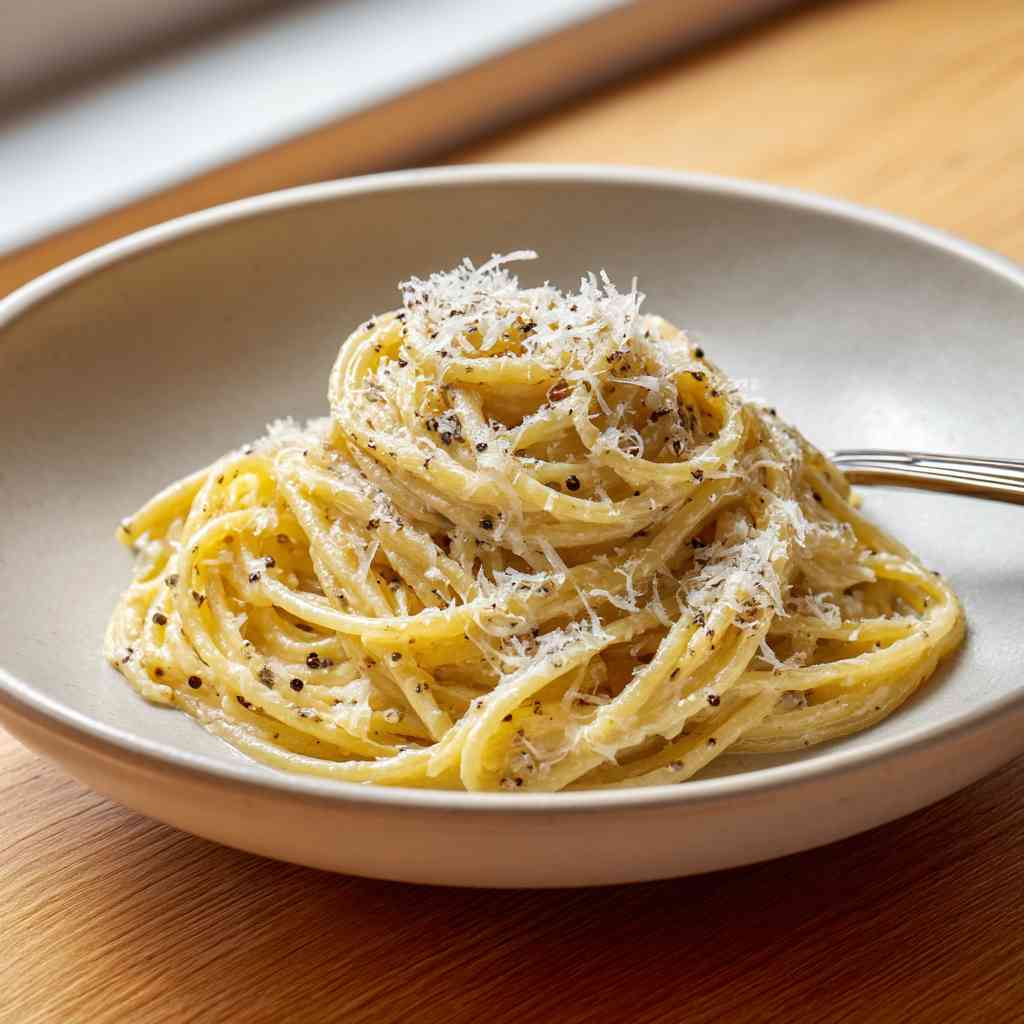
Making cacio e pepe is all about timing and technique—and I promise, it’s simpler than you might think. Start by bringing a large pot of salted water to a boil, then add 12 ounces of spaghetti and cook until it’s al dente, which takes about 8 to 10 minutes. That perfect al dente texture is essential here; you want the pasta to retain a slight bite that stands up to the rich sauce we’re about to create.
While your pasta bubbles away, prepare the heart of this dish: the cheese mixture. In a large bowl, mash together 4 tablespoons of room-temperature unsalted butter, 1 tablespoon of extra-virgin olive oil, and 2/3 cup of grated Pecorino Romano cheese until you’ve formed a smooth paste. The room-temperature butter is non-negotiable here—cold butter won’t incorporate properly, and melted butter might cause your sauce to break.
Once your pasta reaches that perfect al dente state, reserve about 1/2 cup of that starchy cooking water before draining the spaghetti. This reserved water contains the secret to the silky sauce that makes cacio e pepe so irresistible.
Now comes the magical moment when it all comes together. Add your hot drained pasta directly to the bowl with your cheese mixture and toss vigorously. The residual heat from the pasta will begin melting everything together, but you’ll need to gradually add splashes of that reserved pasta water while continuing to toss until you achieve a creamy, glossy sauce that perfectly coats each strand.
Don’t those little pools of emulsified butter and cheese look absolutely dreamy? Season generously with salt to taste and—most importantly—lots of freshly ground black pepper. The pepper isn’t just a seasoning here; it’s a star ingredient that gives the dish its distinctive character and slight heat.
Divide your masterpiece among four plates and serve immediately, because this is one pasta that waits for no one.
Classic Roman-Style Cacio e Pepe Substitutions and Variations
While traditional cacio e pepe purists might gasp at the thought of modifications, I’ve discovered that this classic Roman pasta can handle a few thoughtful substitutions without losing its soul.
Can’t find pecorino? Parmesan works in a pinch, though it’s less sharp. For a gluten-free version, try rice pasta—just watch it closely to avoid mushiness.
Sometimes I swap butter for more olive oil when I want a lighter finish. And when I’m feeling rebellious, I add toasted breadcrumbs for crunch or lemon zest for brightness.
The magic of cacio e pepe lies in its simplicity, but that doesn’t mean we can’t play a little.
What to Serve with Classic Roman-Style Cacio e Pepe
Now that we’ve explored adaptations of the recipe, let’s talk about creating a complete meal around your cacio e pepe.
This simple pasta truly shines when paired with complementary dishes that don’t overshadow its peppery, cheesy perfection.
I love serving mine with a crisp arugula salad dressed with lemon and olive oil—the peppery greens echo the black pepper in the pasta.
A side of roasted asparagus or broccolini works beautifully too. For protein, consider grilled chicken or a small portion of prosciutto.
Wine-wise? Nothing beats a dry Italian white like Frascati or Pinot Grigio.
Trust me, your taste buds will thank you.
Final Thoughts
As I reflect on this humble Roman classic, I can’t help but marvel at how just a handful of ingredients transform into something so extraordinary.
The magic happens when hot pasta water emulsifies with butter, olive oil, and salty pecorino, creating that silky sauce that clings to every strand of spaghetti.
What makes cacio e pepe truly special? It’s not just the simplicity—it’s the technique.
Get it right, and you’ve mastered one of cooking’s perfect equations. Make it once, you’ll crave it forever.
My friends, good pasta doesn’t need to be complicated to be magnificent.
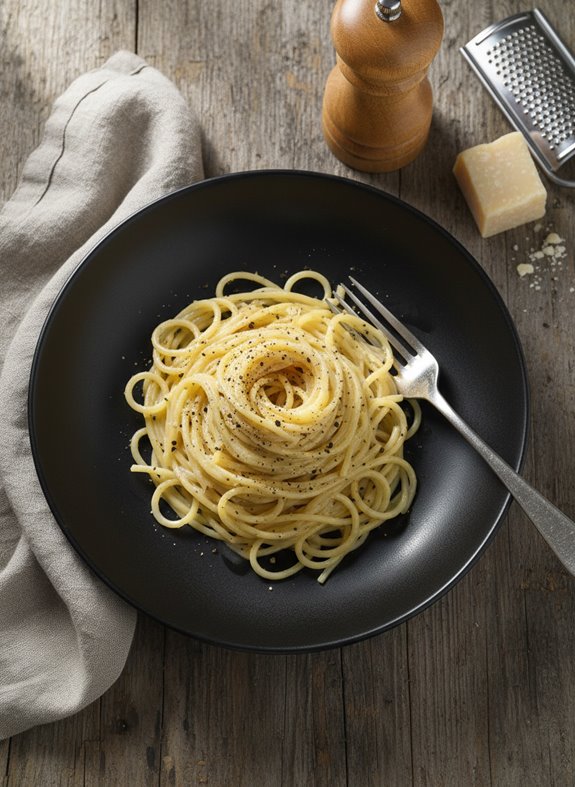
Classic Roman-Style Cacio e Pepe
Ingredients
Equipment
Method
- Bring a large pot of salted water to a boil.
- Add spaghetti and cook until al dente, about 8-10 minutes.
- While pasta cooks, in a large bowl, mash together room-temperature butter, olive oil, and grated Pecorino Romano cheese until it forms a smooth paste.
- Before draining pasta, reserve about 1/2 cup of the starchy cooking water.
- Add the hot drained pasta directly to the bowl with the cheese mixture and toss vigorously.
- Gradually add splashes of reserved pasta water while continuing to toss until you achieve a creamy, glossy sauce that coats each strand.
- Season generously with salt and freshly ground black pepper.
- Serve immediately.