
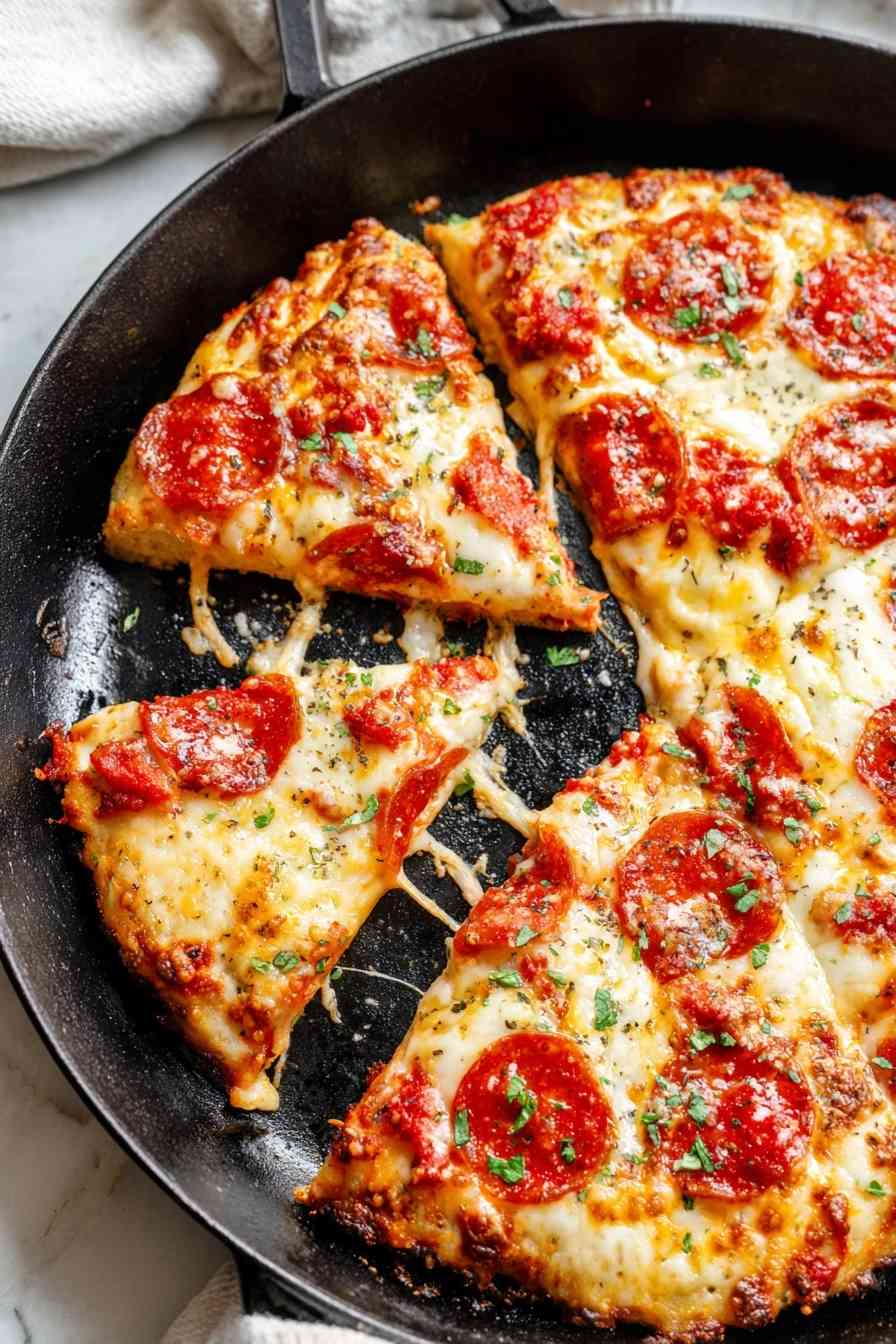
Cast Iron Skillet Pizza delivers a crispy, caramelized crust and gooey cheese in 30 minutes.
The magic happens in the skillet itself. That heavy cast iron creates direct, even heat that crisps the bottom while the oven melts the cheese into golden, bubbly perfection. You get edges that caramelize beautifully, toppings that go all the way to the rim, and a texture that feels somewhere between Detroit-style and classic New York.
Whether you’re using homemade dough or grabbing a ball from the grocery store, this method works. It’s fast, flexible, and forgiving enough for a weeknight but impressive enough for anyone who shows up expecting takeout. Once you pull this out of the oven, nobody’s ordering delivery.
What You Need for Cast Iron Skillet Pizza
This ingredient lineup is short, simple, and built for flexibility. You’re working with pantry staples and a few smart choices that make all the difference in texture and flavor.
- Olive oil – coats the pan to prevent sticking and helps the crust develop a crispy, golden bottom.
- Pizza dough – use store-bought or homemade, but make sure it’s at room temperature so it stretches easily without snapping back.
- Low-moisture mozzarella – shredded from a block gives you the best melt and browning without releasing too much water.
- Pizza sauce – dotted over the cheese instead of spread underneath, which keeps the crust from getting soggy.
- Toppings – whatever you love, but keep them relatively dry to maintain that crispy crust.
How to Make Cast Iron Skillet Pizza: Step by Step
STEP 1: Move one oven rack to the very bottom position and one to the top, then preheat your oven to 450°F.
STEP 2: Spread the olive oil evenly across the bottom and sides of your cast iron skillet. Gently stretch the pizza dough to fill the pan, pressing it into the edges and dimpling the surface with your fingers to create texture.
STEP 3: Sprinkle the shredded mozzarella over the entire surface of the dough, making sure it reaches all the way to the edges. Then dot the pizza sauce over the cheese layer, spreading it to the rim.
STEP 4: Add your toppings, then place the skillet on the bottom oven rack. Bake for 18 to 20 minutes, or until the bottom crust is deep golden brown and the cheese is melted and browning. Lift the edge with a spatula to check the crust color. If you want extra browning on top, move the pan to the top rack for 2 to 3 minutes.
STEP 5: Set the hot skillet on a wire rack briefly, then run a sharp knife around the edges to loosen the crust. Use a spatula to transfer the pizza to a cutting board immediately so the bottom stays crisp.
Getting the Crispiest Crust & Meltiest Cheese
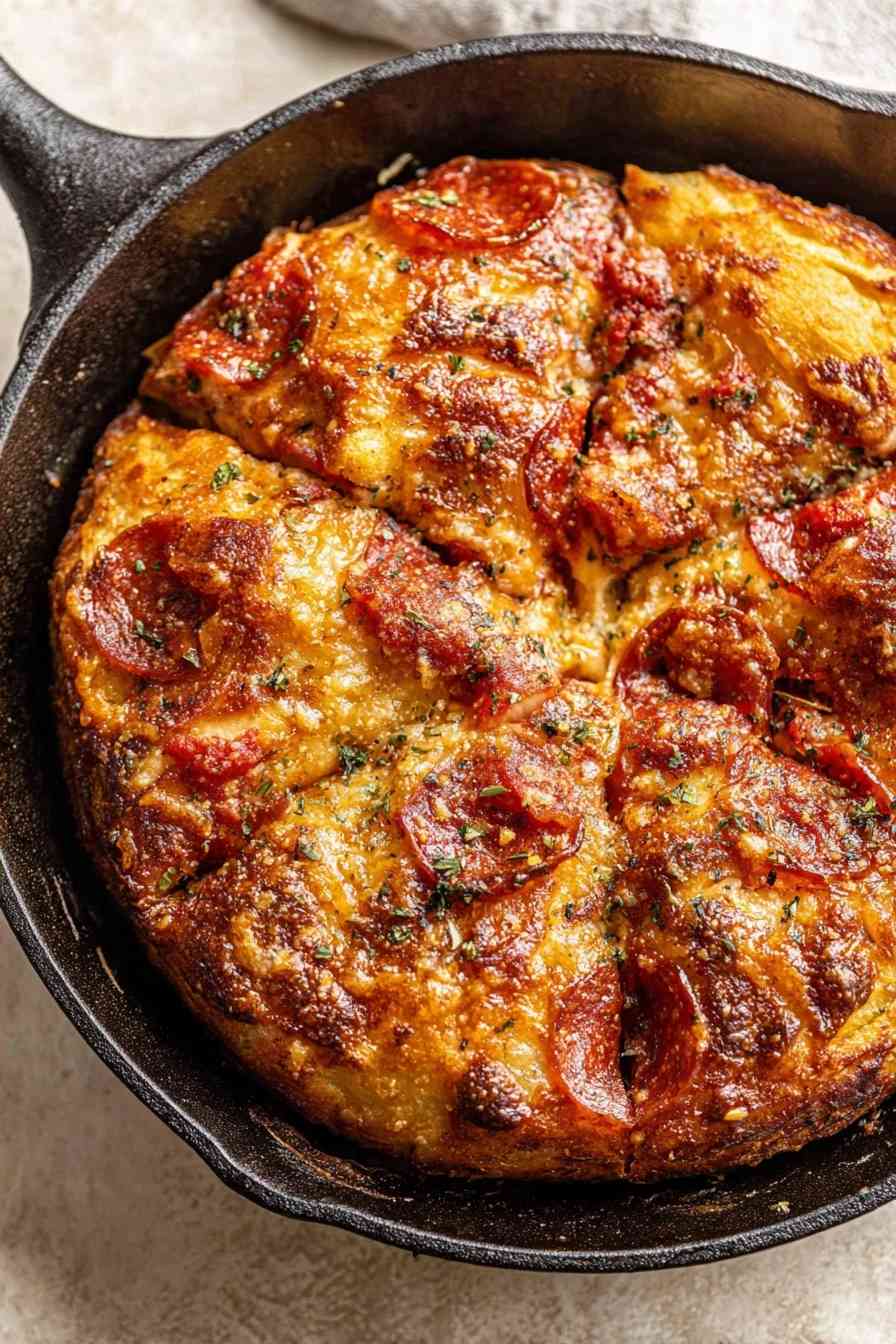
- Stretch the dough all the way to the edges of the pan. Gaps or uneven coverage mean uneven browning and a crust that doesn’t hold together as well.
- Don’t skip the bottom rack placement. That’s where the direct heat hits the cast iron and creates the crispy, caramelized base you’re after.
- Lift the pizza edge with a spatula halfway through baking to check the crust color. If it’s still pale, leave it on the bottom rack longer before moving it up.
- Transfer the pizza out of the skillet as soon as it’s done. Leaving it in the pan traps steam underneath and turns that crispy crust soft.
Pizza Night Sides: What Goes Great with Skillet Pizza
- Garlic rolls or Parmesan bread bites add a buttery, garlicky contrast and soak up any extra sauce.
- A simple green salad with lemon vinaigrette cuts through the richness and adds a fresh, bright note.
- Roasted vegetables like zucchini, bell peppers, or cherry tomatoes bring color and a little extra nutrition without weighing things down.
Cast Iron Skillet Pizza: Common Questions & Troubleshooting
Can I use a different type of cheese or does it have to be low-moisture mozzarella?
Low-moisture mozzarella melts beautifully without releasing too much water, which keeps the crust crisp. Fresh mozzarella works, but it’s wetter and can make the base soggy. If you use it, pat it dry and tear it into smaller pieces instead of shredding.
What’s the best way to keep the crust from sticking to the cast iron pan?
Coat the entire bottom and sides of the skillet with olive oil before adding the dough. After baking, run a sharp knife around the edge while the pizza is still hot to loosen any spots that might stick, then transfer it out immediately.
Can I use gluten-free or whole wheat pizza dough in this recipe?
Both work, though gluten-free dough tends to be more delicate and may need gentler handling when stretching. Whole wheat dough is sturdier but can turn out denser, so let it rest at room temperature for at least 20 minutes before stretching.
What toppings work best (or worst) with cast iron skillet pizza?
Dry or pre-cooked toppings like pepperoni, sausage, olives, and roasted vegetables work great. Avoid watery ingredients like fresh tomatoes or raw mushrooms unless you cook them down first, since they release moisture that can make the crust soggy.
How to Store and Reheat Leftover Skillet Pizza
Store leftover slices in an airtight container in the fridge for up to three days. For the best texture, reheat them in a dry skillet over medium heat for a few minutes until the bottom crisps up again. You can also use a 400°F oven for about 8 minutes, placing the slices directly on the rack.
Freezing works, but the crust loses some of its crispy edge. Wrap slices tightly in plastic wrap and foil, then freeze for up to a month. Thaw in the fridge overnight and reheat in a skillet or oven.
Cast Iron Skillet Pizza
Ingredients
Equipment
Method
- Position one oven rack at the lowest level and another at the top, then set the oven to preheat at 450°F (230°C).
- Brush the olive oil all over the bottom and sides of a cast iron skillet. Stretch the pizza dough gently to cover the skillet base, pressing it out to the edges and using your fingertips to dimple the surface.
- Scatter the shredded mozzarella evenly over the dough, making sure to go right up to the edge. Spoon the pizza sauce in dollops over the cheese, distributing it evenly.
- Arrange your chosen toppings over the sauce, then transfer the skillet to the bottom oven rack. Bake for 18–20 minutes, or until the crust is deeply golden underneath and the cheese is bubbly and starting to brown. Check for doneness by lifting the edge with a spatula; for extra browning on top, move the skillet to the upper rack for an additional 2–3 minutes if desired.
- Take the skillet out and set it on a wire rack briefly. Run a sharp knife around the pizza’s edges to loosen it, then use a spatula to carefully transfer the pizza onto a cutting board to keep the crust crisp. Serve immediately.