
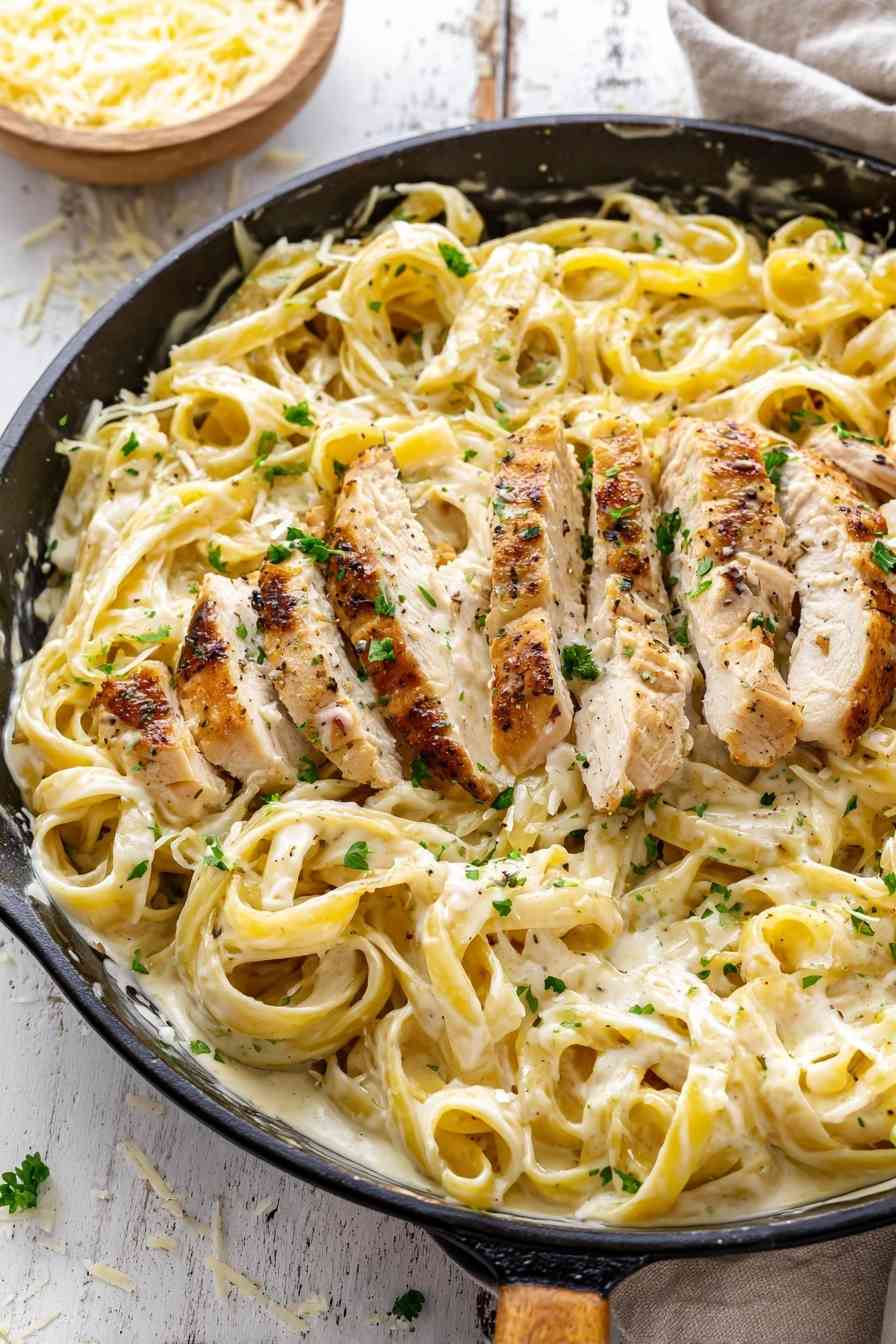
Chicken Fettuccine Alfredo combines pan-seared chicken, a silky parmesan cream sauce, and al dente pasta.
Good Alfredo comes down to layered seasoning and timing. Chicken breasts are seasoned with garlic powder and Italian seasoning, then seared until golden and juicy. The sauce is built from heavy cream and freshly grated parmesan, and the fettuccine cooks just to al dente. A splash of reserved pasta water pulls everything together and adjusts the sauce to a glossy consistency that clings to every strand.
This weeknight recipe feels indulgent but needs no fancy technique. Salt at every stage, rest the chicken before slicing, and scrape up the pan drippings, and the whole dish comes together in about thirty minutes. For a subtle kick under all that creamy richness, add a pinch of red pepper flakes.
Why This Works
Each step builds on the one before it. Searing the chicken first leaves browned bits in the skillet, and the cream lifts them off the bottom, so that flavor ends up in the sauce instead of going down the drain. The butter and garlic go into the same pan, which keeps the sauce savory without extra ingredients. Heavy cream has enough fat to stay smooth as it simmers with the cheese, and freshly grated parmesan melts cleanly into it. Finally, the starch in the pasta water acts as a binder. It helps the sauce coat the noodles instead of pooling at the bottom of the plate.
What Goes Into Chicken Fettuccine Alfredo
The ingredient list is short, and each component has a specific job in building flavor and texture.
- Fettuccine pasta – wide, flat noodles that hold cream sauce well and cook to al dente in about ten minutes.
- Chicken breasts – three to four similar-sized pieces sear evenly and stay juicy when cooked to 165°F.
- Heavy cream – full-fat cream creates the rich, velvety base that defines Alfredo sauce.
- Butter – adds silkiness and helps bloom the garlic at the start of the sauce.
- Fresh garlic – finely minced cloves bring sharp, aromatic depth to the cream.
- Parmesan cheese – freshly grated parmesan melts smoothly and gives the sauce its signature nutty, salty flavor.
- Pasta water – starchy, salted water loosens the sauce and helps it cling to the noodles.
- Garlic powder and Italian seasoning – season the chicken with warm, savory flavor before it hits the pan.
- Olive oil – a dependable oil for searing the chicken over medium-high heat.
- Red pepper flakes – an optional pinch adds gentle heat that cuts through the richness.
- Kosher salt and black pepper – season every layer, from the pasta water to the chicken to the finished sauce.
Cooking Chicken Fettuccine Alfredo Step by Step
The full ingredient amounts and instructions are in the recipe card below. Here is what to watch for at each stage so the dish turns out right.
A properly salted pot. The pasta water should taste noticeably salty, like the ocean. This is the only chance to season the noodles themselves, and the same water seasons the sauce later on.
A dry surface on the chicken. Pat the breasts dry before seasoning. Surface moisture steams instead of searing, and the chicken won’t brown. Wait until the oil shimmers before adding the chicken, then leave it alone so a golden crust can form.
The right internal temperature. The chicken is done when an instant-read thermometer in the thickest part reads 165°F (74°C). Color alone isn’t a reliable guide. Let it rest for a few minutes before slicing so the juices stay in the meat.
Fragrant, not browned, garlic. Garlic in hot butter needs only about thirty seconds. As soon as it smells fragrant, pour in the cream. Browned garlic turns bitter and carries that bitterness through the whole sauce.
Sauce texture. Once the parmesan goes in, keep the sauce at a gentle simmer and stir often. A hard boil can make the cheese clump or the sauce separate. The sauce is ready when it lightly coats the back of a spoon and a line drawn through it holds for a moment. If it looks thick or pasty, it has gone too far, and the pasta water will fix it.
When to add pasta water. Scoop out half a cup before draining, since it is easy to forget once the pasta is in the colander. Add it after the fettuccine goes into the sauce, not before, because the noodles keep absorbing liquid as they toss. Pour in a splash, toss, and check again. Stop when the sauce looks glossy and clings to the noodles without pooling in the pan. If the sauce tightens while it waits on the stove, another splash will loosen it.
Timing at the end. Alfredo thickens quickly as it cools, so top the pasta with the sliced chicken and serve it right away.
What to Serve with Chicken Fettuccine Alfredo
- A crisp, lemony side salad with arugula or romaine cuts through the richness and adds brightness.
- Garlic bread is a classic pairing, especially when it’s buttery and toasted until the edges turn golden.
- Roasted broccoli or green beans tossed with olive oil and lemon add color and a contrast in texture.
Pro Tips for Alfredo Success
- Choose chicken breasts of similar size so they sear evenly and cook through at the same rate. Check each piece with a thermometer, since a thicker breast may need a little longer to reach 165°F.
- Use freshly grated parmesan instead of pre-shredded cheese, which contains anti-caking agents that make the sauce grainy.
- Cook the pasta to firm al dente, about one minute less than the package suggests. It will keep softening in the hot sauce.
- Add pasta water gradually, one or two tablespoons at a time, until the sauce turns glossy and coats the noodles.
Chicken Fettuccine Alfredo Questions, Answered
Can I use pre-cooked or rotisserie chicken instead?
Yes, rotisserie chicken works well when time is short. Slice or shred the meat and warm it gently in the finished sauce so it doesn’t dry out. You’ll lose the pan drippings that add depth to the sauce, but the dish will still taste rich and satisfying.
How do I prevent the sauce from turning grainy?
Use freshly grated parmesan and add it over very low heat or off the heat, stirring constantly. Pre-shredded cheese contains cellulose, which keeps it from melting smoothly. Full-fat heavy cream also helps the sauce stay silky, so avoid substituting milk or half-and-half.
What’s the best method to reheat Chicken Fettuccine Alfredo without drying it out?
Reheat it gently in a skillet over low heat, adding a few tablespoons of milk or chicken broth to loosen the sauce. Stir frequently to prevent sticking, and heat until the pasta and chicken are hot all the way through. Microwaving works in a pinch, but cover the dish and add a little liquid to keep the pasta from drying out.
Can I freeze leftovers, and how well do they keep?
Cream-based sauces don’t freeze well, because they tend to separate and turn grainy when thawed. If you do freeze it, store it in an airtight container for up to one month and reheat gently with added cream or milk to bring the texture back together.
How to Store and Reheat Alfredo Leftovers
Store leftovers in an airtight container in the fridge for up to three days. The sauce thickens as it cools, so plan on adding a splash of milk or broth when reheating. Warm it gently in a skillet over low heat, stirring often, or microwave it in thirty-second intervals with a damp paper towel over the top to hold in moisture. Either way, heat until it is steaming hot throughout. Freezing isn’t ideal for cream sauces, but if you freeze a batch, refresh the texture with extra cream and gentle heat when you reheat it.
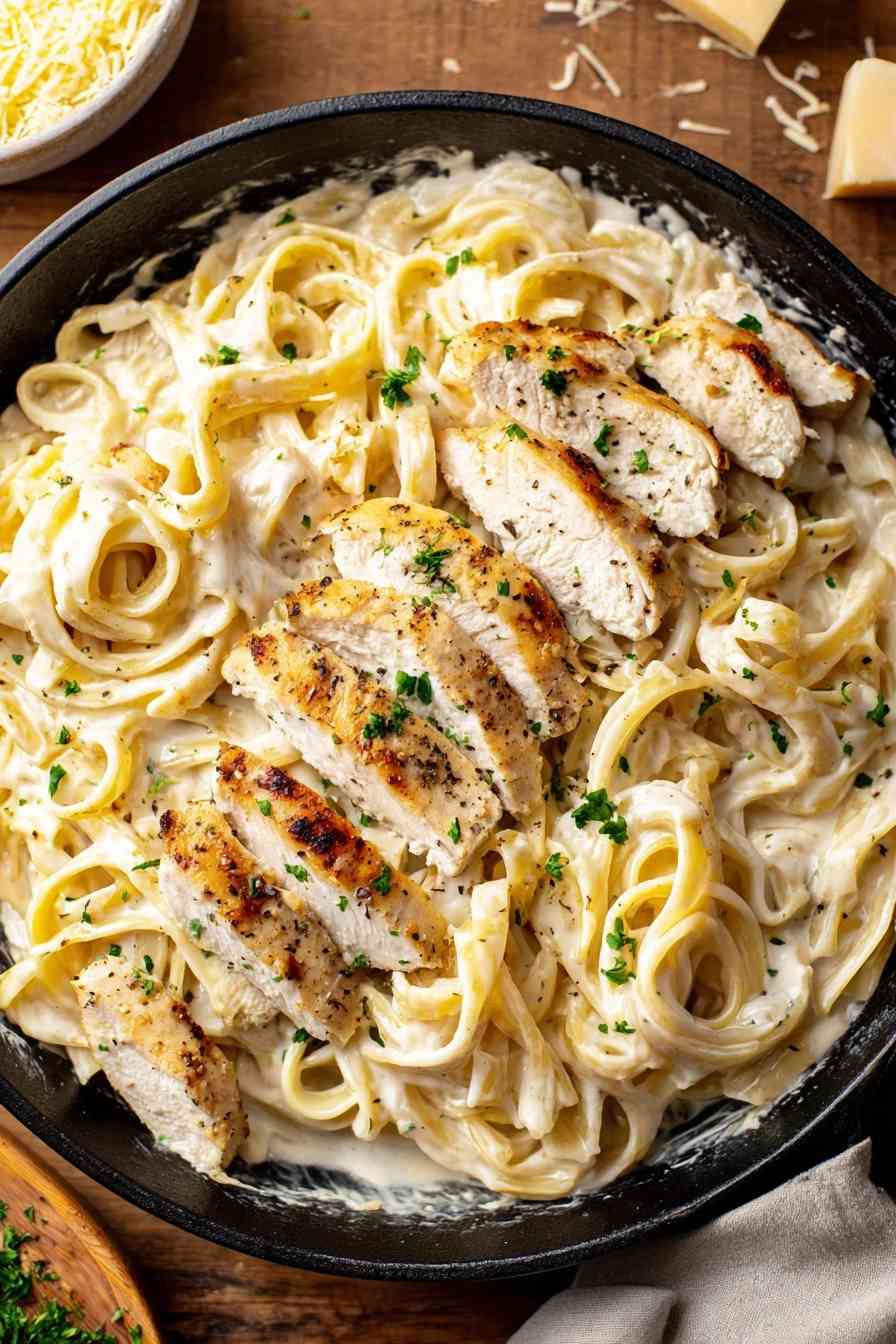
Chicken Fettuccine Alfredo
Ingredients
Equipment
Method
- Fill a large pot with water and bring it to a boil. Add a generous amount of salt.
- Pat the chicken breasts dry and trim any excess fat. Season both sides with salt, pepper, garlic powder, and Italian seasoning.
- Heat the olive oil in a large skillet over medium-high heat. Add the chicken and cook for 5-6 minutes per side, or until the chicken reaches 165°F internally.
- While the chicken cooks, add the fettuccine to the boiling water and cook until al dente. Reserve about half a cup of the pasta water before draining.
- When the chicken is cooked through, remove it from the skillet and let it rest for a few minutes before slicing.
- Add butter, minced garlic, and optional red pepper flakes to the skillet. Cook until the garlic is fragrant, about 30 seconds.
- Pour in the heavy cream, scraping the bottom of the skillet to loosen any browned bits. Stir in the parmesan cheese and cook for 3–5 minutes, until the sauce thickens. Season with salt and pepper.
- Add the drained pasta to the sauce, tossing to coat. Add reserved pasta water, a little at a time, if needed to reach your desired consistency.
- Top with sliced chicken, adjust seasoning as needed, and serve immediately.