
Garlic butter shrimp pasta delivers restaurant-quality flavor in about 20 minutes.
This dish feels like something you’d order at a white-tablecloth restaurant, but it comes together on a weeknight with ingredients you probably already have. The shrimp turn opaque and tender in minutes, the garlic blooms in butter until fragrant, and the parmesan melts into a silky coating that clings to every strand of fettuccine. A squeeze of lemon juice and a handful of fresh parsley at the end cut through the richness and brighten the whole plate.
It’s quick enough for Tuesday dinner but impressive enough to serve when you want to look like you tried harder than you actually did. The kind of meal that makes people think you spent an hour in the kitchen when you really spent twenty minutes and a single pan.
Step-by-Step: How to Make Garlic Butter Shrimp Pasta
STEP 1: Bring a large pot of salted water to a boil, then cook the fettuccine until al dente according to package directions. Drain well and set aside.
STEP 2: Heat cooking oil in a large pan over medium heat. Add the garlic and cook for about 2 minutes, stirring frequently, until fragrant but not browned. If the garlic starts to color too quickly, pull the pan off the heat.
STEP 3: Add the butter to the pan and let it melt completely. Add the shrimp in a single layer if possible, then cook for 4 to 6 minutes, stirring occasionally, until the shrimp turn opaque white with pink edges.
STEP 4: Stir in the lemon juice, lemon zest, parmesan cheese, salt, and black pepper. Keep stirring gently until the parmesan melts into the butter and forms a cohesive sauce.
STEP 5: Add the drained fettuccine to the pan and toss everything together until the pasta is evenly coated in the garlic butter sauce.
STEP 6: Remove from heat, garnish with fresh parsley, and serve immediately while the sauce is still glossy and clinging to the noodles.
STEP 7: To clean and devein shrimp before cooking, hold the peeled shrimp in one hand and make a shallow slit along the center of the back with a small sharp knife. Lift out the black vein with your knife, then rinse under cold water.
STEP 8: If using frozen shrimp, thaw them completely and pat dry before cooking to ensure they sear properly rather than steam.
What Goes Into Garlic Butter Shrimp Pasta
The ingredient list is short, but each component plays a clear role in building flavor and texture.
- Fettuccine – wide, flat noodles that catch and hold the butter sauce better than thinner pasta shapes.
- Shrimp – the protein base, turning tender and sweet as they cook in the garlic butter.
- Garlic – bloomed in oil until fragrant, creating the aromatic foundation of the sauce.
- Butter – adds richness and helps the sauce coat the pasta in a silky layer.
- Parmesan cheese – melts into the butter to create a creamy, slightly salty finish.
- Lemon juice and zest – cut through the richness with brightness and acidity, balancing the dish.
- Cooking oil – prevents the garlic from burning before the butter melts.
- Salt and black pepper – season the shrimp and sauce to taste.
- Parsley – fresh, grassy garnish that adds color and a hint of herbaceous flavor.
Secrets for Plump Shrimp and Silky Pasta
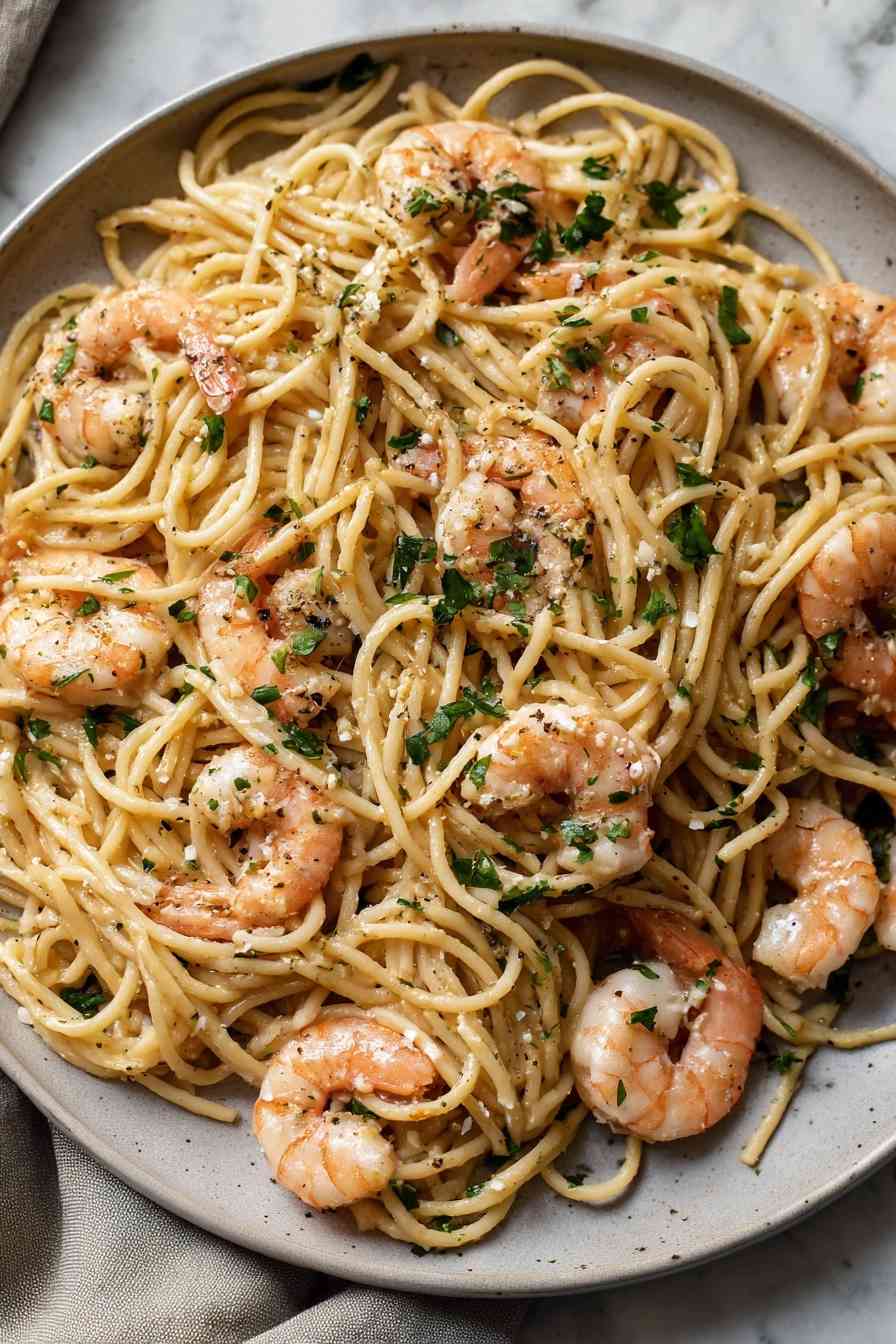
- Pull the shrimp off the heat as soon as they turn opaque. Overcooked shrimp go from tender to rubbery in seconds, so watch them closely and don’t walk away during those final minutes.
- Add the parmesan gradually while stirring. If you dump it all in at once, it can clump instead of melting smoothly into the butter.
- Reserve a splash of pasta water before draining. If the sauce feels too thick or the pasta starts to stick, a tablespoon or two of starchy water will loosen everything without diluting the flavor.
- Use fresh parsley if you can. Dried parsley tastes dusty and flat compared to the bright, grassy punch of fresh leaves.
What to Serve With Garlic Butter Shrimp Pasta
A simple arugula salad with lemon vinaigrette balances the richness of the butter and cheese without overwhelming the delicate shrimp. Garlic bread or a crusty baguette works perfectly for soaking up any extra sauce left on the plate. Roasted asparagus or broccolini adds a crisp, slightly charred vegetable element that complements the pasta without competing for attention.
For a lighter option, serve alongside a fresh tomato salad or steamed green beans tossed with a touch of olive oil. The key is choosing sides that won’t overshadow the garlic butter sauce, which is the star of the dish.
Garlic Butter Shrimp Pasta FAQs & Troubleshooting
Can I use frozen shrimp instead of fresh?
Yes, frozen shrimp work well as long as you thaw them completely and pat them dry before cooking. Excess moisture can cause the shrimp to steam instead of sear, which affects texture. Thaw them overnight in the fridge or run them under cold water for a few minutes.
What’s the best way to prevent overcooking the shrimp?
Watch for the color change from translucent gray to opaque white with pink edges, then remove the pan from heat immediately. Shrimp continue cooking from residual heat, so pulling them early prevents that rubbery texture. If you’re nervous, err on the side of slightly underdone.
Is it possible to use a different pasta shape?
Absolutely. Linguine, spaghetti, or even penne will work, though wider noodles like fettuccine hold the sauce better. If you use a short shape like penne, toss everything thoroughly so the garlic butter coats each piece evenly instead of pooling at the bottom.
How do I make this dish less rich or lighter?
Cut the butter in half and add a bit more lemon juice to brighten the sauce without sacrificing flavor. You can also use half the parmesan or skip it entirely, though the sauce will be thinner and less creamy. A handful of cherry tomatoes adds acidity and freshness.
Can I make garlic butter shrimp pasta dairy-free?
Swap the butter for olive oil and skip the parmesan, or use a dairy-free parmesan alternative if you want that salty, umami finish. The dish will taste lighter and more garlicky without the cheese, so you may want to add a pinch of nutritional yeast for depth.
Storing and Reheating Your Shrimp Pasta
Store leftovers in an airtight container in the fridge for up to 2 days. The shrimp will firm up slightly as they cool, but they’ll still taste good if you reheat gently on the stovetop over low heat with a splash of water or broth to loosen the sauce.
Avoid the microwave if you can, since it tends to overcook the shrimp and make them chewy. Stir frequently and remove from heat as soon as the pasta is warmed through. Freezing isn’t recommended, as shrimp and butter-based sauces don’t hold up well in the freezer and the texture suffers when thawed.
This dish tastes best the day you make it, when the shrimp are still tender and the sauce is glossy and fresh. But if you do have leftovers, a gentle reheat on the stove brings most of that original texture back without much fuss.
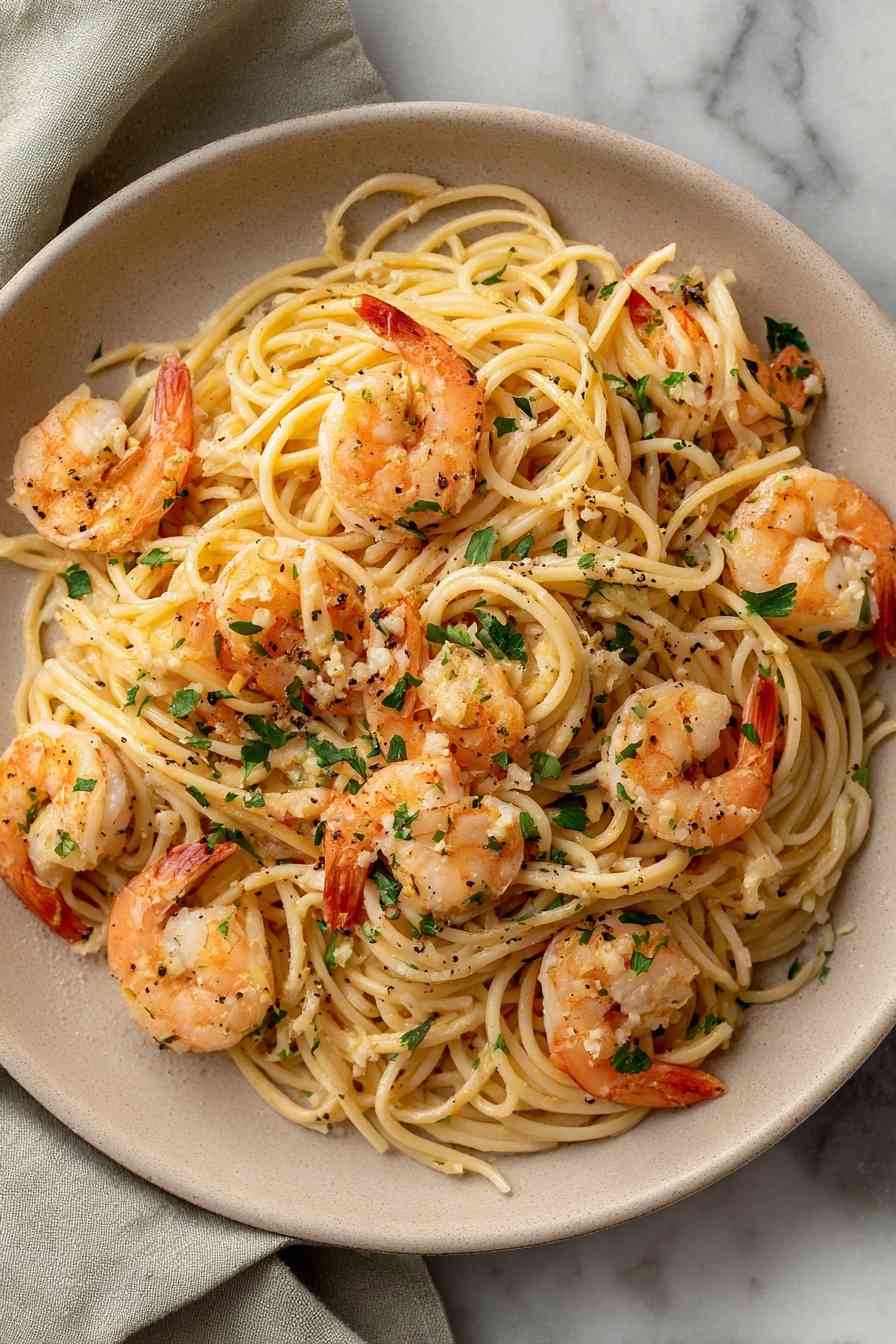
Garlic Butter Shrimp Pasta
Ingredients
Equipment
Method
- Boil a large pot of salted water. Cook the fettuccine until it is al dente, then drain thoroughly and set aside.
- In a pan over medium heat, warm the cooking oil. Sauté the garlic until fragrant, about 2 minutes.
- Add butter to the same pan and let it melt. Add the shrimp and cook, stirring occasionally, until they turn opaque white with some pink, about 4–6 minutes.
- Mix in the lemon juice, lemon zest, parmesan cheese, salt, and black pepper. Stir well so the cheese melts and everything is combined.
- Add the drained fettuccine to the pan and toss to coat the pasta evenly with the sauce.
- Garnish with parsley just before serving.