

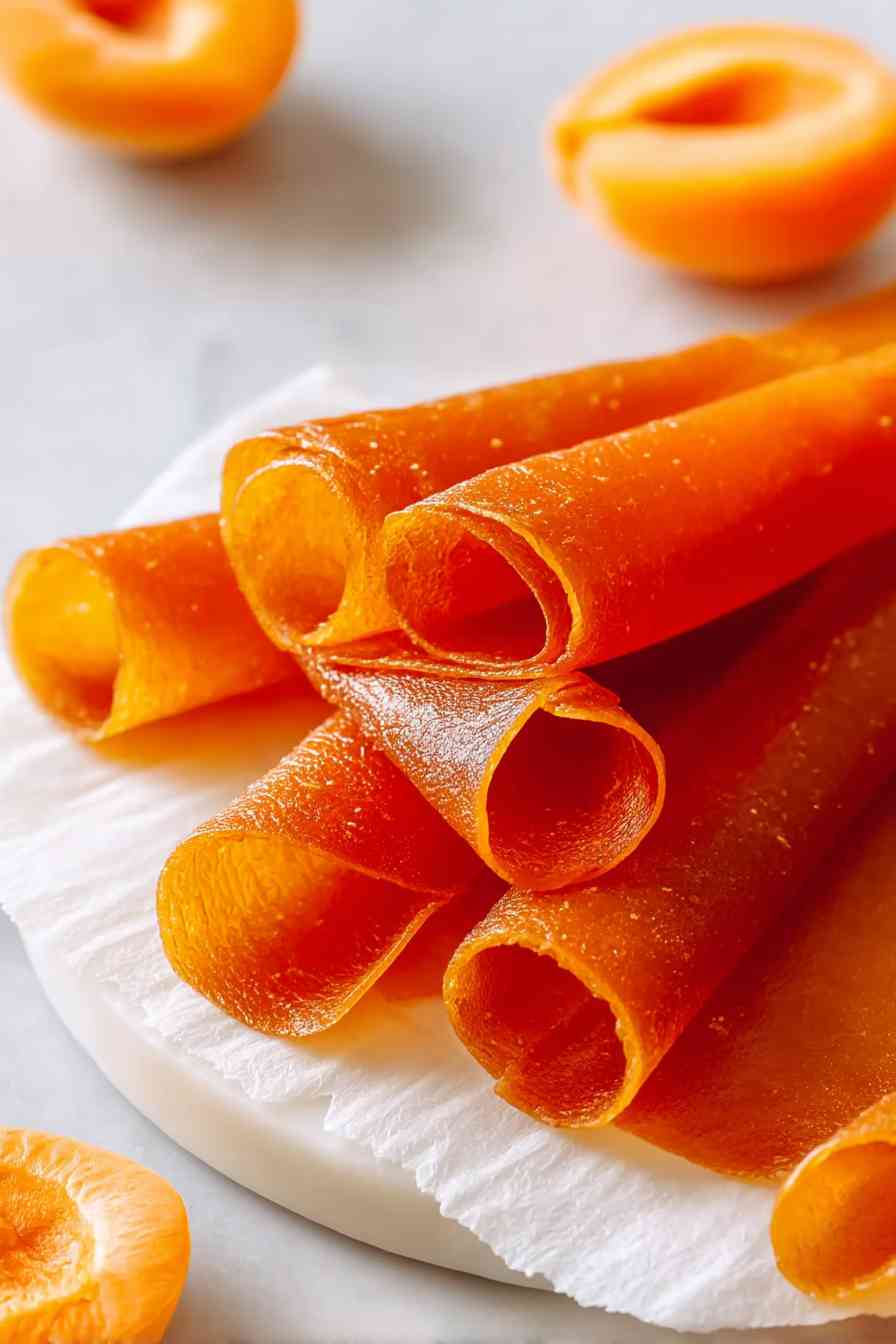
Homemade apricot fruit leather transforms roasted fresh apricots into a naturally sweet, tangy snack.
There’s something deeply satisfying about making fruit leather from scratch, especially when you start with ripe apricots at their peak. The process feels almost magical, turning fresh fruit into something portable, shelf-stable, and fun to eat. Roasting the apricots at 400°F before blending concentrates their natural sugars and deepens the flavor in a way that raw fruit just can’t match. You end up with a snack that tastes like summer, rolled up and ready whenever you need it.
This method gives you control over sweetness, texture, and thickness. You can dry the puree in the oven for consistency or let the sun do the work if the weather cooperates. Either way, the result is a chewy, pliable sheet that peels away cleanly and stores beautifully. It’s a make-ahead project that rewards patience with something genuinely delicious.
What You’ll Need for Apricot Fruit Leather
The ingredient list stays short and focused, letting the apricots shine without unnecessary distractions.
- Fresh apricots – roasted to concentrate their natural sweetness and create a smooth, flavorful base for the leather.
- Cane sugar – balances the tartness of the apricots and helps preserve the finished product.
- Fresh lemon juice – adds brightness, enhances the fruit’s natural acidity, and acts as a preservative.
- Fine sea salt – amplifies the apricot flavor without making the leather taste salty.
How to Make Apricot Fruit Leather, Step by Step
STEP 1: Wash the apricots thoroughly, halve them, and remove the pits, discarding any bruised or damaged spots. Arrange the halves cut-side up on a baking sheet and roast at 400°F for 15 minutes until they soften and release their juices. Let them cool for about 5 minutes before moving to the next step.
STEP 2: Transfer the cooled roasted apricots to a blender and pulse until completely smooth, working in batches if needed. Pour the puree into a large bowl and stir in the cane sugar, fresh lemon juice, and fine sea salt until well combined. Taste the mixture at this point to adjust sweetness if your apricots are especially tart or sweet.
STEP 3: Line a baking sheet with parchment paper and pour the seasoned puree onto it. Use an offset spatula or the back of a spoon to spread it evenly to a thickness of 1/8 to 1/4 inch. Thinner layers dry faster and more evenly, while thicker layers take longer but offer a chewier texture.
STEP 4: Dry the puree using your preferred method. For sun-drying, place the sheet in direct sunlight for 6 to 12 hours, turning occasionally, until the surface is no longer sticky. For oven-drying, bake at 200°F for 3 to 3.5 hours, checking periodically. The leather is ready when it feels dry on the surface but still has slight pliability.
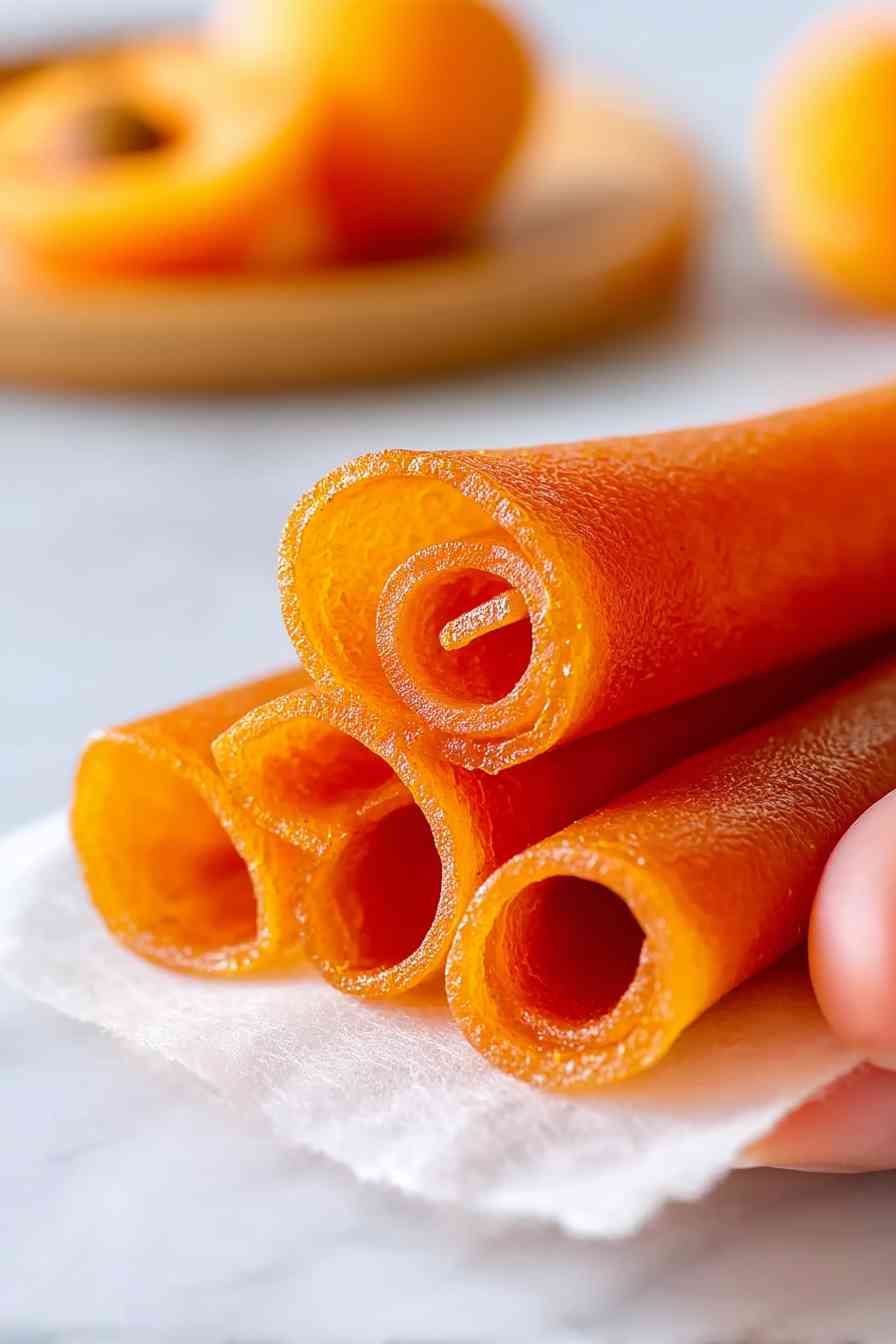
STEP 5: Remove the fruit leather from the heat source and let it cool completely on the baking sheet, about 30 minutes. Gently peel the leather away from the parchment paper, then roll it tightly into a cylinder or cut it into strips. Use additional parchment paper between layers to prevent sticking.
Getting the Best Texture and Flavor in Your Fruit Leather
- Inspect your apricots carefully before roasting. Bruised or damaged spots will create off-flavors and interfere with the smooth texture of the finished leather.
- Spread the puree as evenly as possible across the parchment. Uneven thickness leads to some areas drying too quickly while others stay sticky, and you’ll end up with brittle edges and tacky centers.
- Check the leather frequently during the final hour of drying. Overdrying makes it brittle and hard to roll, while underdrying leaves it sticky and prone to mold during storage.
- If you’re sun-drying, choose a day with low humidity and consistent sunshine. Cover the sheet loosely with cheesecloth to keep insects away without blocking airflow.
Tasty Ways to Enjoy Apricot Fruit Leather
Roll it up and pack it in lunchboxes for a naturally sweet snack that doesn’t need refrigeration. Cut the leather into small squares and layer it into trail mix with nuts, seeds, and dark chocolate chips for a portable energy boost. You can also chop it finely and stir it into yogurt or oatmeal for a concentrated burst of apricot flavor.
Apricot Fruit Leather Questions: Troubleshooting, Substitutions & More
Can I use other fruits instead of apricots?
You can substitute peaches, plums, or nectarines using the same roasting and blending method. Berries work well too, though they may need slightly less sugar depending on their natural sweetness. Adjust the drying time based on the water content of your chosen fruit.
Do I have to use the oven, or can I sun-dry the leather?
Both methods work, but sun-drying requires consistent dry weather and takes longer. The oven offers more control over temperature and timing, making it easier to avoid overdrying. If you live in a humid climate, the oven is your best option.
How do I know when the fruit leather is done drying?
Touch the surface lightly with your finger. It should feel dry and smooth, not sticky or tacky. The leather should peel away from the parchment cleanly and have slight flexibility when you bend it. If it cracks or shatters, it’s overdried.
Is it possible to make this recipe without added sugar?
You can skip the sugar if your apricots are very ripe and sweet, but the leather will be more tart and may not store as long. Sugar acts as a preservative and helps balance the acidity of the lemon juice.
Why did my fruit leather turn out brittle or sticky?
Brittle leather was dried too long or at too high a temperature. Sticky leather wasn’t dried enough or was spread too thick. Adjust your drying time and check the texture frequently during the final hour to catch it at the right moment.
How to Store Homemade Apricot Fruit Leather
Store the rolled or cut fruit leather in an airtight container at room temperature for up to 2 weeks. Keep parchment paper between layers to prevent sticking. For longer storage, refrigerate the container for up to a month, or freeze individual rolls wrapped tightly in plastic wrap for up to 3 months. Thaw frozen leather at room temperature for about 20 minutes before unwrapping.