
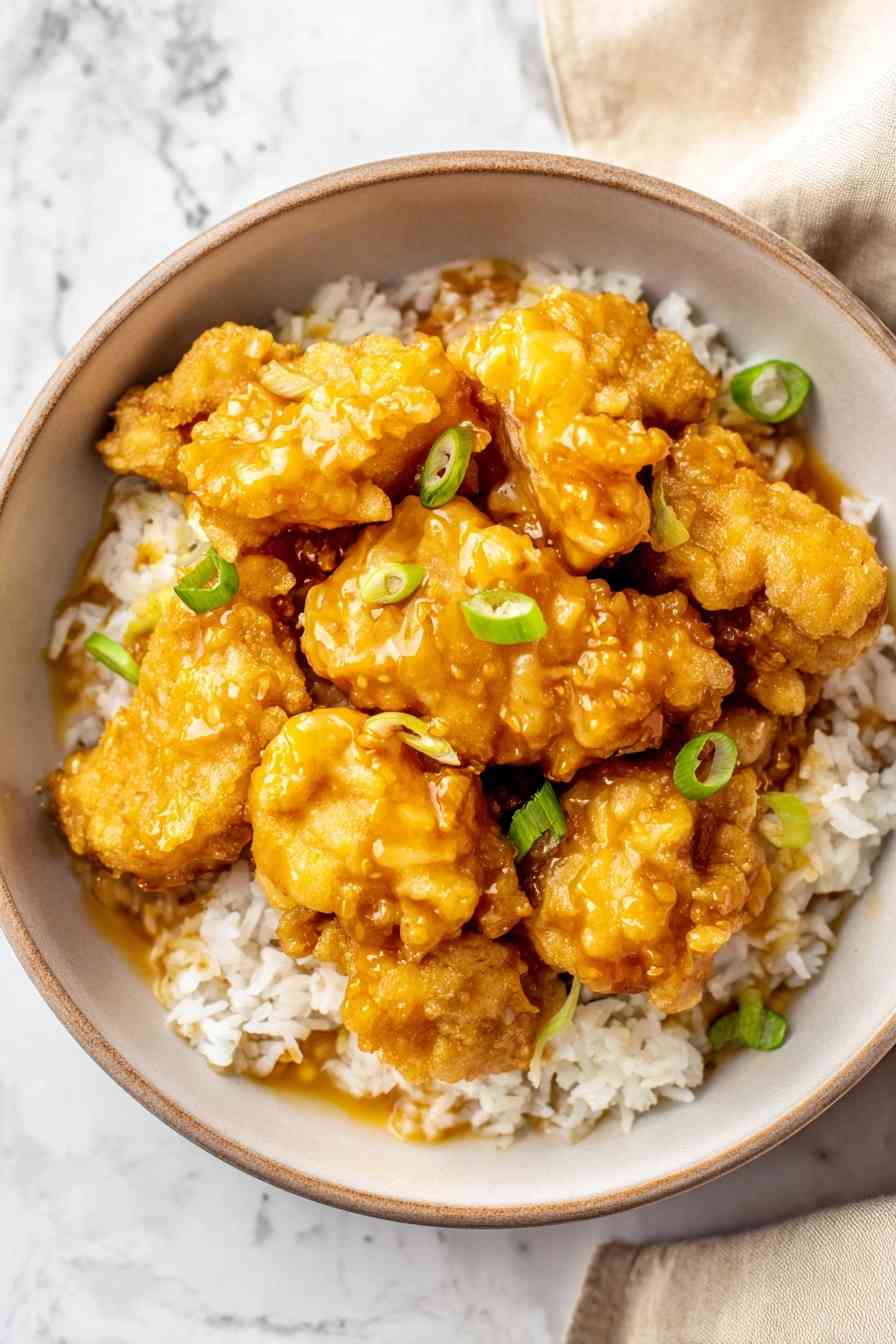
Homemade Orange Chicken delivers golden, crispy fried chicken bites coated in a sticky, sweet-tart orange glaze.
The contrast is unbeatable: crunchy on the outside, tender inside, then slicked with a sauce that hits every note from honey sweetness to bright citrus tang. You get all the takeout satisfaction without wondering what’s actually in the coating or the glaze. Just chicken, a simple batter, and a sauce built from orange juice, honey, soy sauce, and a handful of warm spices.
The magic happens in two stages. First, you coat bite-sized chicken pieces in egg and a cornstarch-flour blend, then fry them in small batches until they turn deeply golden. While the chicken drains, you simmer the sauce on the stove, thickening it quickly with a cornstarch slurry until it clings to the back of a spoon. Toss everything together, and you’ve got restaurant-level texture with flavors you can actually control.
What You’ll Need for Homemade Orange Chicken
This recipe relies on straightforward ingredients that work together to create serious crunch and bold citrus flavor.
- Boneless chicken breasts – chopped into bite-sized chunks for quick frying and maximum surface area.
- Eggs – bind the coating to the chicken and help the flour mixture stick during frying.
- Cornstarch and all-purpose flour – the combination creates a light, crispy shell that stays crunchy even after saucing.
- Salt and black pepper – season the coating so the chicken itself has flavor before it hits the glaze.
- Cooking oil – use a neutral oil with a high smoke point like vegetable or canola for clean, even frying.
- Orange juice – the base of the sauce, providing bright citrus flavor and natural sweetness.
- Honey – adds viscosity and a rich sweetness that balances the acidity of the orange and vinegar.
- White vinegar – cuts through the sweetness with sharp tang and keeps the sauce from feeling one-dimensional.
- Soy sauce – brings umami depth and a savory backbone to the glaze.
- Orange zest – amplifies the citrus aroma and adds concentrated orange oil flavor.
- Garlic powder, ginger powder, and paprika – layer in warmth, subtle spice, and a hint of color.
- Red pepper flakes – provide a gentle heat that lingers without overwhelming the sweetness.
- Cornstarch slurry – thickens the sauce in seconds, turning it glossy and sticky enough to coat every piece of chicken.
Step-by-Step: Making Crispy Orange Chicken at Home
STEP 1: Chop the chicken breasts into bite-sized chunks, keeping the pieces roughly the same size so they cook evenly. Zest one orange to get about a tablespoon of zest, then juice enough oranges to yield one cup of juice.
STEP 2: Beat the eggs in one bowl. In a separate bowl, whisk together the cornstarch, flour, salt, and pepper. Working in small batches, dip a handful of chicken chunks into the egg, let the excess drip off, then toss them in the flour mixture until fully coated. Shake off any loose coating and set the pieces on a plate. Repeat until all the chicken is coated.
STEP 3: Pour two to three inches of oil into a heavy-bottomed pot and heat over medium-high until it reaches 350°F on a thermometer. Add the chicken in small batches, frying for two to three minutes until the coating turns golden brown and crispy. Transfer the cooked chicken to a plate lined with paper towels. Continue frying in batches, letting the oil return to temperature between each round.
STEP 4: Mix half a tablespoon of cornstarch with one tablespoon of warm water to create a smooth slurry. In a medium saucepan, combine the orange juice, honey, vinegar, soy sauce, orange zest, garlic powder, ginger powder, paprika, red pepper flakes, and the cornstarch slurry. Heat over medium, stirring gently, until the sauce thickens and turns glossy, about two to three minutes.
STEP 5: Transfer the fried chicken to a large bowl, pour the warm sauce over the top, and toss until every piece is coated.
STEP 6: Garnish with extra red pepper flakes and chopped green onions if desired, then serve immediately over rice.
Tips for Perfectly Crunchy, Flavorful Chicken
- Keep the oil temperature steady at 350°F. If it drops too low, the coating absorbs oil and turns soggy instead of crisping up. Use a thermometer and adjust the heat between batches.
- Fry in small batches to avoid crowding the pot. Overcrowding lowers the oil temperature and prevents the chicken from developing a golden, crunchy shell.
- Toss the chicken with the sauce right before serving. The longer the chicken sits in the glaze, the more the coating softens. If you need to hold it, keep the chicken and sauce separate until plating.
- Mix the cornstarch slurry thoroughly before adding it to the sauce. Lumps won’t dissolve once the sauce heats, and you’ll end up with uneven texture.
Best Sides to Serve with Orange Chicken
Steamed jasmine or basmati rice soaks up the extra sauce and balances the richness of the fried chicken. Stir-fried vegetables like snap peas, broccoli, or bell peppers add crunch and a fresh contrast to the sweet glaze. A simple cucumber salad with rice vinegar and sesame oil cuts through the heaviness and refreshes the palate between bites.
Orange Chicken FAQs: Substitutions, Leftovers, and More
Can I use chicken thighs instead of chicken breasts for orange chicken?
Yes, boneless skinless chicken thighs work beautifully and stay even more tender during frying. They have slightly more fat than breasts, which means they’re harder to overcook. Just chop them into similar-sized chunks so the frying time stays consistent across the batch.
Is it possible to bake the chicken instead of frying?
You can bake the coated chicken at 425°F on a wire rack for about 20 minutes, flipping halfway through. The texture won’t be quite as crispy as deep-fried, but brushing the pieces lightly with oil before baking helps them brown and crisp up more effectively.
How do I keep the chicken crispy after adding the sauce?
Toss the chicken with the sauce immediately before serving, not in advance. The coating starts softening the moment it touches the glaze. If you’re serving family-style, consider keeping some chicken unsauced on the side so guests can add their own and preserve the crunch.
What can I substitute for honey in the orange sauce?
Maple syrup or agave nectar both work as one-to-one replacements. Maple adds a deeper, slightly earthy sweetness, while agave keeps the flavor lighter and closer to honey. Granulated sugar dissolved in a tablespoon of warm water also works in a pinch.
Can orange chicken be made gluten-free?
Swap the all-purpose flour for a gluten-free flour blend and use tamari instead of soy sauce. The cornstarch is already gluten-free, so the coating will still fry up crispy. Just make sure your flour blend contains xanthan gum or another binder for the best texture.
Storing and Reheating Your Leftover Orange Chicken
Store leftover orange chicken in an airtight container in the fridge for up to three days. The coating will soften in storage, but reheating in a hot oven or air fryer can bring back some of the crispness. Spread the chicken on a baking sheet and reheat at 375°F for about 10 minutes, or air fry at 360°F for five to six minutes.
Freezing isn’t ideal because the sauce and coating don’t hold up well after thawing. If you want to prep ahead, freeze the cooked, unsauced chicken separately. Thaw it in the fridge, reheat until crispy, then make a fresh batch of sauce and toss everything together right before serving.
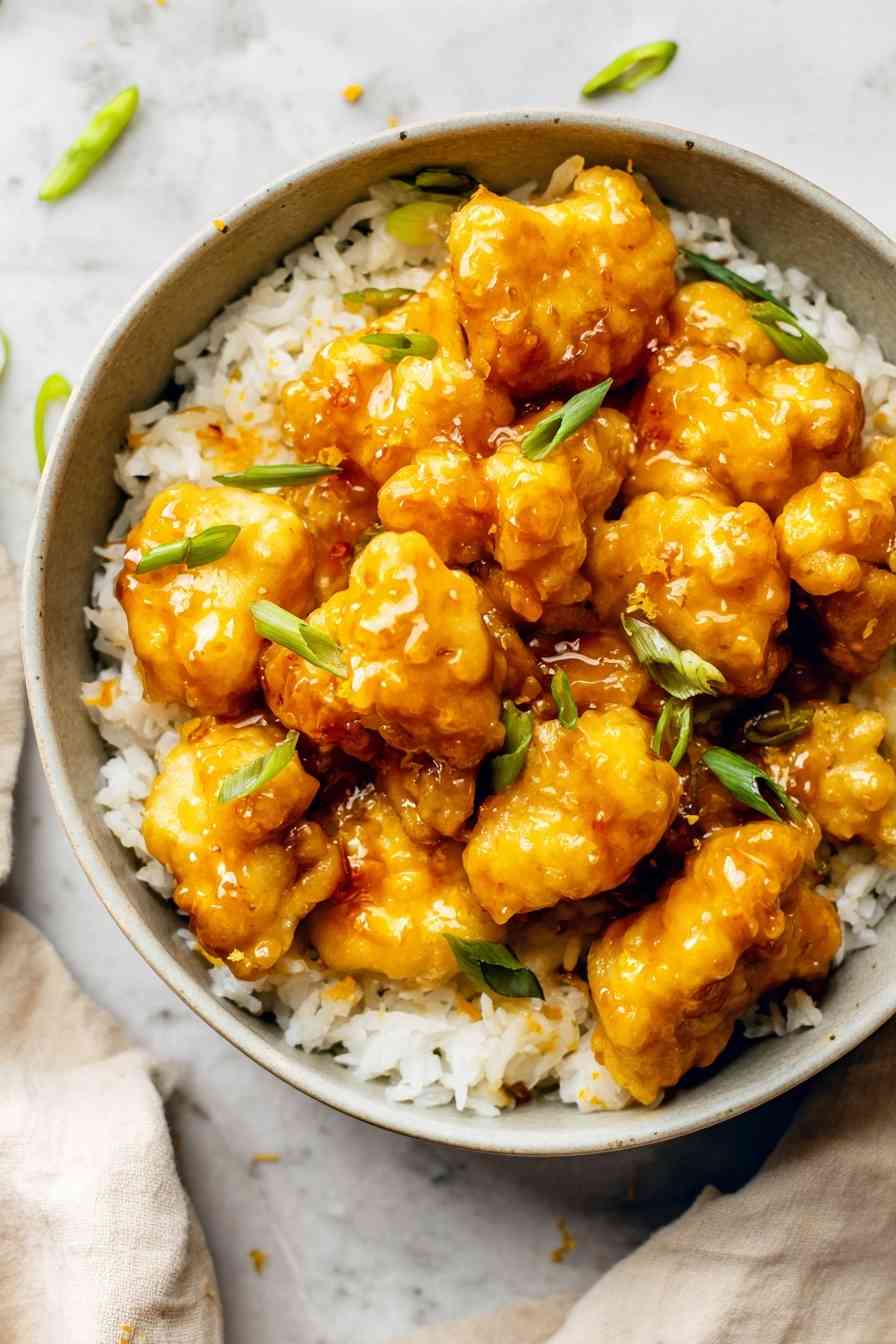
Homemade Orange Chicken
Ingredients
Equipment
Method
- Cut the chicken breasts into bite-sized pieces. Zest one orange to yield 1 tablespoon of zest, and juice oranges if using fresh.
- Beat the eggs in a bowl. In a separate bowl, whisk together 1/3 cup cornstarch, 1/3 cup flour, salt, and pepper. Dip the chicken pieces in the beaten eggs, then toss them in the flour-cornstarch mixture until evenly coated. Shake off the excess and set on a plate. Continue until all chicken is coated.
- Pour 2 to 3 inches of oil into a heavy-bottomed pot and heat over medium-high until it reaches 350°F (use a thermometer). Working in batches, fry the coated chicken pieces for 2 to 3 minutes, until crisp and golden brown. Transfer to a paper towel-lined plate and repeat with remaining chicken.
- Stir 1/2 tablespoon cornstarch together with 1 tablespoon warm water to form a smooth slurry.
- Add the orange juice, honey, white vinegar, soy sauce, orange zest, garlic powder, ginger powder, paprika, red pepper flakes, and the cornstarch slurry to a saucepan. Cook over medium heat, stirring, until the sauce thickens to a glossy consistency, about 2 to 3 minutes.
- Place the cooked chicken in a large bowl. Pour the warm orange sauce over top and toss to coat all the pieces evenly.
- If desired, garnish with extra red pepper flakes and sliced green onions. Serve immediately with rice.