
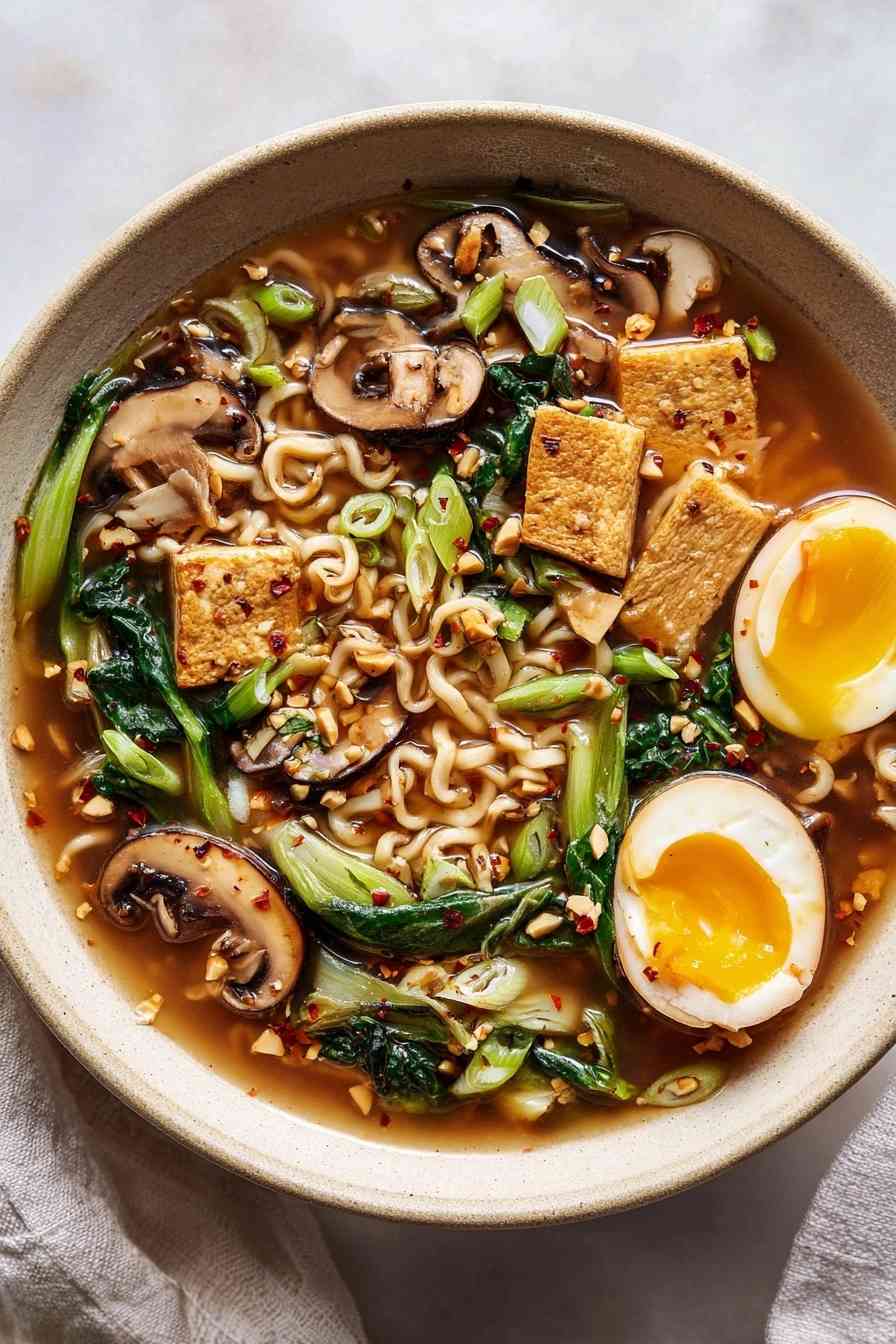
Homemade Ramen transforms instant noodles into a rich, satisfying bowl with juicy chicken, bold broth, and classic toppings.
You’re starting with instant ramen noodles, but tossing the flavor packet and building your own broth from scratch. The result is a deeply savory, customizable bowl that’s loaded with texture and flavor, from golden-seared chicken to soft-boiled eggs and crunchy peanuts. Once you taste the difference between a packet and a pot of simmered broth spiked with soy sauce, hot sauce, and honey, there’s no going back.
The technique here is straightforward but intentional. You sear chicken in the pot to build fond, deglaze with broth or cooking wine to capture every bit of flavor, then simmer the broth with aromatics and spices until it’s concentrated and full-bodied. Baby bella mushrooms get sautéed separately so they stay firm and meaty, and bok choy goes in at the end to keep its bite. The noodles cook right in the broth, soaking up all that savory goodness.
This is the kind of bowl that feels indulgent but comes together with pantry staples and a little patience. The toppings—soft-boiled eggs, green onions, and honey-roasted peanuts—add layers of richness and crunch that make each bite feel complete.
Step-by-Step: Building Your Ramen Bowl
STEP 1: Heat 1 tablespoon olive oil and 1 tablespoon butter in a large soup pot over medium-high heat. Add the sliced mushrooms and sauté until they turn golden and release their moisture, about 4 minutes. Remove the mushrooms and set them aside so they stay firm and don’t get soggy later.
STEP 2: Slice the chicken breast in half lengthwise to create two thinner cutlets. Cover with plastic wrap and use the textured side of a meat mallet to pound each piece to about ½ inch thick. Pat the chicken dry with paper towels and season both sides with salt and pepper.
STEP 3: Heat the remaining 1 tablespoon olive oil and 1 tablespoon butter in the same pot over medium-high heat. Sear the chicken for 4 to 5 minutes per side until deeply golden and cooked through. Remove the chicken, let it rest for 10 minutes, then slice it into strips.
STEP 4: Add the halal chicken broth or non-alcoholic white cooking wine alternative to the pot over medium heat. Scrape up all the browned bits from the bottom of the pot with a wooden spoon. Let the liquid bubble and reduce by half, about 4 to 5 minutes. This deglazing step captures all the flavor from searing the chicken.
STEP 5: Add 1 tablespoon butter and the minced garlic to the pot. Cook for 2 minutes until fragrant. Then add the chicken broth, soy sauce, hot sauce, honey, sesame oil, onion powder, mustard powder, ground ginger, white pepper, and red pepper flakes. Bring the broth to a gentle boil, then reduce to a simmer and cook for 10 minutes to concentrate the flavors.
STEP 6: Bring the broth to a rapid boil. Add the instant ramen noodles (discard the flavor packets) and cook for 1 minute. Reduce the heat to a gentle simmer, then add the bok choy, cooked mushrooms, and sliced chicken. Simmer until the noodles are tender, about 3 more minutes.
STEP 7: While the broth simmers, prepare the soft-boiled eggs. Place the eggs in a pot and cover with cool water. Bring to a gentle boil, then cook for exactly 6 minutes. Transfer the eggs to a bowl of cool water, let them sit for a few minutes, then peel carefully.
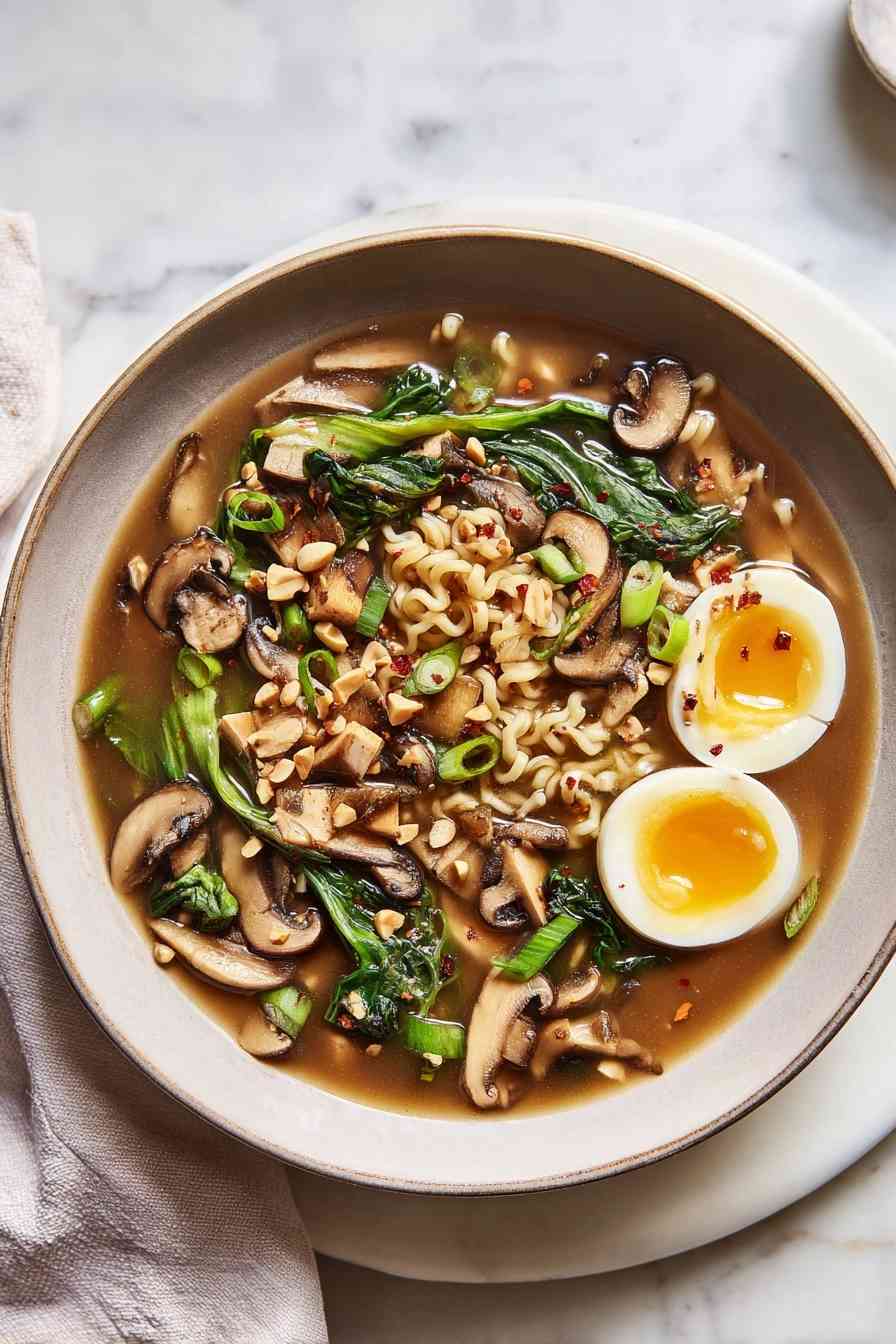
STEP 8: Ladle the ramen into serving bowls. Top each bowl with sliced green onions, roughly chopped honey-roasted peanuts, and a halved soft-boiled egg.
What Goes Into Homemade Ramen: Key Ingredients & Toppings
Building a flavorful ramen bowl starts with a mix of proteins, aromatics, and toppings that work together to create depth and texture.
- Chicken breast – seared and sliced into juicy strips that add protein and richness to the bowl.
- Baby bella mushrooms – sautéed separately until golden to preserve their firm, meaty texture and boost umami.
- Instant ramen noodles – cooked right in the broth without the flavor packet, they absorb all the savory goodness from the soup.
- Chicken broth – the base of the soup, simmered with aromatics and spices to build a concentrated, flavorful broth.
- Soy sauce – adds salty, umami depth that anchors the broth.
- Hot sauce and honey – balance heat and sweetness, rounding out the flavor profile with complexity.
- Toasted sesame oil – contributes a nutty, aromatic finish that ties the broth together.
- Garlic, onion powder, mustard powder, ginger, white pepper, and red pepper flakes – a spice blend that adds warmth, depth, and subtle heat.
- Bok choy – added at the end to retain its crisp texture and mild, slightly sweet flavor.
- Soft-boiled eggs – creamy yolks add richness and make the bowl feel complete.
- Green onions and honey-roasted peanuts – fresh, crunchy toppings that add contrast and a final layer of flavor.
Pro Tips for Restaurant-Quality Homemade Ramen
- Don’t skip deglazing the pot. After searing the chicken, those browned bits stuck to the bottom hold serious flavor. Scraping them up with broth or cooking wine is what gives your soup that deep, savory backbone.
- Sauté the mushrooms separately. Cooking them first and setting them aside keeps them firm and meaty instead of waterlogged. Add them back at the end so they stay golden and flavorful.
- Watch the noodles closely. Instant ramen noodles cook fast, especially in hot broth. Pull them off the heat as soon as they’re tender to avoid a mushy texture.
- Time your soft-boiled eggs carefully. Six minutes in gently boiling water gives you a jammy, creamy yolk. Overcook by even a minute and you’ll lose that silky texture.
What to Serve with Your Homemade Ramen
A bowl of ramen pairs well with light, contrasting sides that balance the richness of the broth.
- Crispy spring rolls or potstickers – add a crunchy, savory side that contrasts with the rich broth.
- Cucumber salad with rice vinegar and sesame seeds – a cool, tangy bite that cuts through the richness of the ramen.
- Steamed edamame with sea salt – a simple, protein-packed side that keeps the meal light and balanced.
Homemade Ramen FAQs: Substitutions, Noodles, and More
Can I use a different protein instead of chicken?
Absolutely. Thinly sliced pork, shrimp, or even tofu work well here. Sear pork or shrimp the same way you would chicken, or pan-fry tofu until golden before slicing. Adjust cooking times based on the protein you choose, but the broth-building process stays the same.
What type of mushrooms work best in ramen?
Baby bella mushrooms are ideal because they hold their shape and add earthy umami without getting slimy. Shiitake mushrooms are another great option if you want a more traditional ramen flavor. Slice them thin and sauté until golden for the best texture.
Is it possible to make this ramen vegetarian?
Yes. Swap the chicken for firm tofu or extra mushrooms, and use vegetable broth instead of chicken broth. Keep the soy sauce, sesame oil, and spices the same. The broth will still be rich and flavorful, especially if you add a splash of miso paste for extra depth.
How do I get perfectly soft-boiled eggs for ramen?
Start with cool water, bring it to a gentle boil, then cook the eggs for exactly 6 minutes. Transfer them immediately to cool water to stop the cooking process. Peel gently under running water to avoid tearing the whites. The yolk should be jammy and slightly runny in the center.
Can I use fresh ramen noodles instead of instant?
Fresh ramen noodles work beautifully and give the dish a more authentic texture. Cook them separately according to package instructions, then add them to the broth just before serving. Fresh noodles usually take 2 to 4 minutes to cook, so adjust timing accordingly.
How to Store and Reheat Leftover Ramen
Store the broth, noodles, chicken, and vegetables separately in airtight containers in the fridge for up to 3 days. Keeping the components apart prevents the noodles from absorbing too much liquid and turning mushy. Reheat the broth on the stovetop over medium heat until simmering, then add the noodles, chicken, and vegetables. Warm through for 2 to 3 minutes.
Soft-boiled eggs don’t reheat well, so prepare fresh eggs when you’re ready to serve leftovers. If you have uncooked eggs, boil them fresh and add them to the reheated bowls. The broth freezes well for up to 2 months, but freeze it without the noodles or vegetables. Thaw overnight in the fridge, then reheat and add freshly cooked noodles and toppings.
Homemade Ramen
Ingredients
Equipment
Method
- In a large soup pot, heat 1 tablespoon olive oil and 1 tablespoon butter over medium-high. Add the sliced mushrooms and cook for about 4 minutes, stirring often, until golden brown. Remove the mushrooms from the pot and set aside.
- Slice the chicken breast in half horizontally to create two thinner cutlets. Place between plastic wrap and pound each to about 1/2 inch thickness with a meat mallet.
- Pat the chicken pieces dry and season well on both sides with salt and pepper.
- Add the remaining 1 tablespoon olive oil and 1 tablespoon butter to the pot. Once hot, add chicken and cook for 4–5 minutes per side, or until golden and cooked through. Transfer chicken to a plate, let it rest 10 minutes, then slice into strips.
- Pour the 1/2 cup halal chicken broth or non-alcoholic cooking wine into the pot over medium heat, scraping up any browned bits. Allow the liquid to simmer and reduce by half, about 4–5 minutes.
- Stir in 1 tablespoon butter and add the minced garlic. Cook for 2 minutes, stirring often.
- Add the 6 cups chicken broth, soy sauce, hot sauce, honey, sesame oil, onion powder, mustard powder, ground ginger, white pepper, and red pepper flakes. Bring to a gentle boil, then reduce heat and simmer for 10 minutes to develop flavor.
- For the soft-boiled eggs: Submerge eggs in cool water and bring to a gentle boil. Cook for 6 minutes, then transfer eggs to a bowl of cool water. Once cool, peel the eggs and slice in half.
- Increase the heat to bring the broth to a rapid boil. Add the ramen noodles and cook for 1 minute.
- Lower the heat to a gentle simmer and stir in bok choy, cooked mushrooms, and sliced chicken. Simmer for about 3 minutes longer, or until the noodles are done.
- Divide ramen among serving bowls. Top each with sliced green onions, chopped honey-roasted peanuts, and halved soft-boiled eggs before serving.