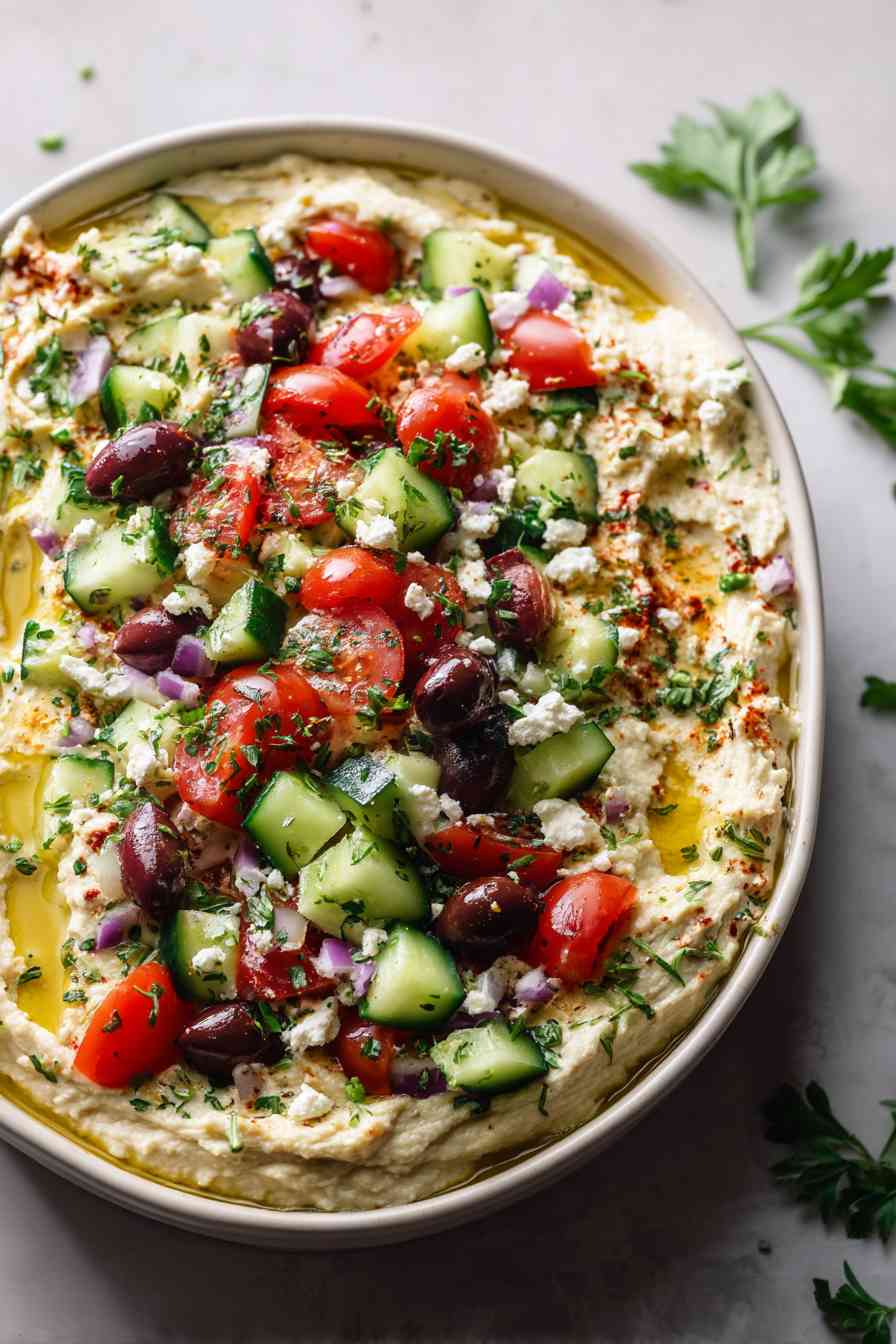

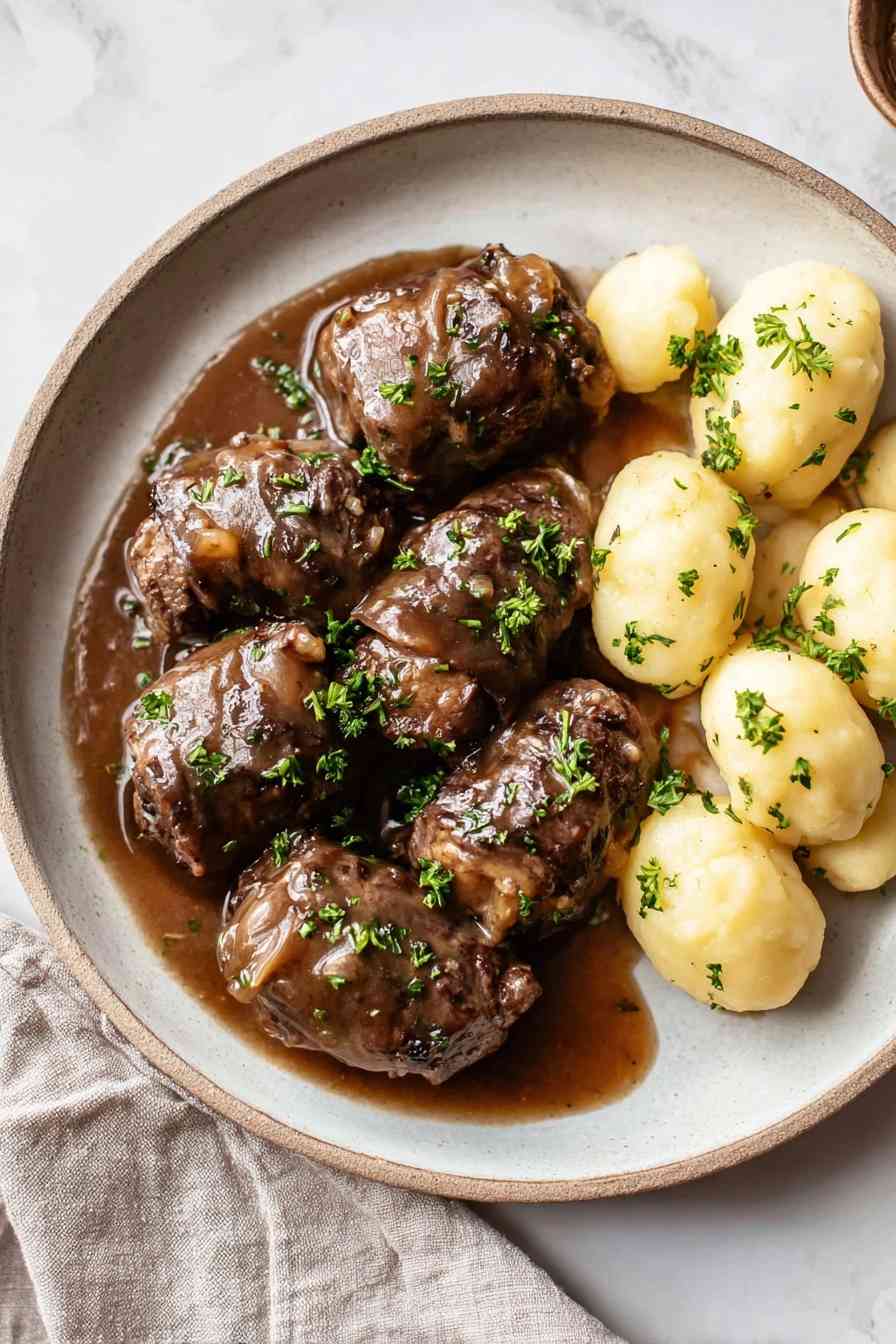
Mama’s German Beef Rouladen is a traditional German dish of thin beef rolls filled with mustard, bacon, pickles, and onions.
This is the kind of dish that shows up when company comes over, when the weather turns crisp, and when you want something that feels both festive and deeply comforting. Thin top round beef slices get filled with mustard, bacon, onions, and dill pickles, then rolled tight, seared until golden, and simmered low and slow in a non-alcoholic red wine braising liquid until they’re fork-tender and glossy. The whole process takes a bit of patience, but the payoff is a centerpiece that looks impressive and tastes like a warm hug from someone’s German grandmother.
The beauty of rouladen lies in the contrast between the tangy pickle spears, the smoky bacon, and the rich, savory gravy that forms as everything braises together. Securing each roll with butcher’s twine keeps the filling tucked in place during the long simmer, and the cornstarch-thickened gravy at the end has a sheen that makes the whole platter look restaurant-worthy. It’s a make-ahead showstopper for special occasions.
What Goes Into Mama’s German Beef Rouladen
The ingredient list here is all about building layers of flavor that meld together during the braise, creating a dish that’s tangy, savory, and deeply satisfying.
- Top round beef slices – pounded thin to about 1/4 inch, these are the foundation of each roll and need to be tender enough to wrap around the filling without tearing.
- German or dijon mustard – spread across each beef slice to add sharpness and a slight heat that balances the richness of the bacon and gravy.
- Beef bacon – adds smoky depth and a bit of fat that keeps the rolls moist during the long simmer.
- Onion – sliced lengthwise and tucked into each roll, it softens and sweetens as the rouladen braise.
- Garlic dill pickles – the tangy, briny backbone of the filling, cut into spears so they stay intact and provide bursts of flavor in every bite.
- Butter and olive oil – used for searing the rouladen until they develop a deep golden crust that locks in flavor.
- Non-alcoholic red wine alternative – red grape juice or halal red cooking wine creates a rich base for the braising liquid without any alcohol.
- Beef broth – adds savory depth to the braising liquid and helps form the foundation of the gravy.
- Halal Worcestershire sauce – brings umami and a subtle tang to the braising liquid.
- Bay leaf, sugar, salt, and pepper – round out the seasoning and balance the acidity from the pickles and wine alternative.
- Cornstarch – mixed with cold water to create a slurry that thickens the strained braising liquid into a glossy, pourable gravy.
Rolling, Searing, and Braising: How to Make Beef Rouladen
STEP 1: Lay the beef slices out on a clean work surface in assembly-line fashion, with the narrowest end of each slice at the bottom. Spread each slice with about 1 tablespoon of mustard, then season with salt and black pepper. Place a strip of beef bacon lengthwise on each slice, then arrange 2 to 3 pickle spears and some sliced onions on the bottom third.
STEP 2: Roll the beef up from the narrow end, tucking in the sides if the slices are wide enough, and place each roll seam-side down. Secure both ends with butcher’s twine, tying the knots on the seam side and trimming the excess.
STEP 3: Heat butter and oil in a heavy Dutch oven or large deep skillet over medium to medium-high heat. Working in batches, sear the rouladen on all sides until deeply browned, then transfer them to a plate.
STEP 4: Add the chopped onions to the same pan and cook over medium heat until softened and translucent, about 5 minutes. Stir in the minced garlic and cook for 1 minute, then add the celery and cook for 5 minutes more.
STEP 5: Pour in the non-alcoholic red wine alternative and bring to a rolling boil for 3 minutes. Add the beef broth, Halal Worcestershire sauce, bay leaf, sugar, salt, and pepper, then nestle the seared rouladen and any accumulated juices back into the pot. Top up with extra stock or water if needed to cover the rolls.
STEP 6: Cover the pot and cook over low heat on the stovetop, or in a 325°F oven, for about 90 minutes or until the rouladen are fork-tender. Remove the rouladen to a warm platter and strain the braising liquid through a mesh strainer.
STEP 7: Return the strained liquid to the pot and bring to a rolling simmer. Create a slurry by mixing cornstarch with cold water, then stir it gently into the liquid until the gravy is slightly thickened and glossy. Season to taste with salt, pepper, and optional sugar or mustard.
STEP 8: Cut away the twine from the rouladen and serve drizzled with the warm gravy.
What to Serve with German Beef Rouladen
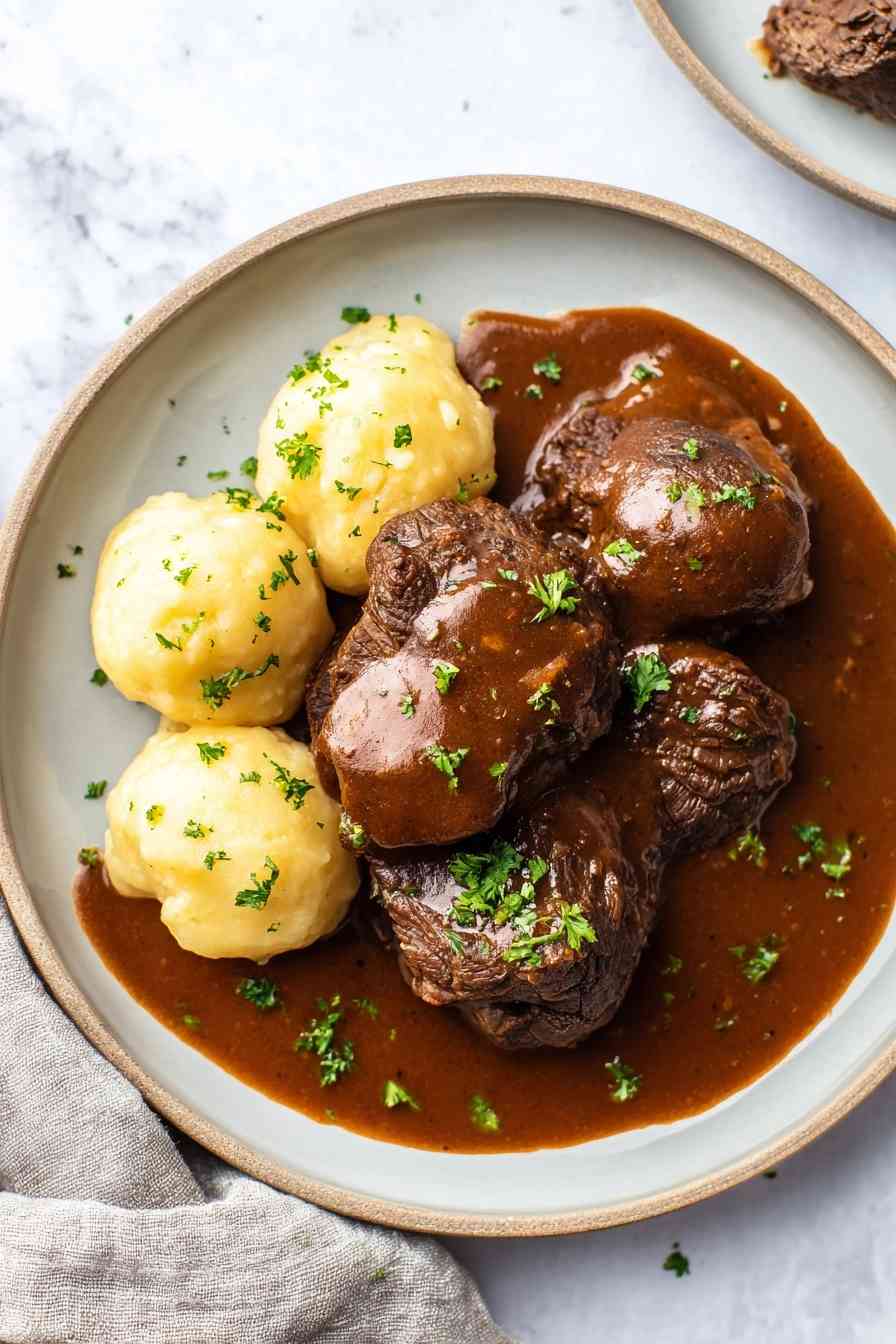
Rouladen pairs beautifully with sides that soak up the rich gravy and balance the tangy, savory filling. Buttery mashed potatoes or spätzle are classic choices that let you enjoy every drop of the glossy gravy. Braised red cabbage with apples adds a sweet-tart contrast that complements the pickles and bacon. Roasted root vegetables or steamed green beans keep the plate from feeling too heavy while adding color and texture.
Tips for Perfect Beef Rouladen Every Time
- Sear in batches – avoid crowding the pan to ensure a deep golden crust on all sides and better flavor in the final gravy.
- Tie the twine snugly – secure it on the seam side so the knots don’t interfere with browning, and trim the excess close to the knot.
- Check for doneness – pierce with a fork after 90 minutes; if the beef isn’t fork-tender, cover and simmer for another 15 to 20 minutes.
- Strain before thickening – remove any bits of vegetable or bay leaf from the braising liquid to keep the gravy smooth and glossy.
Beef Rouladen: Frequently Asked Questions
Can I prepare beef rouladen in advance for entertaining?
You can roll and tie the rouladen up to a day ahead, then cover and refrigerate them until you’re ready to sear and braise. This makes the day-of cooking much easier and lets you focus on sides and gravy.
What are the best substitutes for non-alcoholic red wine in the braising liquid?
Red grape juice works well and adds a subtle sweetness, while halal red cooking wine or a mix of beef broth with a splash of balsamic vinegar can mimic the acidity and depth of traditional red wine.
Is there a trick to keeping the rouladen from unrolling while cooking?
Secure each roll with butcher’s twine at both ends, tying the knots on the seam side. This holds the filling in place during searing and braising, and the twine is easy to snip off before serving.
Can the gravy be made thicker or thinner to taste?
If the gravy is too thin, add a bit more cornstarch slurry and simmer until it reaches your preferred consistency. If it’s too thick, whisk in a splash of beef broth or water until it’s pourable.
Does the type of pickle really make a difference in the flavor?
Garlic dill pickles are traditional and provide a tangy, briny punch that balances the richness of the beef and bacon. Bread-and-butter pickles would be too sweet, and plain dills lack the garlic depth that makes rouladen distinctive.
How to Store and Reheat Beef Rouladen
Store leftover rouladen in an airtight container in the fridge for up to 3 days, keeping them submerged in the gravy to prevent drying out. Reheat gently on the stovetop over low heat, covered, until warmed through, or microwave individual portions in 30-second intervals. The rouladen hold up well to reheating and often taste even better the next day as the flavors continue to meld.
Mama’s German Beef Rouladen
Ingredients
Equipment
Method
- Arrange the beef slices on a work surface with the narrow end closest to you to create an assembly line.
- Spread about 1 tablespoon of mustard over each slice, then season them lightly with salt and pepper.
- Lay a half-strip of beef bacon lengthwise on each slice.
- Place 2 to 3 pickle spears and a portion of the sliced onion along the bottom third of each piece of beef.
- Roll up the beef from the bottom, tucking in the sides if possible to fully enclose the filling.
- Tie each roulade at both ends with butcher’s twine on the seam side, trimming off excess twine.
- In a heavy Dutch oven or large deep skillet, melt butter with olive oil over medium to medium-high heat.
- Working in batches, sear the rouladen on all sides until nicely browned, then transfer to a plate.
- Add the chopped onion to the same pan and cook over medium heat until soft and translucent, about 5 minutes.
- Add the minced garlic to the onions, stir for about 1 minute, then include the chopped celery and cook for another 5 minutes.
- Pour in the non-alcoholic red wine alternative and bring to a boil. Let it boil vigorously for 3 minutes.
- Add the beef broth or water, Worcestershire sauce, bay leaf, sugar, salt, and black pepper to the pan.
- Return the seared rouladen along with any juices to the pot, adding more broth or water if needed so they are mostly covered.
- Cover the pot and cook over low heat on the stovetop—or bake in a 325°F (165°C) oven—for 90 minutes, until the meat is fork-tender.
- Remove the cooked rouladen to a warmed platter.
- Strain the braising liquid through a mesh sieve and return the liquid to the pot, discarding solids.
- Bring the liquid to a boil, then stir in the cornstarch slurry, mixing until the gravy is slightly thickened.
- Taste the gravy and adjust seasoning with extra salt, pepper, sugar, or mustard if desired.
- Remove the twine from each roulade and serve, topping with lots of warm gravy.