
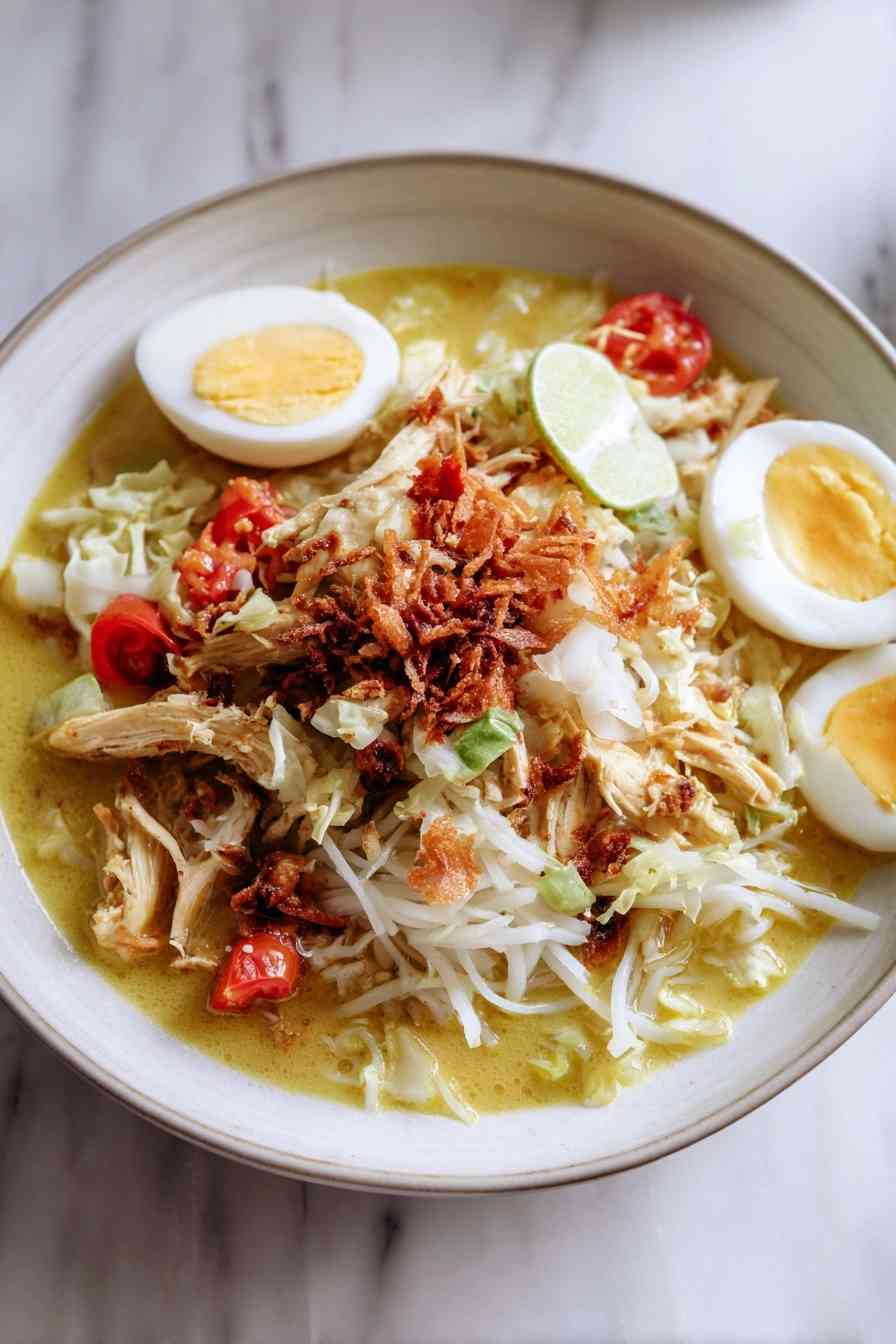
Soto Ayam Lamongan is a traditional Indonesian turmeric chicken soup built in layers.
The broth starts golden and clear, layered with turmeric, lemongrass, and lime leaves. You blend aromatics separately, toast spices until they smell warm and nutty, then fold in savory prawn paste that melts into the soup base. The chicken simmers gently until tender, then gets fried and shredded before landing back in the bowl. On top, you sprinkle koya, a signature powder made from prawn crackers and fried garlic that dissolves into the broth and adds a salty, umami richness you cannot replicate any other way.
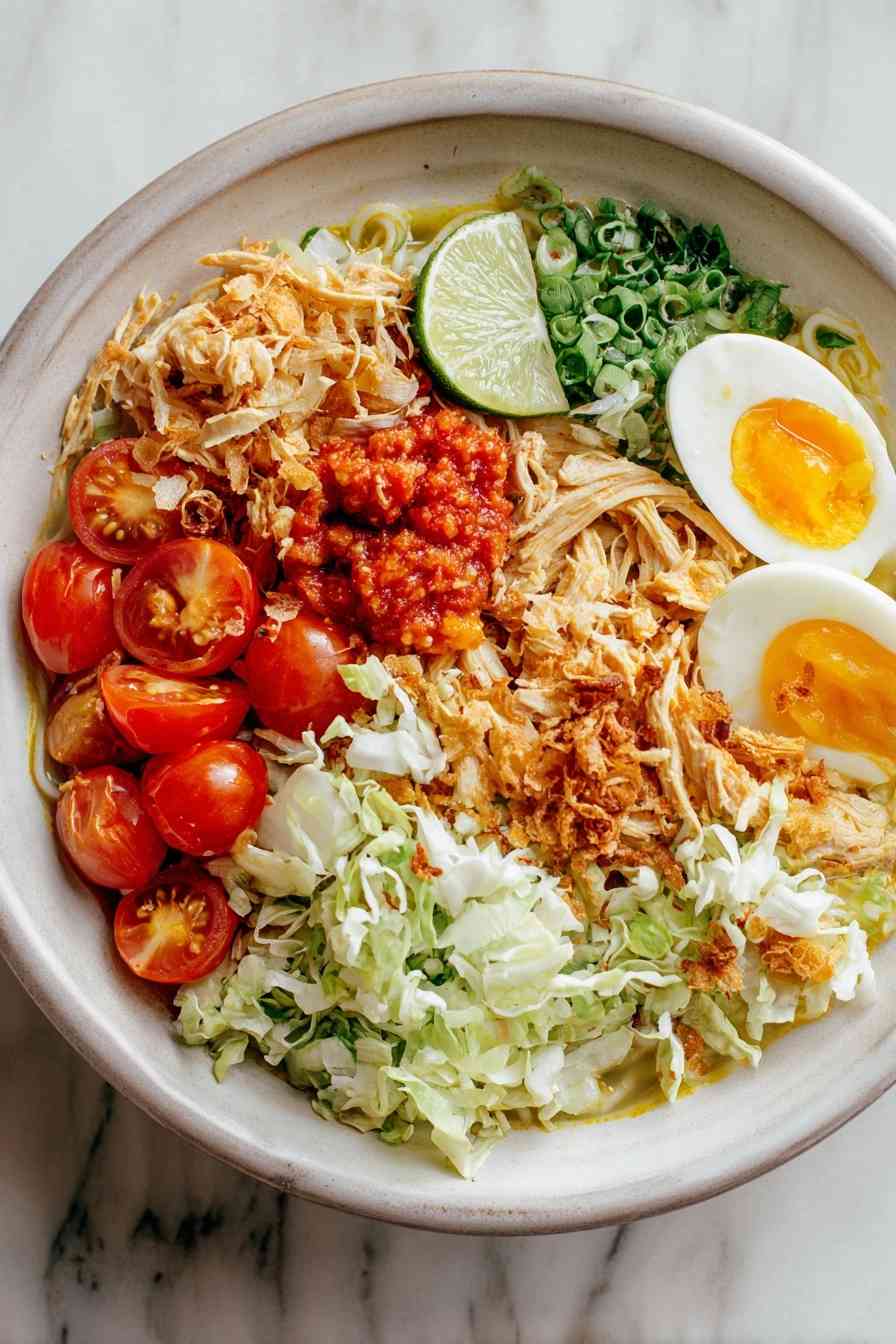
This is not a quick weeknight soup. It asks for time, attention, and a willingness to work through multiple blended pastes and careful assembly. But the payoff is a bowl that tastes like effort and intention, where every spoonful carries depth, warmth, and the kind of comfort that feels both nourishing and special. The layered assembly of noodles, cabbage, tomatoes, eggs, and garnishes turns each serving into something that looks as deliberate as it tastes.
If you have ever wanted to understand why Indonesian soups feel so different from other broths, this is the recipe that shows you how toasting, blending, and building flavors in stages creates something far more complex than the ingredient list suggests.
Everything You Need for Soto Ayam Lamongan (with Koya and Toppings)
This soup relies on three separate blended mixtures, each contributing a distinct layer of flavor, plus a full lineup of toppings that make the final bowl feel abundant and complete.
- Whole chicken – simmered for broth, then fried and shredded for texture and richness.
- Shallots and garlic – blended into the first aromatic paste that forms the savory foundation.
- Candlenuts, turmeric, and ginger – toasted and blended into a spice paste that gives the broth its golden color and earthy warmth.
- Fresh prawns – blended into a smooth paste that adds umami depth and a subtle seafood sweetness.
- Coriander seed powder – brings warmth and a faint citrus note that balances the turmeric.
- White pepper – adds gentle heat without overpowering the broth.
- Lemongrass and kaffir lime leaves – bruised and simmered to release bright, aromatic oils.
- Mushroom stock powder or chicken bouillon – deepens the savory backbone of the broth.
- Prawn crackers and fried garlic – blended into koya, a powdery topping that melts into the soup and adds salty crunch.
- Glass noodles (soun) – soaked until soft, then placed at the bottom of each bowl to soak up broth.
- Cabbage, tomatoes, and hard-boiled eggs – fresh toppings that add color, texture, and balance.
- Fried shallots, lime wedges, and sambal – finishing touches that let each person adjust flavor and heat.
How to Make Soto Ayam Lamongan: Step-by-Step Guide
STEP 1: Blend shallots and garlic until smooth. Toast candlenuts and turmeric in a dry pan for 2 to 3 minutes until fragrant, transfer to a blender with ginger, and blend until smooth, adding a small amount of water or oil if needed. Blend peeled and deveined prawns until a smooth, thick paste forms.
STEP 2: Heat oil in a pan over medium heat, add the shallot-garlic paste, and cook for 5 to 7 minutes, stirring often, until fragrant and the oil separates. Add the turmeric-ginger paste and stir to combine. Add coriander seed powder, white pepper, salt, sugar, mushroom stock powder, bruised lemongrass, and lime leaves, then stir well. Add the prawn paste and cook until the mixture no longer smells raw and tastes savory.
STEP 3: Place the chicken in a pot, cover with water, and bring to a boil. Skim off foam and impurities, turn off heat, remove the chicken, and rinse under running water. This step ensures a clear, golden broth without cloudiness.
STEP 4: Place the cleaned chicken in a clean pot, add 2 liters of fresh water and the cooked aromatic paste from step 2. Bring to a gentle simmer over medium heat and cook for 30 to 40 minutes until the chicken is tender and the broth is golden and fragrant. Taste and adjust seasoning, turn off heat, and stir in thinly sliced green onion. Cover to keep warm.
STEP 5: Remove the chicken from the broth and let cool slightly. Heat a little oil in a pan and fry chicken pieces until lightly golden and fragrant, then shred the fried chicken into thin strips.
STEP 6: Blend prawn crackers and fried garlic until very fine and powdery to make koya. Prepare all toppings: slice cabbage, cut tomatoes into wedges, soak and drain glass noodles, boil and halve eggs, and arrange fried shallots and lime wedges.
STEP 7: Place softened soun at the bottom of each serving bowl. Add shredded fried chicken, sliced cabbage, and tomato. Ladle hot broth over everything, add half a boiled egg, sprinkle generously with fried shallots, and add a spoonful of koya. Serve with lime wedges and sambal on the side.
Getting the Most Flavor from Your Turmeric Chicken Soup
- Toast the candlenuts and turmeric in a dry pan until they smell warm and nutty, not raw. This step mellows the turmeric and brings out the natural oils in the candlenuts, which makes the broth taste rounder and less sharp.
- Cook the aromatic paste slowly until the oil separates and the mixture no longer smells raw. If you rush this step, the broth will taste harsh and underdeveloped. You want the paste to smell sweet, savory, and deeply fragrant before you add it to the broth.
- Skim the chicken carefully during the first boil, then rinse it under running water before adding it to the final broth. Skipping this step almost always results in a cloudy, muddy-looking soup instead of the clear, golden broth that defines this dish.
- Blend the koya until it is fine and powdery, not chunky. If the texture is too coarse, it will sit on top of the broth instead of dissolving into it. A fine powder melts into the soup and adds a salty, umami richness that feels like it belongs there.
What to Serve with Soto Ayam Lamongan
This soup is already a complete meal, but a few simple sides make the experience feel more traditional and satisfying. Serve it with steamed white rice on the side for anyone who wants extra starch, or offer extra sambal and lime wedges so everyone can adjust the heat and brightness to their liking. A small plate of fried tempeh or tofu adds protein and texture without competing with the broth. Some people also enjoy a side of hard rolls or flatbread to soak up the golden broth, or simply eat the soup as is, letting the noodles and toppings provide all the substance you need.
Soto Ayam Lamongan Questions & Answers
Can I substitute candlenuts if I can’t find them?
Macadamia nuts or raw cashews work as substitutes, though the flavor will be slightly different. Candlenuts have a mild, creamy richness that thickens the paste and adds body to the broth. If you use cashews, toast them lightly first to bring out their natural oils and reduce any raw taste.
Is it possible to use boneless chicken instead of a whole chicken?
You can use bone-in chicken thighs or drumsticks, but the broth will lack the depth and body that a whole chicken provides. The bones, skin, and connective tissue release gelatin and flavor during simmering, which makes the broth taste richer. If you use boneless chicken, consider adding chicken wings or backs to the pot for better flavor.
What is koya, and do I have to use it?
Koya is a powdered topping made from prawn crackers and fried garlic that dissolves into the broth and adds a salty, umami richness. You can skip it, but the soup will taste lighter and less complex. Koya is one of the signature elements that makes this soup taste different from other chicken broths.
How spicy is Soto Ayam Lamongan, and can I adjust the heat?
The soup itself is not spicy. The white pepper adds gentle warmth, but the real heat comes from the sambal served on the side. You can make the soup as mild or as spicy as you like by adjusting how much sambal you stir in at the table.
Can I make the broth ahead and freeze it?
The broth freezes well for up to three months. Let it cool completely, then transfer to airtight containers and freeze. Thaw overnight in the fridge and reheat gently on the stove. Prepare the toppings and koya fresh when you are ready to serve, as they do not freeze well and lose texture if stored too long.
Storing and Reheating Indonesian Chicken Soup
Refrigerator: Store the broth, shredded chicken, and toppings separately in airtight containers in the fridge for up to three days. The broth reheats beautifully on the stove over medium heat, and the chicken can be warmed in the broth or fried again for extra crispness. Keep the glass noodles, cabbage, and koya separate until you are ready to assemble each bowl, as they soften and lose texture if stored in the broth.
Freezer: Freeze the broth and shredded chicken in separate airtight containers for up to three months. Thaw overnight in the fridge, then reheat gently on the stove over medium heat until steaming. Do not boil, as this can make the broth taste thin. Prepare fresh toppings and koya when you are ready to serve, as they taste best when made fresh and added just before eating.
Reheating: Whether thawed or fresh, always reheat the broth gently and taste before serving. You may need to adjust salt or add a squeeze of lime to brighten the flavors after storage. The koya should always be made fresh or stored in an airtight container and used within a day, as it loses its powdery texture if exposed to moisture.
Soto Ayam Lamongan (Indonesian Turmeric Chicken Soup)
Ingredients
Equipment
Method
- Blend the shallots and garlic together until you have a smooth paste. Set aside.
- In a dry pan, toast the candlenuts and turmeric over medium heat for 2–3 minutes, stirring frequently, until aromatic. Place them in a blender along with ginger and blend until smooth, adding a little water or oil if needed.
- Process the peeled and deveined prawns in a blender or food processor until they become a thick, smooth paste. Set aside.
- Heat the cooking oil in a large pan over medium heat. Add the shallot-garlic paste and sauté for 5–7 minutes, stirring often, until fragrant and the oil separates from the paste.
- Add the toasted candlenut-turmeric-ginger paste to the pan and mix well. Stir in coriander seed powder, white pepper, salt, sugar, mushroom stock powder, bruised lemongrass stalks, and kaffir lime leaves. Cook for another 2–3 minutes, then stir in the prawn paste. Continue cooking until the mixture is savory and the prawn aroma has mellowed.
- Rinse the whole chicken, then place it in a pot. Pour in enough water to cover and bring to a boil. Skim any foam and impurities from the surface. Remove the chicken and rinse under running water to ensure a clear broth.
- Transfer the cleaned chicken to a clean large pot. Add 2 liters of fresh water and the cooked paste from earlier. Simmer over medium heat for 30–40 minutes, until the chicken is tender and the broth is golden and aromatic. Adjust salt or seasonings as needed. Stir in thinly sliced green onions, then cover the pot to keep warm.
- Remove the chicken from the broth and allow it to cool briefly. Heat a little oil in a pan and fry the chicken pieces until lightly golden and fragrant on all sides. Once cooled, shred the fried chicken into thin strips.
- To make the koya, blend the prawn crackers together with the fried garlic until you achieve a very fine, powdery texture.
- Prepare the toppings: soak the glass noodles in hot water until soft and drain; thinly slice the cabbage; cut tomatoes into wedges; halve the hard-boiled eggs; and ready fried shallots, lime wedges, and sambal if using.
- To assemble, start with softened glass noodles in the base of each serving bowl. Top with shredded fried chicken, sliced cabbage, and tomato wedges. Pour over hot broth and add half a hard-boiled egg. Finish with a sprinkle of fried shallots, a generous spoonful of koya, and serve with lime wedges and sambal on the side.