

A Tasty Pineapple Jello Poke Cake combines yellow cake, pineapple gelatin, and whipped topping into one cheerful dessert.
There’s something undeniably sunny about a pineapple poke cake. The bright yellow gelatin, the fluffy whipped topping studded with pineapple chunks, the toasted coconut and cherry garnish—it all adds up to a slice that looks as cheerful as it tastes. This is the kind of dessert that shows up at potlucks, family gatherings, and summer picnics, and it never fails to draw a crowd.
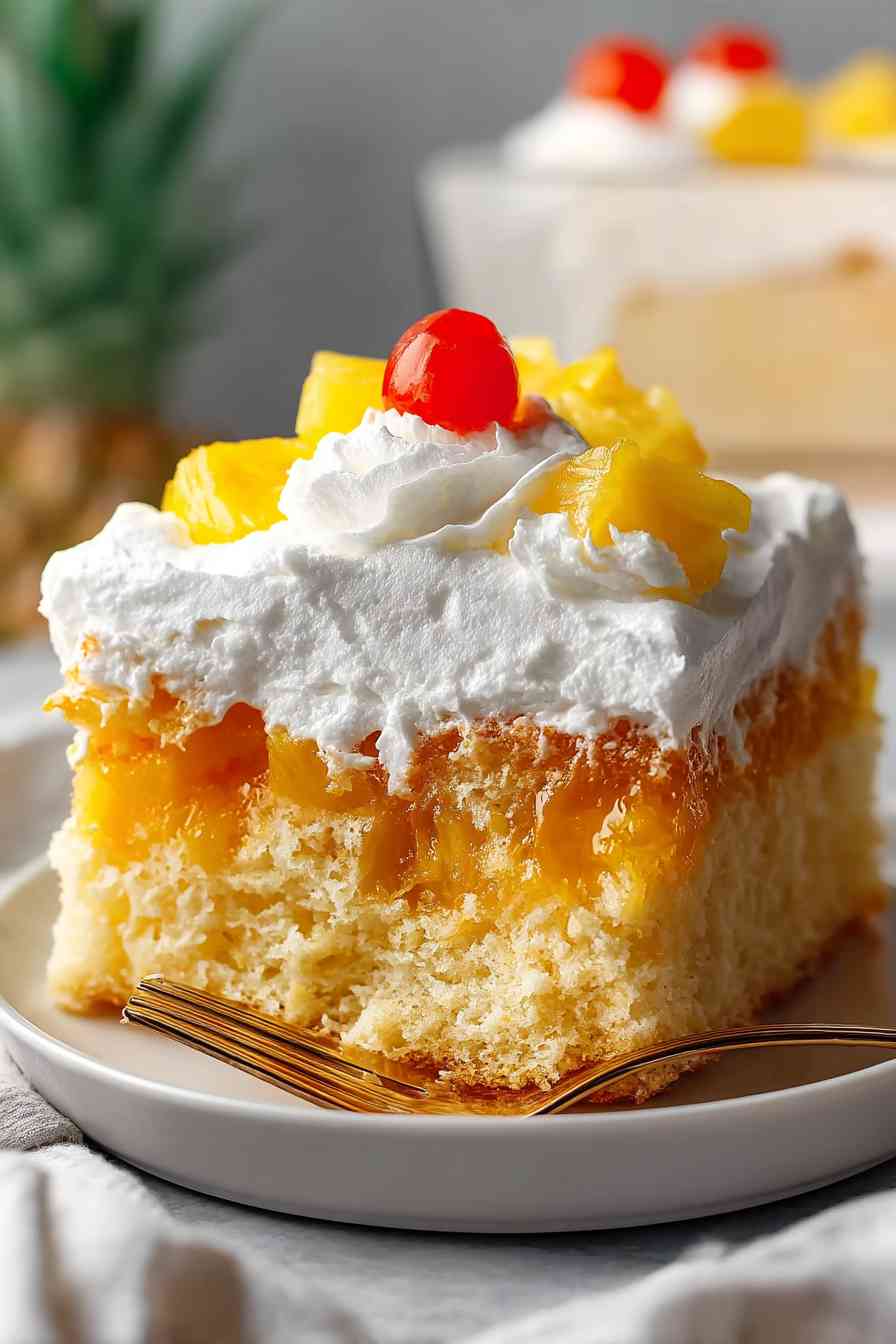
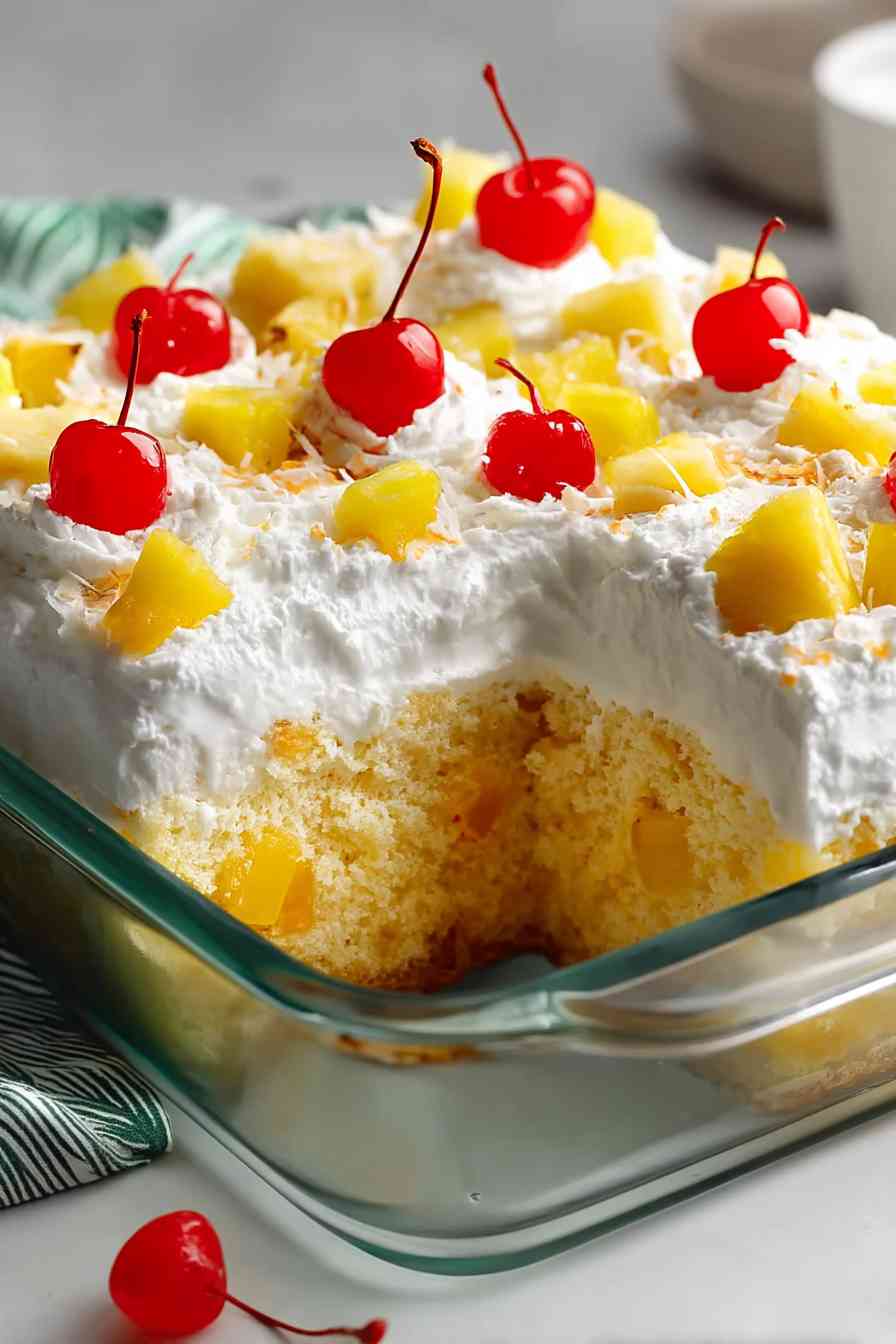
The magic happens in the method. You bake a simple yellow cake using pineapple juice instead of water, which gives the crumb extra moisture and a subtle tropical flavor. Then you poke holes all over the warm cake and pour vivid yellow pineapple gelatin into those holes, creating pockets of tangy sweetness that soak into every bite. After a good chill, you top the whole thing with a fluffy mixture of whipped topping, vanilla, and drained pineapple chunks, then finish with a generous sprinkle of toasted coconut and bright red maraschino cherries.
The result is a dessert that’s equal parts nostalgic and refreshing, with layers of texture and flavor that hold up beautifully when made ahead. It’s a one-pan wonder that delivers big tropical flavor without any fussy technique.
How to Make a Tasty Pineapple Jello Poke Cake: Step-by-Step
STEP 1: Preheat your oven to 350°F. In a large mixing bowl, combine the yellow cake mix, room temperature eggs, oil, and pineapple juice. Mix until just combined and smooth, being careful not to overmix, which can lead to a dense crumb. Pour the batter into a greased 9×13 inch baking dish and bake for 25 to 30 minutes, or until a toothpick inserted in the center comes out clean.
STEP 2: Remove the cake from the oven and let it cool in the pan for 10 minutes. Using a fork or wooden skewer, poke holes all over the entire surface of the cake, spacing them about 1 inch apart. You want plenty of holes for the gelatin to soak in and create those signature pockets of flavor.
STEP 3: In a medium bowl, pour 1.5 cups of boiling water over the pineapple gelatin powder and stir continuously for about 2 minutes until the gelatin is completely dissolved with no granules remaining. Let the mixture cool for 3 to 5 minutes so it’s warm but not scalding. Slowly pour the gelatin liquid over the entire surface of the cake, making sure it flows into all the poked holes. Work carefully and pour in stages if needed to allow the liquid to fully absorb rather than pooling on top.
STEP 4: Place the cake in the refrigerator and chill for at least 45 minutes until the gelatin is completely set and no longer jiggles when the pan is gently moved. Rushing this step will result in a soggy topping layer.
STEP 5: In a large bowl, fold together the whipped topping, vanilla extract, and drained pineapple chunks until evenly combined. Gently fold rather than stir to keep the whipped topping light and airy.
STEP 6: Spread the pineapple-whipped topping mixture evenly over the chilled cake, working from the center outward. Sprinkle the toasted coconut generously over the top, then arrange the maraschino cherries in a decorative pattern across the surface. Return the assembled cake to the refrigerator for 1 to 2 hours before serving to allow all layers to meld together and achieve the perfect chilled consistency.
Gathering Ingredients for Pineapple Jello Poke Cake
This cake relies on a short list of pantry-friendly ingredients that come together to create layers of tropical flavor and texture.
- Yellow cake mix – provides the tender, moist base that soaks up the gelatin beautifully.
- Eggs – room temperature eggs incorporate more smoothly into the batter for a tender crumb.
- Oil – adds richness and keeps the cake soft even after chilling.
- Pineapple juice – reserved from the canned chunks, this replaces water in the batter for extra moisture and tropical flavor.
- Pineapple gelatin – creates those vivid yellow pockets of tangy sweetness throughout the cake.
- Boiling water – dissolves the gelatin powder completely for a smooth, pourable liquid.
- Whipped topping – forms the fluffy, cloud-like layer that crowns the cake.
- Pineapple chunks – thoroughly drained and folded into the topping for bursts of juicy fruit.
- Toasted coconut – adds nutty flavor and textural contrast to the soft layers below.
- Vanilla extract – enhances the tropical flavors and adds subtle depth to the whipped topping.
- Maraschino cherries – bright red garnish that adds a pop of color and retro charm.
Tips for the Best Pineapple Gelatin Poke Cake
- Drain pineapple chunks thoroughly before folding them into the whipped topping. Excess liquid will make the topping watery and cause it to weep as the cake sits. Press the chunks gently in a colander or pat them dry with paper towels.
- Cool the gelatin to the right temperature before pouring. If it’s too hot, it can melt the cake surface and create a gummy texture. If it’s too cool, it won’t flow into the holes properly. Aim for warm but not scalding.
- Chill twice for the best texture. The first chill sets the gelatin so it doesn’t mix into the topping layer. The second chill allows all the layers to firm up and meld together for clean, beautiful slices.
- Toast the coconut in a dry skillet over medium heat, stirring frequently, until it turns golden and fragrant. This takes only 3 to 5 minutes and transforms the flavor from bland to nutty and rich.
What Pairs Well With Pineapple Jello Poke Cake
Serve this cake with strong coffee or iced tea to balance the sweetness. A scoop of vanilla ice cream or coconut sorbet adds creamy contrast to the fluffy topping. Fresh fruit like mango slices or strawberries echoes the tropical theme and complements the bright flavors.
Pineapple Jello Poke Cake FAQs
Can I use a different flavor of gelatin if I can’t find pineapple?
Yes, you can substitute orange, lemon, or lime gelatin. The flavor profile will shift slightly, but the method and texture will remain the same. Just make sure the gelatin color complements the yellow cake and tropical topping.
What’s the best way to toast coconut for the topping?
Spread the coconut in a thin layer in a dry skillet over medium heat. Stir frequently and watch closely, as it can go from golden to burnt in seconds. Once it’s fragrant and lightly browned, remove it from the heat immediately and let it cool before sprinkling it on the cake.
Does the cake need to be completely cool before adding the gelatin?
No, the cake should be slightly warm when you pour the gelatin. If it’s too cool, the gelatin won’t absorb properly and will pool on the surface. A 10-minute rest after baking is ideal—warm enough to accept the liquid but set enough not to crumble.
Can I make Pineapple Jello Poke Cake a day ahead?
Absolutely. This cake benefits from an overnight chill in the fridge. The flavors meld together beautifully, and the texture becomes even more cohesive. Just cover it tightly with plastic wrap or foil to prevent it from absorbing any fridge odors.
Is it possible to use fresh pineapple instead of canned?
Fresh pineapple contains enzymes that can prevent gelatin from setting properly, so canned pineapple is the safer choice. If you want to use fresh, you’ll need to cook it first to deactivate those enzymes, which adds extra steps and changes the texture slightly.
Storing and Serving Pineapple Jello Poke Cake
Store the cake covered in the refrigerator for up to 4 days. The whipped topping holds up well, though it may soften slightly over time. For the cleanest slices, use a sharp knife and wipe it clean between cuts. This cake does not freeze well due to the whipped topping and gelatin layers, which can become watery and grainy when thawed. Serve it cold, straight from the fridge, for the best texture and flavor contrast.
This pineapple poke cake is the kind of dessert that brings people together, with its bright layers, tropical flavors, and cheerful presentation. It’s a reliable crowd-pleaser that tastes even better the next day, making it a smart choice for gatherings where you want to prep ahead and still deliver something memorable.
Tasty Pineapple Jello Poke Cake
Ingredients
Equipment
Method
- Preheat your oven to 350°F. In a large mixing bowl, combine the yellow cake mix, eggs, oil, and pineapple juice. Stir gently until the batter becomes smooth and evenly mixed, taking care not to overmix. Transfer the batter to a greased 9x13 inch baking dish and bake for 25-30 minutes, checking for doneness with a toothpick inserted into the center—it should come out clean when the cake is ready.
- Take the cake out of the oven and allow it to rest in the pan for 10 minutes so it sets slightly while still warm. Use a fork or wooden skewer to poke holes throughout the entire cake surface, spacing them approximately 1 inch apart. Make sure you create plenty of holes so the gelatin can soak in properly and form flavorful pockets.
- In a medium bowl, combine the pineapple gelatin powder with the boiling water. Stir steadily for about 2 minutes until the gelatin dissolves completely with no visible granules. Allow the mixture to cool for 3-5 minutes until it's warm but not too hot. Carefully pour the gelatin over the cake surface, ensuring it seeps into all the holes you created. Pour gradually if needed to prevent pooling on top.
- Transfer the cake to the refrigerator and chill for at least 45 minutes until the gelatin sets completely and doesn't jiggle when you gently shake the pan. This step is essential for achieving proper texture, so don't rush it.
- In a large bowl, combine the whipped topping, vanilla extract, and drained pineapple chunks. Use a folding motion rather than stirring to keep the mixture light and airy, blending until everything is evenly distributed.
- Spread the pineapple-whipped topping mixture over the chilled cake in an even layer, starting from the center and working outward. Scatter the toasted coconut generously across the top, then arrange the maraschino cherries in an attractive pattern. Place the finished cake back in the refrigerator for 1-2 hours before serving to allow the layers to set and meld together for the ideal chilled consistency.