

The best sugar cookies have soft centers with crisp edges, hold their shape beautifully for decorating, and stay tender for days after baking.
There’s something deeply satisfying about rolling out cookie dough, cutting shapes with your favorite cutters, and watching those shapes emerge from the oven exactly as you intended. No puffing, no spreading, no disappointment. Just thick, buttery cookies with a flat surface for decorating and enough structure to handle royal icing, glaze, or buttercream without turning into a soggy mess.
The secret is in the method, not magic. You chill the rolled-out dough for at least two hours, which firms up the butter and keeps the cookies from spreading in the oven. You roll to an even quarter-inch thickness, which gives you that satisfying bite without turning brittle. And you use just enough baking powder to add a little lift without puffing the cookies into unrecognizable blobs. The result is a cookie that tastes like pure butter and vanilla, with an optional hint of almond extract if you want to take the flavor up a notch.
These cookies are endlessly customizable. Decorate them for holidays, tint the icing in every color imaginable, or leave them plain and enjoy the simple pleasure of a well-made sugar cookie. They freeze beautifully, both as dough and as baked cookies, so you can make them ahead and pull them out whenever the mood strikes.
Step-by-Step: Making Perfect Sugar Cookies
STEP 1: Whisk together the flour, baking powder, and salt in a medium bowl and set it aside. This ensures the leavening is evenly distributed throughout the dough.
STEP 2: Beat the softened butter and granulated sugar together on high speed for about three minutes, until the mixture is light and creamy. Add the egg, vanilla extract, and almond extract if using, then beat on high for another minute. Scrape down the bowl and beat again to make sure everything is fully combined. Add the dry ingredients and mix on low speed until the dough comes together. If the dough feels too soft or sticky to roll, beat in one more tablespoon of flour.
STEP 3: Divide the dough in half. Place each portion on a piece of lightly floured parchment paper or a silicone baking mat. Roll each piece out to about one-quarter-inch thickness, using a lightly floured rolling pin and adding a bit more flour if the dough sticks. The shape doesn’t matter, as long as the thickness is even.
STEP 4: Lightly dust the top of one rolled-out dough portion with flour to prevent sticking. Place the second rolled-out portion, still on its parchment, on top of the first. Cover the stacked dough tightly and refrigerate for at least two hours, or up to two days. This step is non-negotiable if you want cookies that hold their shape.
STEP 5: Preheat the oven to 350°F and line large baking sheets with parchment paper or silicone mats. Remove the top piece of dough from the refrigerator. If it’s sticking to the bottom piece, run your hand under it to help separate them. Use cookie cutters to cut shapes, then gather the scraps, reroll, and continue cutting until all the dough is used. Repeat with the second piece of dough. Arrange the cookies three inches apart on the prepared baking sheets.
STEP 6: Bake for 11 to 12 minutes, until the edges are very lightly browned and set. If your oven has hot spots, rotate the baking sheets halfway through. Let the cookies cool on the baking sheet for five minutes, then transfer them to a cooling rack to cool completely before decorating.
STEP 7: Decorate the cooled cookies with royal icing, easy glaze icing, or cookie buttercream. Tint the icing with gel food coloring if desired. You can decorate the cookies directly on a baking sheet and place the whole sheet in the refrigerator to help the icing set faster.
What You’ll Need for the Best Sugar Cookies
This recipe relies on a short list of pantry staples, each one playing a specific role in creating cookies that are tender, flavorful, and sturdy enough to decorate.
- All-purpose flour – provides structure and keeps the cookies from spreading too much during baking.
- Baking powder – adds a subtle lift without puffing the cookies into unrecognizable shapes.
- Salt – balances the sweetness and enhances the buttery flavor.
- Unsalted butter – delivers rich, creamy flavor and creates the tender crumb that makes these cookies so satisfying.
- Granulated sugar – sweetens the dough and helps create those lightly crisp edges.
- Egg – binds the dough together and adds structure.
- Vanilla extract – brings warm, aromatic flavor that complements the butter.
- Almond extract (optional) – adds a subtle, nutty depth that makes the flavor more complex and memorable.
- Royal icing, glaze, or buttercream – for decorating the cooled cookies with color, texture, and a little extra sweetness.
- Sprinkles – for adding color and fun to your decorated cookies.
Expert Tips for Soft, Cut-Out Sugar Cookies

- Chill the rolled-out dough for the full two hours. Skipping or shortening the chill time is the most common reason cookies spread and lose their shape in the oven.
- Roll to an even quarter-inch thickness. Uneven rolling leads to some cookies baking faster than others, which means some will be overdone while others are still soft.
- Watch the bake time closely. These cookies are done when the edges are very lightly browned and set, not when the tops are golden all over. Overbaking turns them dry and hard.
- Add flour if the dough is too soft. If the dough feels sticky after mixing, beat in one more tablespoon of flour before rolling. This small adjustment makes rolling much easier without compromising the texture.
Topping and Serving Ideas for Sugar Cookies
Royal icing is the classic choice for decorating because it dries hard and smooth, making the cookies easy to stack, gift, or ship. Tint it with gel food coloring and use piping bags to create intricate designs.
An easy glaze icing made with powdered sugar and milk dries with a soft sheen and takes just a few minutes to mix. Cookie buttercream offers a rich, creamy finish that stays soft and spreadable.
For a casual approach, leave the cookies plain and serve them alongside coffee or tea. The buttery vanilla flavor is satisfying on its own, especially if you used the almond extract.
Sugar Cookie Troubleshooting & Questions
Why is chilling the dough so important for sugar cookies?
Chilling the rolled-out dough firms up the butter, which prevents the cookies from spreading in the oven. Without that chill time, the butter melts too quickly during baking, and the cookies lose their shape. Two hours is the minimum, but you can chill the dough for up to two days if you want to work ahead.
Can I freeze the dough or baked cookies for later?
You can freeze the rolled-out dough for up to three months. Wrap it tightly in plastic wrap, then place it in a freezer bag. Thaw it in the refrigerator before cutting and baking. Baked cookies also freeze well for up to three months. Let them cool completely, then layer them between sheets of parchment paper in an airtight container.
How do I keep my sugar cookies from spreading in the oven?
Make sure the dough is well-chilled before baking, and avoid overworking it when you roll it out. If the dough warms up too much while you’re cutting shapes, pop the cut cookies back in the refrigerator for 10 minutes before baking. Also, check that your oven temperature is accurate, because a too-hot oven can cause spreading.
What’s the best way to decorate sugar cookies?
Royal icing is the most popular choice because it dries hard and smooth, making it ideal for detailed designs and stacking. Use piping bags with small tips for outlines and flooding, and let each layer dry before adding the next. If you want something quicker, an easy glaze icing or cookie buttercream works well for simpler designs.
Can I skip the almond extract or use something else?
You can skip the almond extract entirely, and the cookies will still taste great. If you want to try a different flavor, maple extract, lemon extract, or even a small amount of cinnamon can add a nice twist. Just keep the amount small so it doesn’t overpower the buttery vanilla base.
How to Store and Keep Sugar Cookies Fresh
Store plain or iced cookies in an airtight container at room temperature for up to five days. If you decorated them with royal icing or glaze, wait until the icing is completely dry before stacking or covering them. For longer storage, cover the cookies tightly and refrigerate them for up to 10 days.
If you decorated the cookies with buttercream, store them at room temperature for up to one day, or in the refrigerator for up to five days. Buttercream stays soft, so it’s best to keep those cookies in a single layer or separated by parchment paper.
To freeze baked cookies, let them cool completely, then layer them between sheets of parchment paper in an airtight container. They’ll keep in the freezer for up to three months. Thaw them at room temperature before decorating or serving.
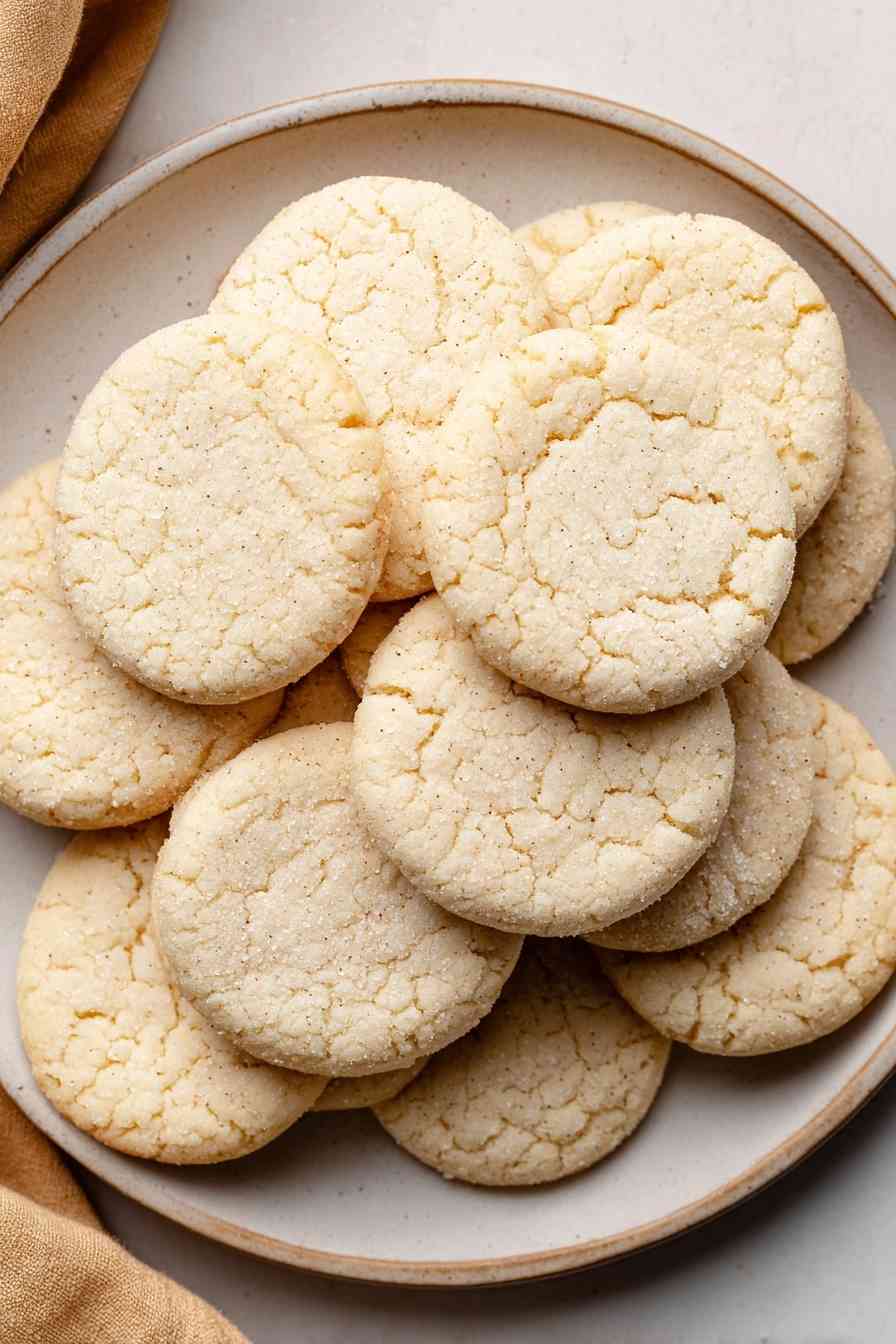
The Best Sugar Cookies
Ingredients
Equipment
Method
- Whisk together the flour, baking powder, and salt in a medium bowl and set aside.
- In a large mixing bowl, use a handheld or stand mixer fitted with the paddle attachment to beat the softened butter and sugar together on high speed until the mixture is light and creamy, about 3 minutes.
- Add the egg, vanilla, and almond extract (if using) to the bowl and beat on high speed until fully combined, about 1 minute. Scrape down the bowl as needed and mix again to ensure everything is incorporated.
- Add the dry ingredients to the wet mixture and mix on low speed until the dough just comes together and is soft. If the dough feels too soft or sticky to roll, add 1 more tablespoon of flour and mix briefly.
- Divide the dough into two even portions. Place each half on a lightly floured piece of parchment paper or silicone baking mat. Using a lightly floured rolling pin, roll each portion out to about 1/4-inch thick. Add a little extra flour if the dough is too sticky.
- Lightly dust the top of one rolled-out piece with flour. Stack the second rolled-out piece (on parchment) on top of the first. Cover the dough tightly and refrigerate for at least 2 hours and up to 2 days.
- When ready to bake, preheat the oven to 350°F (177°C). Line large baking sheets with parchment paper or silicone baking mats.
- Carefully remove the top dough layer from the fridge. If it sticks, gently run your hand under the parchment to help release it. Use cookie cutters to cut the dough into shapes. Gather scraps, re-roll, and continue cutting shapes until all dough is used. Repeat with the second dough portion, arranging cookies 3 inches apart on baking sheets.
- Bake for 11–12 minutes, or until the edges of the cookies are just lightly browned and set. If needed, rotate the baking sheets halfway through baking. Let cookies cool on the baking sheet for 5 minutes, then transfer to a wire rack to cool completely.
- Once cooled, decorate cookies with royal icing, glaze, or buttercream as desired. Add sprinkles or tint the icing with gel food coloring if you like. You can decorate cookies on a baking sheet, then refrigerate the sheet to help the icing set if needed.
- Enjoy the cookies immediately or let the icing set completely before serving or storing. Once set, store the cookies (plain or iced) tightly covered at room temperature for up to 5 days, or refrigerate for up to 10 days. If using buttercream, store at room temperature for up to 1 day, or in the fridge for up to 5 days.