Why You’ll Love this Salt-Crusted Tri Tip Roast
Why do tri tip roasts deserve a special place in your grilling repertoire? I’m convinced this salt-crusted method transforms an ordinary cut into something magical.
The salt creates a perfect seal, locking in juices while the meat expands like a little pillow inside its seasoned cocoon.
I love how each roast develops its own personality—unique shapes, caramelized edges, and that gorgeous color.
The technique couldn’t be simpler, yet the results are consistently impressive. Perfect for parties where you need to feed a crowd without hovering over the grill.
And those thin, across-the-grain slices? Absolute heaven on small sandwiches or rye bread.
What Ingredients are in Salt-Crusted Tri Tip Roast?
This salt-crusted tri tip roast recipe is all about simplicity with outstanding results. The magic happens when you create that salt seal around the meat, transforming an ordinary cut into something truly special. What’s wonderful about this approach is how the salt works to lock in moisture while adding just the right amount of seasoning. And honestly, who doesn’t love a recipe with just a handful of ingredients that delivers restaurant-quality results?
- 2 lbs tri-tip roast
- 4 tablespoons seasoning salt (Lawry’s recommended)
When shopping for your tri-tip, don’t be put off by its somewhat unattractive appearance in the packaging. This diamond in the rough transforms beautifully during cooking. As for the seasoning salt, while Lawry’s is specifically mentioned in the recipe, you could experiment with other seasoned salt blends if you prefer. Just remember that the salt crust is the star technique here, creating that essential seal that allows the meat to expand and develop those gorgeous colors and flavors during grilling. The simplicity of these ingredients belies the complexity of flavors you’ll achieve.
How to Make this Salt-Crusted Tri Tip Roast
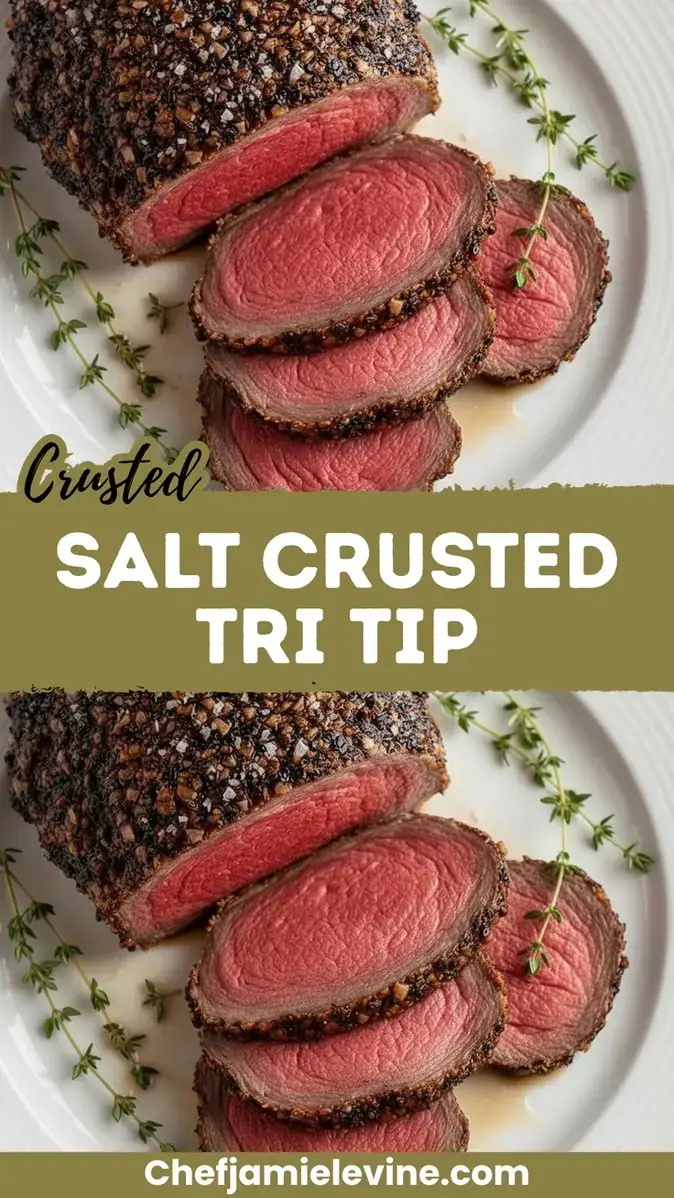
Creating a salt-crusted tri tip begins with thoroughly coating your 2-pound roast with 4 tablespoons of seasoning salt (Lawry’s works perfectly here). Make sure you cover every bit of the surface, creating that all-important salt seal that will work its magic during cooking.
Once coated, pop it in the refrigerator for 3-4 hours to let the salt do its thing—but don’t go overboard with the timing. Leaving it overnight can actually be too much, turning what should be a flavor-enhancing crust into something overpowering.
About an hour before grilling, take the meat out of the fridge to allow it to come closer to room temperature, which helps it cook more evenly.
For grilling, you’ll want to set up your charcoal grill for indirect cooking using trays or rails. The indirect method is essential here—it allows the meat to cook gently without harsh direct heat that could break that beautiful salt seal.
A grilling rack is your best friend for this recipe, preventing those pesky grill marks from scoring the roast and potentially disrupting the salt crust.
Cover the grill and maintain a temperature between 375-425°F during the first half hour. After 20 minutes, give the roast a single turn, then check the temperature at the 40-minute mark.
You’re looking for that magical 135°F internal temperature, which gives you a perfect medium-rare after resting.
One of the most fascinating parts of this cooking method is watching how the roast transforms. When properly sealed with salt, the meat actually expands within its crust, sometimes puffing up like a little pillow—a sign you’ve done everything right!
After removing it from the grill, let it rest for 10 minutes before slicing. Be prepared for quite a bit of juice to flow out—easily half a cup or more—so use a cutting board with deep grooves.
When slicing, pay close attention to the grain direction, which changes throughout a tri-tip. Always cut across the grain for maximum tenderness, and keep your slices thin, especially if you’re serving this at a party or making sandwiches.
The contrast between the seasoned crust and the juicy interior makes every bite worth the effort.
Salt-Crusted Tri Tip Roast Substitutions and Variations
While the classic salt-crusted tri tip recipe delivers incredible results, you can easily adapt it to suit your taste preferences or accommodate what’s in your pantry.
Don’t have Lawry’s? No problem. Try a mix of kosher salt with garlic powder and black pepper, or experiment with smoked paprika for a subtle smokiness.
I’ve used Montreal steak seasoning in a pinch—different, but delicious.
For herb lovers, try adding rosemary or thyme to your salt mixture. You can also substitute other similar-sized roasts like top sirloin when tri tip isn’t available.
Just remember, the cooking time might vary slightly depending on the cut’s thickness.
What to Serve with Salt-Crusted Tri Tip Roast
Once you’ve mastered the salt-crusted tri tip, choosing the right side dishes can elevate your meal from good to unforgettable.
I love pairing this beautiful roast with simple, complementary sides that don’t compete with its rich flavor.
For a complete meal, I recommend a bright arugula salad with lemon vinaigrette, creamy horseradish mashed potatoes, or grilled vegetables that pick up some of that smoky charcoal essence.
Since the roast creates its own wonderful jus, a crusty bread for sopping is practically mandatory.
And trust me, nothing beats thin-sliced tri tip on small rye bread pieces for an impressive party spread.
Final Thoughts
After preparing dozens of salt-crusted tri tips over the years, I’m convinced it’s one of the most forgiving yet impressive roasts you can master.
The salt seal creates a perfect environment for the meat to cook evenly while developing remarkable flavor.
Remember, the beauty of tri tip lies in its simplicity. Don’t overthink it. Just respect the timing (no overnight salting, please), watch your temperature, and pay attention to those grain directions when slicing.
What makes this recipe special? It transforms an affordable cut into something guests will rave about.
Perfect for feeding crowds or meal prepping, with minimal ingredients but maximum impact.

Salt-Crusted Tri Tip Roast
Ingredients
Equipment
Method
- Thoroughly coat the tri-tip roast with seasoning salt, ensuring every surface is covered to create a complete salt seal.
- Refrigerate the seasoned roast for 3-4 hours. Do not leave overnight as this can make the seasoning too intense.
- Remove the roast from the refrigerator about 1 hour before cooking to bring it closer to room temperature.
- Set up your charcoal grill for indirect cooking using trays or rails. Place a grilling rack over the indirect heat area to prevent grill marks from breaking the salt crust.
- Cover the grill and maintain a temperature between 375-425°F during cooking.
- After 20 minutes, turn the roast once, then continue cooking.
- Check the internal temperature at the 40-minute mark. You’re aiming for 135°F for medium-rare.
- Once the desired temperature is reached, remove the roast from the grill and let it rest for 10 minutes before slicing.
- Slice thinly across the grain, noting that the grain direction changes throughout a tri-tip.