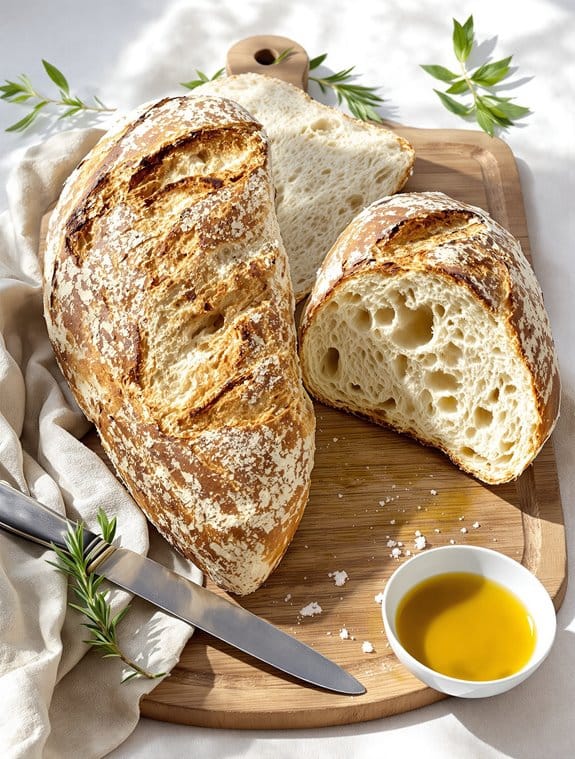
Ingredients
Equipment
Method
- In a food processor, combine 1 cup of bread flour, 2 teaspoons of sugar, 2½ teaspoons of dry yeast, and ¾ cup of very warm water (120-130°F). Process for about 1 minute until well blended.
- Transfer this sponge mixture to a bowl, cover, and let it develop in the refrigerator for 2 to 24 hours (overnight is recommended for best flavor development).
- When the sponge is ready, return to the food processor and add the remaining 4 cups of bread flour, ¼ cup of warm water (105-115°F), 2 teaspoons of nonfat dry milk powder, the remaining 2½ teaspoons of dry yeast, and 1 teaspoon of salt.
- Process until the dough forms a ball, then continue processing for another minute to develop the gluten.
- Turn the sticky dough out onto a floured surface. Divide the dough in half.
- Roll each portion into a 12x16-inch rectangle, then shape each rectangle into a classic slipper shape (ciabatta).
- Line baking sheets with parchment paper and sprinkle with cornmeal. Place the shaped loaves on the prepared sheets.
- Dust the loaves with the additional 2 tablespoons of flour, cover, and let rise for about 30 minutes until doubled in size.
- Meanwhile, preheat your oven to 425°F.
- Bake the loaves for 25 minutes, or until they sound hollow when tapped on the bottom and the crust is golden and crisp.
- Transfer the baked ciabatta to a wire rack and allow to cool completely before slicing.
Nutrition
Notes
For the best texture, avoid cutting into the bread while it's still hot. The cooling period allows the interior to set properly. Store your ciabatta in a paper bag at room temperature for up to 2 days, or freeze for longer storage. To refresh day-old bread, sprinkle with water and warm in a 350°F oven for 5-10 minutes.
For flavor variations, try adding roasted garlic, herbs like rosemary, or olives to the dough after the first rise. The high hydration dough is meant to be sticky, so resist the urge to add too much additional flour during shaping.