Ingredients
Equipment
Method
- Preheat your oven to 375°F (190°C) and grease two 8-inch cake pans with nonstick spray.
- Sift the cake flour at least 4 times in a separate bowl before measuring to ensure it is very light and silky. After sifting, measure 2 cups exactly.
- Place the pre-measured cake flour into a sifter, then add the baking powder, baking soda, and salt. Sift these together into a bowl and set aside.
- In a large bowl, beat the softened unsalted butter on high speed until creamy and smooth using an electric mixer.
- Add the granulated sugar, then beat on medium-high to high for at least 2 minutes, scraping the sides as needed, until the mixture is fluffy and pale. Mix in the vanilla pudding mix and scrape the sides again.
- Add the eggs and vanilla extract, mixing well and scraping down the bowl between additions.
- Gradually incorporate the dry flour mixture into the wet batter, alternating with the buttermilk, starting and ending with the dry ingredients. Once no white flour remains, stop the mixer and gently finish mixing by hand.
- Divide the batter evenly between the two cake pans—each should have about 1 cup of batter for a 4-inch circle. Tap the pans on the counter to remove large air bubbles.
- Bake for 18–22 minutes, until the tops are domed, lightly golden, and spring back when touched.
- Cool cakes in their pans for 5–10 minutes, then transfer the pans to the freezer for easier frosting and assembly.
- Combine the half and half with water in a medium saucepan. Bring to a boil over medium-high heat, stirring constantly so it doesn't scorch.
- Add the corn starch and sugar, whisking to dissolve. Return to a boil and cook for 2–3 minutes, stirring until the sauce thickens.
- Remove from heat and stir in the salted butter and clear imitation vanilla extract until smooth. Let the sauce cool completely before using.
- Store in a squeeze bottle or airtight container in the fridge until ready to use.
- With an electric mixer, beat the cream cheese until it is smooth and creamy.
- Add the instant butterscotch pudding and mix again until completely blended.
- Gently fold in the thawed whipped topping until well combined.
- Transfer the filling to a piping bag fitted with a tip or use a Ziploc bag with the corner snipped off.
- In a large bowl, use an electric mixer to beat the softened salted butter and vegetable shortening together until smooth and fluffy.
- Mix in the clear imitation vanilla extract.
- Gradually add the powdered sugar, one cup at a time, mixing well after each addition.
- Increase the mixer speed to medium-high and beat for about 2 minutes, so the buttercream becomes light and airy. Transfer to a piping bag or Ziploc bag as desired.
- Remove the cake layers from the freezer. Slice the domed tops off with a cake layer cutter or serrated knife to create flat layers.
- Place a damp paper towel under a small cake board to keep it in place. Dab some vanilla buttercream in the center of the board to anchor the first layer.
- Set the bottom cake layer on the board. Generously drizzle store-bought butterscotch sauce over the top and gently spread it.
- Leaving about a 1/3-inch edge clear, pipe the butterscotch filling onto the center of the cake layer.
- Drizzle butterscotch sauce over the cut side of the remaining cake layer, then invert and place it, sauced side down, on top of the filling.
- Apply a thin 'crumb coat' of vanilla buttercream all over the cake to seal in crumbs, then return the cake to the freezer for 15–20 minutes to chill.
- After chilling, frost the cake with a thicker layer of vanilla buttercream. Remove the damp paper towel once the frosting is in place.
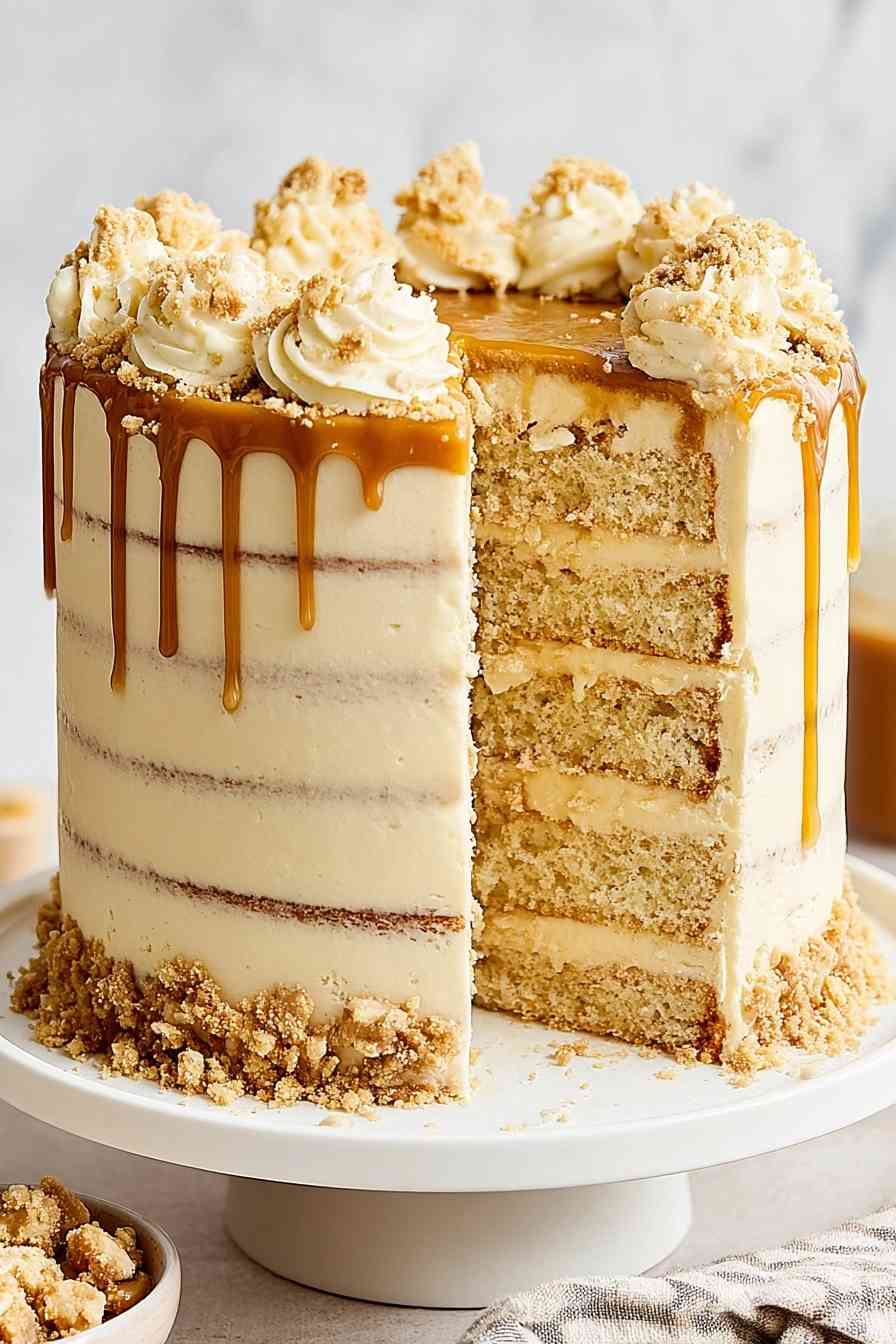
- Generously pour butterscotch topping sauce over the top, letting it run down the sides for a dramatic effect.
- Finished by zig-zagging the vanilla cream sauce on top of the butterscotch layer, using a squeeze bottle or bag with the end snipped.
Nutrition
Notes
For best results, sift only cake flour several times to create a tender crumb. If you must substitute all-purpose flour, replace 2 tablespoons with cornstarch per cup, but true cake flour is preferred. You can make the cake layers and creams separately a day in advance, storing in the refrigerator. Assemble and decorate before serving for the freshest look. Store leftovers in an airtight container in the fridge for up to four days, or freeze unfrosted layers for longer keeping. For a dazzling effect, chill the cake before adding drizzles so the sauces don’t soak in.