Ingredients
Equipment
Method
- Preheat your oven to 425°F and lightly oil a roasting pan.
- Season the flour with salt and pepper. Dredge the oxtails in the seasoned flour and arrange them in the roasting pan.
- Roast the oxtails for about 15 minutes, then add the quartered yellow onions (with skin on), celery heart with leaves, and halved head of garlic to the pan.
- Spread tomato paste over the oxtails and continue roasting for about 40 minutes, stirring occasionally to prevent burning. This caramelization step is crucial for developing deep flavor.
- Transfer the roasted oxtails and vegetables to a large stockpot. Pour off excess grease from the roasting pan but preserve the caramelized bits.
- Add 2 cups of cold water to the hot roasting pan, scrape up all the flavorful brown bits, and add this liquid to your stockpot.
- Add the Beefamato juice (or tomato juice), remaining cold water, bay leaves, and beef base to the stockpot.
- Reduce oven temperature to 250°F. Place the covered stockpot in the oven and cook for about 3 hours, until the meat is falling off the bone.
- Strain the stock, reserving the oxtails. When cool enough to handle, remove the meat from the bones and set aside.
- Return the strained stock to the stovetop and bring to a low simmer.
- Add the chopped yellow onion, sliced mushrooms, celery ribs, carrots, spinach, diced tomatoes, and barley to the simmering stock.
- Simmer until the barley is tender, about 30 minutes.
- Return the reserved oxtail meat to the pot and heat through. Adjust seasoning with salt and pepper to taste.
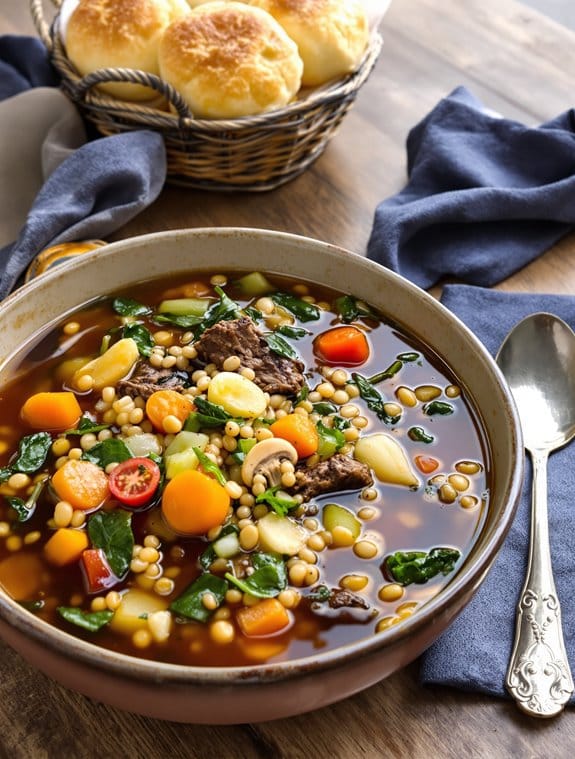
- Serve hot with crusty bread. For even better flavor, refrigerate overnight and reheat the next day.
Nutrition
Notes
For the best results, look for meaty oxtail pieces rather than ones that are mostly bone. This soup develops even more flavor overnight, making it an excellent make-ahead meal. Leftovers can be refrigerated for up to 4 days or frozen for up to 3 months.
If you can't find Beefamato juice, use regular tomato juice with a tablespoon of Worcestershire sauce for similar depth. The barley can be substituted with farro, rice, or small pasta if preferred.