Ingredients
Equipment
Method
- In a stand mixer fitted with the paddle attachment, cream together the butter and salt for 2 to 4 minutes until smooth. Add the granulated sugar, powdered sugar, milk, and vanilla, and continue beating for another 1 to 2 minutes until combined.
- On low speed, mix in the flour and baking soda just until a dough begins to form.
- Shape the dough into a disk. Place it between two sheets of parchment paper and roll it out to about 1/4 inch thick. Move the rolled dough, still between parchment sheets, onto a cookie sheet. Refrigerate for at least 1 hour or up to overnight to chill.
- Preheat your oven to 350°F (175°C).
- Spread the coconut flakes in a single layer on a baking sheet. Toast in the oven for 10 to 15 minutes, stirring often, until golden brown. As soon as it’s toasted, transfer the coconut to a fresh parchment-lined baking sheet to cool and stop further browning.
- Once chilled, remove the top sheet of parchment from the dough. Cut cookies using a 2-inch round cutter or donut-shaped cutter. For regular cutters, use the end of a piping tip to cut out a small center hole.
- Arrange the cut cookies on a parchment-lined baking sheet. Bake for 8 to 10 minutes, or until only the edges start to turn golden. Let the cookies cool on the baking sheet briefly, then transfer to a wire rack.
- Gather leftover scraps, reroll them between parchment, and refrigerate until firm. Repeat cutting and baking until all dough is used. You should yield 22-25 cookies.
- Place the unwrapped caramels and 2 to 3 tablespoons heavy cream in a microwave-safe bowl. Heat in short intervals, stirring, until fully melted and smooth. Add more cream only if needed to achieve a spreadable consistency.
- Reserve about 1/4 to 1/3 cup of caramel, and pour the remaining caramel into the toasted coconut. Mix until the coconut is evenly coated and sticky.
- Spread a thin layer of the reserved caramel over each baked shortbread ring to help the topping adhere. Use a spoon to spread it evenly.
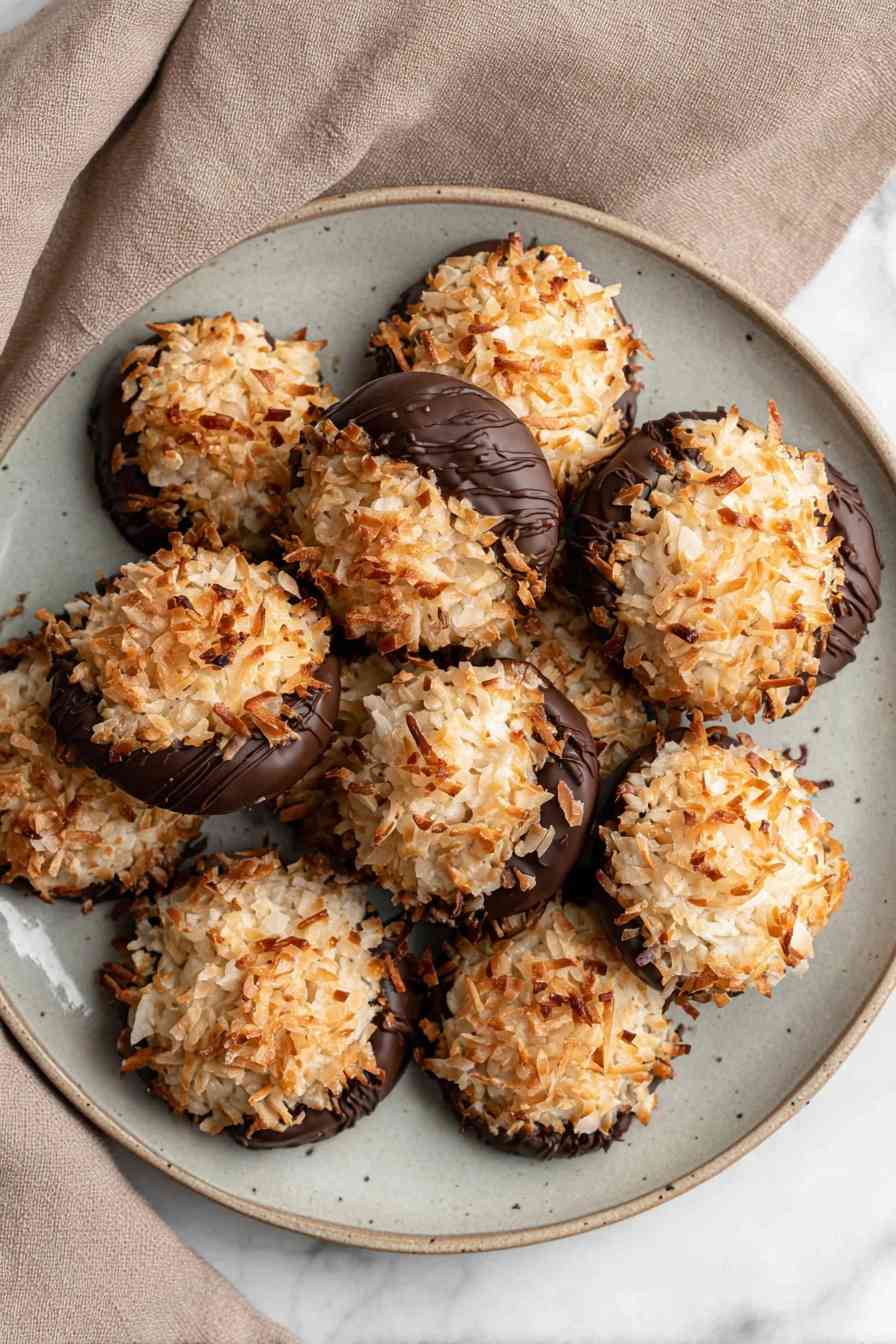
- Place a generous mound of the caramel-coconut mixture on each cookie ring. Press it gently to adhere. If the mixture becomes too sticky, rinse your fingers and continue. Let the toppings set up for 15 to 30 minutes.
- Combine the chocolate wafers and oil in a microwave-safe bowl, melting in short bursts and stirring until smooth.
- Using a fork, dip the bottom of each cookie in the melted chocolate. Tap off excess and place the cookies, chocolate side down, onto a Silpat- or parchment-lined baking sheet. Repeat for all cookies.
- Transfer any remaining chocolate into a small ziplock bag, snip a tiny corner, and drizzle over the top of the cookies in a fine stream.
- Allow the chocolate to fully set before serving or storing the cookies.
- Keep the cookies in an airtight container at room temperature for up to 1 week, or freeze for up to 3 months.
Nutrition
Notes
For neater stripes on top, use a ziplock bag with the tip snipped off for drizzling the chocolate. If the cookie dough becomes too soft while working, chill as needed for clean cuts. Watch the coconut closely when toasting—it browns very fast. Store finished cookies in an airtight container at room temperature up to 1 week, or freeze for longer storage. Substitute a gluten-free 1-to-1 flour blend for a gluten-free version. The dough and finished cookies both freeze well; thaw before serving.