Ingredients
Equipment
Method
- Wash the apricots well, then halve and pit them. Cut into 1-inch chunks and place in a large pot with the water. Bring to a boil over medium-high heat, then reduce to medium and simmer for 10 minutes. As it cooks, mash the fruit with a potato masher or wooden spoon to break it down and release the juice. The mixture should become soft and pulpy.
- Set a fine-mesh sieve over a large bowl and pour the cooked apricot mixture through it. Use the back of a spoon to press gently on the solids to extract as much liquid as possible — avoid pressing too firmly, as this can push pulp through and make the jelly cloudy. Measure out exactly 5 cups of the strained juice, which is the correct amount for proper gel setting with the pectin ratio.
- Pour the 5 cups of strained apricot juice into a clean large pot. Add the pectin and lemon juice, stirring continuously until the pectin is fully dissolved with no visible lumps. The lemon juice both brightens the flavor and provides the acidity needed for the pectin to set correctly.
- Raise the heat to high and bring the mixture to a rolling boil, stirring frequently. When large bubbles are breaking through the surface continuously, stir in the butter and salt. The butter helps minimize foam for a clearer jelly, and the salt deepens the apricot flavor without making it taste salty.
- Add all of the sugar at once, stirring until it dissolves completely. Allow the mixture to return to a full rolling boil, then keep it at high heat and boil for exactly 1 minute. This precise timing is essential for the pectin to activate and the jelly to set correctly.
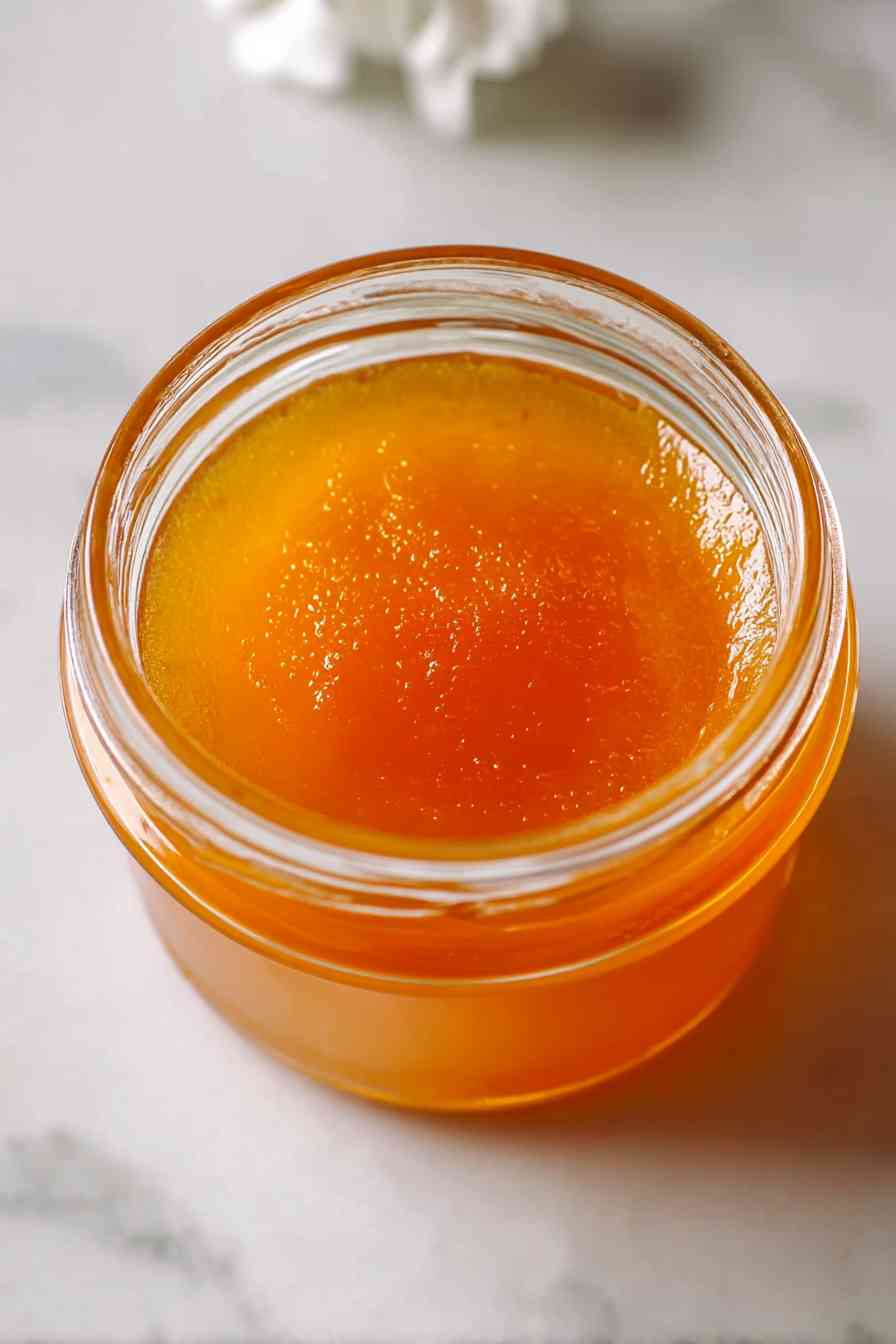
- Remove the pot from the heat immediately after the 1-minute boil. Skim off any remaining foam from the surface using a spoon. Carefully ladle the hot jelly into sterilized jars, leaving 1/4 inch of headspace. Secure the lids and process the jars in a boiling water bath for 10 minutes. The lids should pop as the jars cool, indicating a proper seal.
Notes
Measure the strained apricot juice precisely — even a half-cup difference can affect whether the jelly sets too loose or too firm. When straining, press gently and let gravity do most of the work to keep the jelly clear and translucent. Do not skip or cut short the final 1-minute boil, as this is what activates the pectin properly. Sealed jars can be stored in a cool, dark pantry for up to one year; once opened, refrigerate and use within three to four weeks. If a jar does not seal after processing, refrigerate it immediately and use it within a few weeks. This jelly works beautifully as a glaze for roasted pork or chicken, or served alongside sharp cheddar or brie on a cheese board.