
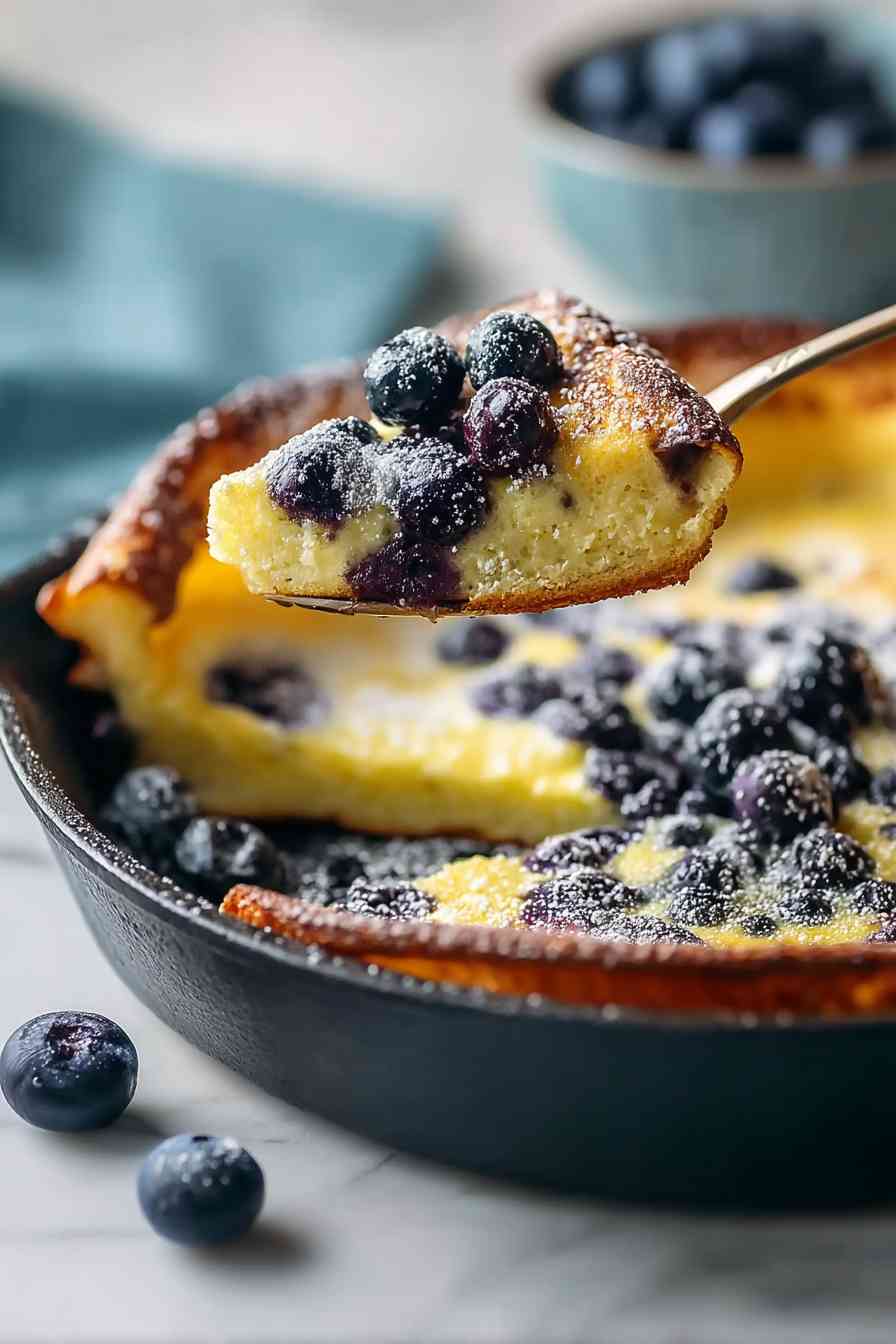
A 30 minute blueberry Dutch baby is breakfast theater—dramatic puffiness and golden edges in under half an hour.
You preheat a skillet in a screaming-hot oven, blend a silky batter in about 30 seconds, toast fresh blueberries in butter until their edges caramelize, then pour everything together and let physics do the rest. What emerges 15 minutes later is a puffy, golden-edged pancake that looks like it required far more effort than it actually did.
The secret is heat. A properly preheated 10 to 12 inch cast iron skillet creates the dramatic rise that makes a Dutch baby worth making in the first place. The batter hits that hot surface and immediately starts climbing the sides, forming crisp, billowy edges while the center stays custardy and tender. Blending the batter in a blender instead of whisking by hand gives you a lump-free texture that rises evenly, and briefly toasting the blueberries in butter before adding the batter concentrates their flavor and keeps them from turning the pancake soggy.
You dust it with confectioners sugar while it is still hot so the sugar sticks beautifully, then serve it straight from the skillet or transfer it to a plate. Either way, you need to move quickly, because a Dutch baby waits for no one.
What You Need for a 30 Minute Blueberry Dutch Baby
The ingredient list is short, but each component plays a specific role in creating the structure, flavor, and rise that define a proper Dutch baby.
- Eggs – provide the structure and lift, and must be at room temperature for a smooth, cohesive batter.
- Milk – thins the batter just enough to create a tender, custardy center without weighing down the rise.
- Flour – gives the pancake its structure and helps form the crisp, golden edges.
- Sugar – adds a touch of sweetness and encourages browning in the oven.
- Vanilla – rounds out the flavor and complements the blueberries without overpowering them.
- Lemon zest – brightens the batter and cuts through the richness of the butter and eggs.
- Salt – balances the sweetness and enhances the overall flavor.
- Melted butter (for the batter) – adds richness and helps create a tender crumb.
- Butter (for the skillet) – melts into a foaming base that toasts the blueberries and greases the pan.
- Blueberries – toast briefly in the hot butter to concentrate their flavor and caramelize their exteriors.
- Confectioners sugar – dusted on while the pancake is still hot so it adheres and creates a beautiful finish.
- Maple syrup – drizzled over the top for sweetness and a classic breakfast flavor.
How to Make a Dramatically Puffy Blueberry Dutch Baby
STEP 1: Preheat your oven to 450°F and place a 10 to 12 inch cast iron skillet on the middle rack to heat throughout the preheating process. Let your eggs come to room temperature if they are not already, as this helps create a smoother batter.
STEP 2: Combine the melted and cooled butter, milk, flour, room temperature eggs, sugar, vanilla, salt, and lemon zest in a blender. Blend on high speed for about 30 seconds until the batter is completely smooth. Let the batter rest for a minute after blending to allow any air bubbles to escape and give the flour time to fully hydrate.
STEP 3: Carefully remove the preheated skillet from the oven and place it on the stovetop over medium-high heat. Add the 2 tablespoons of butter and let it melt and foam for about 1 to 2 minutes. Add the blueberries and let them toast for 30 to 45 seconds, swirling gently to caramelize their exteriors.
STEP 4: Immediately pour the batter over the hot blueberries, working quickly so the batter can grab the heat and start cooking right away. Transfer the skillet back to the oven immediately and bake for 15 minutes, or until the Dutch baby is dramatically puffed and the edges are golden brown.
STEP 5: Do not open the oven door during baking, as the sudden temperature drop can cause it to deflate. The center should be set but still have a slight jiggle.
STEP 6: Remove the Dutch baby from the oven and dust the top generously with sifted confectioners sugar while it is still warm. Drizzle with warm maple syrup and serve immediately while it is still at its most dramatic height.
Dutch Baby Success Tips: From Skillet to Table
- Fully preheat the skillet – A lukewarm skillet will not create the dramatic puff and golden edges that make a Dutch baby worth making.
- Blend until completely smooth – Undermixing leads to uneven rising and a less tender texture.
- Do not open the oven door – The sudden drop in temperature can cause the Dutch baby to deflate before it has a chance to set.
- Serve immediately – It will deflate as it cools, and the edges will lose their crispness if it sits too long.
What to Serve With a Blueberry Dutch Baby
A Dutch baby is rich and custardy, so it pairs well with lighter, brighter accompaniments that cut through the butter and eggs. Crispy bacon or breakfast sausage adds a savory contrast to the sweet blueberries and maple syrup. Fresh whipped cream or a dollop of Greek yogurt balances the richness and adds a tangy note. A simple fruit salad with citrus and mint keeps the meal feeling fresh and bright.
Blueberry Dutch Baby FAQs & Troubleshooting
Can I use frozen blueberries instead of fresh?
You can, but do not thaw them first. Add them directly to the hot butter while still frozen and toast them for about 45 to 60 seconds. Frozen blueberries release more moisture, so the center may be slightly softer and less custardy than with fresh berries.
What if I don’t have a cast iron skillet?
Any oven-safe skillet will work, but cast iron holds heat better and creates the crispest, most dramatic edges. If you use a different material, make sure it is fully preheated and avoid nonstick pans, which do not brown as well at high heat.
Why did my Dutch baby deflate after baking?
All Dutch babies deflate as they cool, but if yours collapsed completely, the skillet may not have been hot enough, or you may have opened the oven door during baking. The sudden temperature drop prevents the structure from setting properly before it deflates.
Can I make the batter ahead of time?
The batter is best used immediately after blending, as it loses some of its rising power if it sits. If you need to make it ahead, refrigerate it for no more than 30 minutes and give it a quick stir before pouring it into the skillet.
Storing and Reheating Your Dutch Baby
Dutch babies are best served fresh from the oven, but leftovers can be stored in an airtight container in the fridge for up to 2 days. The texture will soften and the edges will lose their crispness, but the flavor remains good.
To reheat, place the Dutch baby on a baking sheet and warm it in a 350°F oven for 5 to 7 minutes. This will restore some of the crispness to the edges, though it will not puff up again. You can also reheat individual slices in a toaster oven for a quicker option.
Do not freeze Dutch babies, as the texture becomes rubbery and unpleasant after thawing.
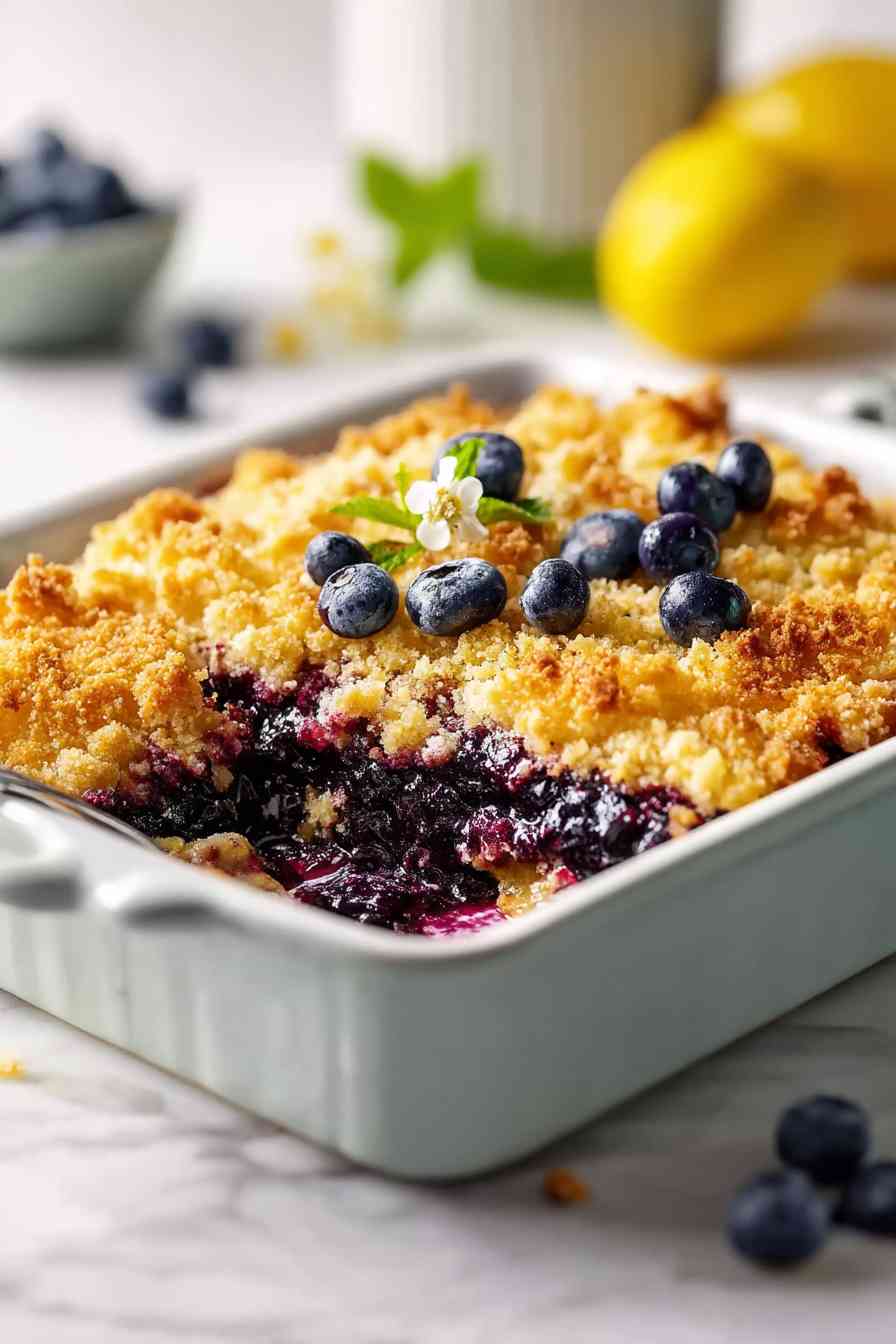
30 Minute Blueberry Dutch Baby
Ingredients
Equipment
Method
- Preheat your oven to 450°F and set a 10–12 inch cast iron skillet (or similar oven-safe skillet) on the middle rack so it heats up along with the oven. A thoroughly preheated skillet is what creates the characteristic puff and golden edges. Meanwhile, if your eggs are not yet at room temperature, set them out now — they blend into a smoother, more cohesive batter when warm.
- Add the melted and cooled butter, milk, flour, room temperature eggs, sugar, vanilla, salt, and lemon zest to a blender. Blend on high speed for about 30 seconds until the batter is completely smooth. Let it rest for a minute after blending so any air bubbles can dissipate and the flour has a moment to fully hydrate, which encourages an even rise.
- Carefully remove the hot skillet from the oven and place it on the stovetop over medium-high heat. Add the 2 tablespoons of butter and let it melt and foam for 1–2 minutes. Add the blueberries and let them toast for 30–45 seconds, swirling them gently to caramelize their exteriors and concentrate their flavor.
- Immediately pour the prepared batter over the hot blueberries in the skillet, working quickly so the batter starts cooking right away from the residual heat. Transfer the skillet straight back into the oven and bake for 15 minutes, until the Dutch baby is dramatically puffed and the edges are deep golden brown. Do not open the oven door during baking — a sudden temperature drop can cause it to deflate before it has set. The center should be set with just a slight jiggle, similar to a custard.
- Remove the skillet from the oven and immediately dust the top generously with sifted confectioners sugar while it is still hot so the sugar adheres. Drizzle with warm maple syrup and serve right away, either straight from the skillet at the table or transferred to a serving plate. The Dutch baby will gently settle as it cools, so serve it while it is still at its most impressive height.