
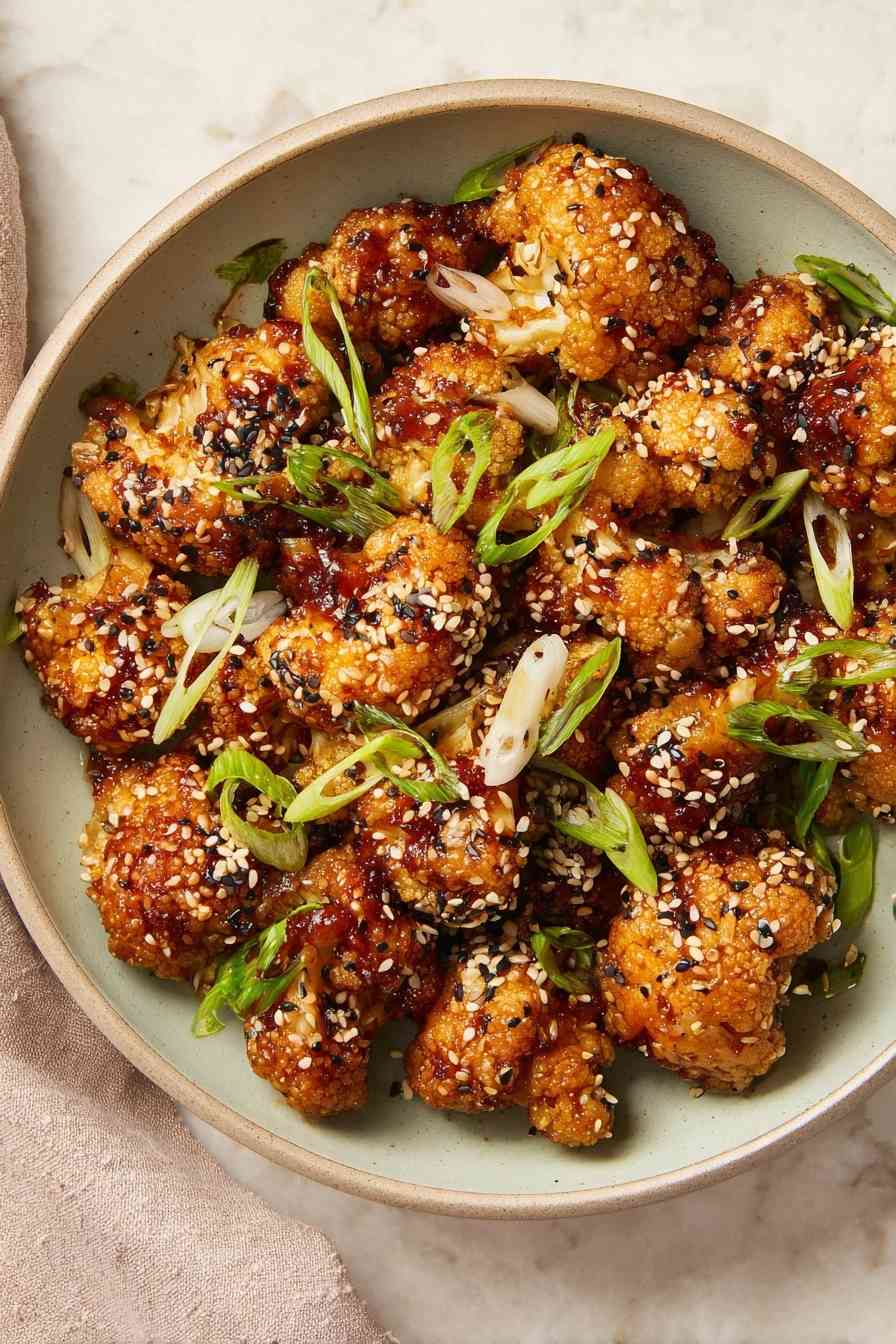
Sticky Sesame Cauliflower is the ultimate answer to takeout cravings—crispy, saucy, and bursting with flavor.
This is the dish that makes cauliflower skeptics believers. Baked until golden and crunchy, then tossed in a sauce built from soy, sesame oil, sriracha, ginger, and garlic, it hits every craving at once—savory, tangy, a little spicy, and just sweet enough. The rice flour-cornstarch batter gives each floret a light, crisp shell that holds up beautifully under that glossy, sticky coating.
You get restaurant-level flavor without the guilt of deep-frying, and the whole thing comes together in about 50 minutes. Serve it over jasmine rice or toss it with noodles, and you’ve got a meal that feels indulgent but keeps things surprisingly healthy. It’s quick enough for a weeknight, impressive enough for company, and flexible enough to tweak the heat or swap honey for maple syrup if you’re keeping it vegan.
How to Get That Irresistible Crunch and Sticky Glaze
STEP 1: Preheat your oven to 200C / 392F and line a baking tray with parchment paper or foil. Cut one medium cauliflower into florets, keeping the sizes fairly even so they bake at the same rate.
STEP 2: In a small bowl, whisk together rice flour, cornstarch, a teaspoon of oil, garlic powder, and water until you have a smooth, thick batter. The batter should coat the back of a spoon without dripping off too quickly.
STEP 3: Toss the cauliflower florets in the batter until every piece is well coated, then arrange them in a single layer on the prepared tray. Bake for 20 to 25 minutes, checking at the 20-minute mark. You want them just done, with a light golden color and firm texture, not soft or mushy.
STEP 4: While the cauliflower bakes, combine sesame oil, soy sauce, vinegar, sriracha, minced ginger, and minced garlic in a small saucepan over medium heat. Let the sauce simmer gently for 5 to 6 minutes to let the flavors meld. If you’re using maple syrup instead of honey, add it now.
STEP 5: Whisk together cornstarch and water in a small bowl, then pour the slurry into the simmering sauce. Stir constantly and cook for another 2 to 3 minutes until the sauce thickens and coats the back of a spoon. Remove from heat and stir in the honey if you’re using it instead of maple syrup.
STEP 6: Once the cauliflower is ready, transfer it to a large bowl and pour the sauce over the florets. Toss gently but thoroughly to coat every piece. Garnish with sesame seeds, sliced spring onions, and sliced chillis, then serve immediately while the florets are still crispy.
What You’ll Need for Sticky Sesame Cauliflower
The ingredient lineup here is straightforward, with each component playing a clear role in building flavor, texture, and that signature sticky glaze.
- Cauliflower – the star, cut into even florets for consistent baking and maximum crunch.
- Rice flour – creates a light, crispy coating that stays crunchy even after saucing.
- Cornstarch – used twice, first in the batter for structure, then in the sauce as a thickener.
- Sesame oil – brings deep, nutty richness to the sauce and ties the whole dish together.
- Soy sauce – delivers umami and saltiness; make sure it’s halal certified if that’s a concern.
- Vinegar – white or apple cider both work to add brightness and balance the sweetness.
- Sriracha – provides heat and a touch of tang; adjust the amount based on your spice tolerance.
- Fresh ginger and garlic – minced finely, these aromatics build the backbone of the sauce.
- Honey or maple syrup – adds sticky sweetness; honey goes in after cooking, maple syrup can simmer with the sauce.
- Sesame seeds, spring onions, and sliced chillis – garnishes that add texture, color, and a final hit of freshness.
What to Serve with Sticky Sesame Cauliflower

This dish pairs beautifully with steamed jasmine rice, which soaks up the extra sauce and balances the bold flavors. If you want something more substantial, toss it with lo mein noodles or serve it over fried rice for a complete meal. A simple cucumber salad with rice vinegar and a pinch of sugar makes a crisp, cooling side that cuts through the richness of the glaze.
The sticky glaze also works well alongside stir-fried vegetables like bok choy or snap peas, or you can serve it as an appetizer over a bed of greens for a lighter option.
Secrets for the Best Sticky Sesame Cauliflower
- Make sure your batter is thick enough to cling to the florets without sliding off. If it’s too thin, add a bit more rice flour or cornstarch until it coats the back of a spoon.
- Don’t overbake the cauliflower. Pull it from the oven when it’s just tender and lightly golden, not soft or browned. Overbaking kills the crunch and leaves you with mushy florets.
- Toss the cauliflower with the sauce right before serving. The longer it sits, the more the coating softens. If you need to hold it for a few minutes, keep the sauce and cauliflower separate until the last moment.
- Taste the sauce before you toss. The balance of sweet, salty, spicy, and tangy should feel right to you. Adjust with more honey, sriracha, or a splash of vinegar as needed.
Sticky Sesame Cauliflower: Common Questions
Can I make Sticky Sesame Cauliflower ahead of time?
You can bake the cauliflower and prepare the sauce a few hours in advance, but keep them separate until you’re ready to serve. Toss them together just before plating to preserve the crispy texture and prevent the florets from turning soggy.
Is there a gluten-free option for this recipe?
Yes, this recipe is naturally gluten-free as long as you use certified gluten-free soy sauce or tamari. The rice flour and cornstarch batter is already free of wheat, so no other substitutions are needed for a gluten-free version.
How do I keep the cauliflower crispy after baking?
The key is to avoid overbaking and to toss the florets with the sauce at the last possible moment. If you let the sauced cauliflower sit for more than a few minutes, the coating will soften. Serve immediately for the best texture.
Can I use frozen cauliflower instead of fresh?
Fresh cauliflower works best because frozen florets release too much moisture during baking, which prevents them from crisping up properly. If you must use frozen, thaw completely, pat the florets very dry, and expect a slightly softer texture overall.
What’s the best way to adjust the spice level?
Start with one tablespoon of sriracha and taste the sauce before adding more. If you want less heat, use a milder chili sauce or cut the sriracha in half. For more kick, increase the sriracha or add a pinch of red pepper flakes.
Keeping Leftover Sticky Sesame Cauliflower Fresh
Store any leftovers in an airtight container in the fridge for up to three days. The cauliflower will lose some of its crispness, but the flavor stays strong. Reheat in a 180C / 350F oven for about 10 minutes to bring back a bit of texture, or warm it gently in a skillet over medium heat. Avoid the microwave if you want to preserve any remaining crunch. Freezing isn’t recommended, as the coating turns mushy when thawed.
For best results, store the sauce and cauliflower separately if you plan to keep them longer than a few hours. This prevents the florets from absorbing too much moisture and losing their crispy exterior.
Sticky Sesame Cauliflower
Ingredients
Equipment
Method
- Preheat the oven to 200°C (392°F) and line a baking tray with parchment paper or foil.
- In a small bowl, whisk together the rice flour, 1 tbsp cornstarch, oil, garlic powder (if using), and water until you have a smooth, thick batter.
- Toss the cauliflower florets in the batter until well coated, then arrange them in a single layer on the prepared tray.
- Bake the cauliflower for 20–25 minutes, until just tender but still crunchy. Avoid overcooking.
- While the cauliflower bakes, add sesame oil, soy sauce, vinegar, sriracha, ginger, and garlic to a small saucepan. Cook over medium heat for 5–6 minutes. If using maple syrup instead of honey, add it now.
- In a separate small bowl, mix 1 tbsp cornstarch with 1/4 cup water until smooth, then pour this mixture into the saucepan with the simmering sauce.
- Stir and cook the sauce for another 2–3 minutes, until it thickens. Remove from heat and stir in the honey (if using that, not maple syrup). Taste and adjust seasoning as needed.
- Once the cauliflower is ready, place it in a large bowl and pour the hot sauce over the florets. Gently toss to coat evenly.
- Transfer to a serving dish and finish with a sprinkle of sesame seeds, chopped spring onions, and sliced chillis. Serve immediately.