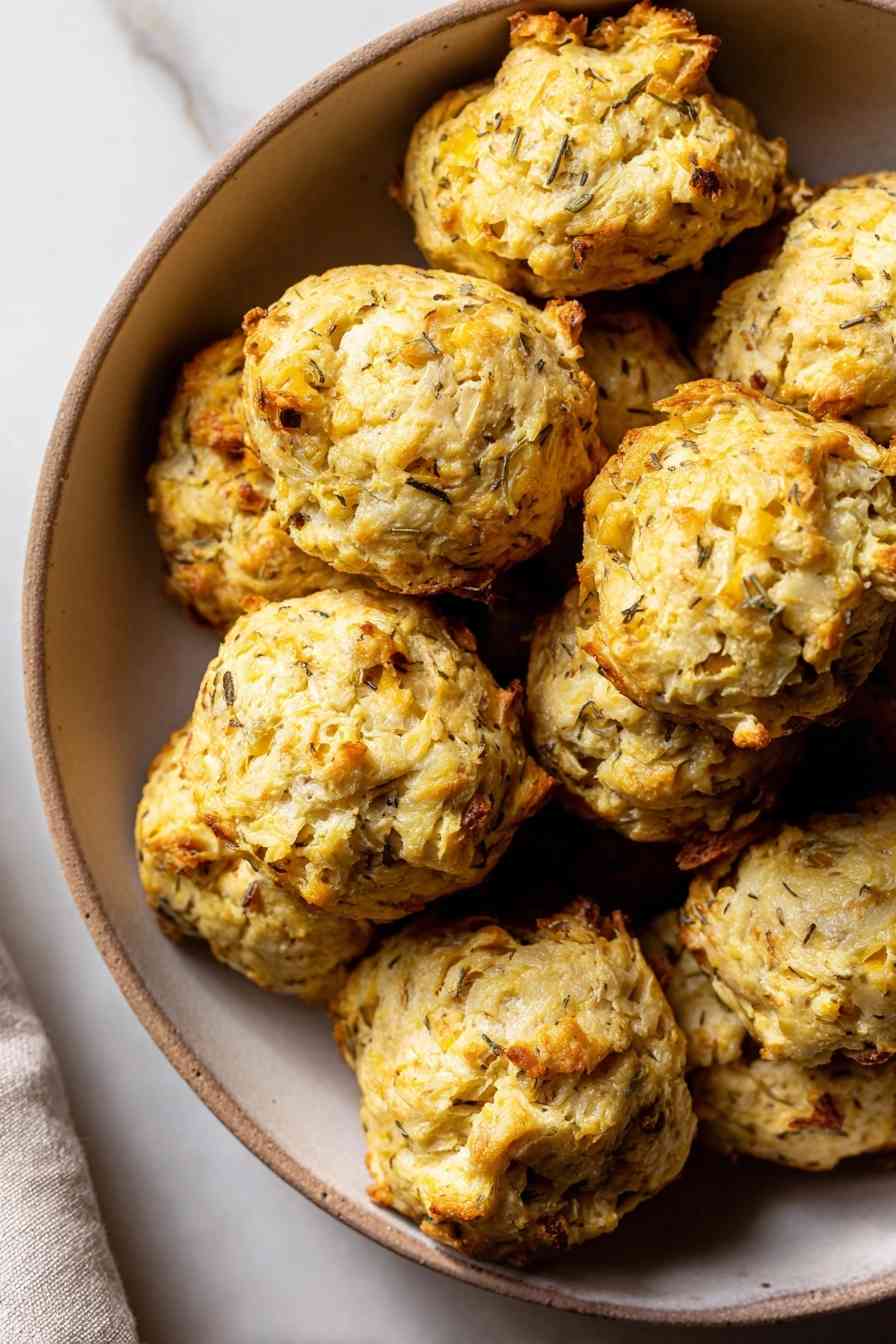

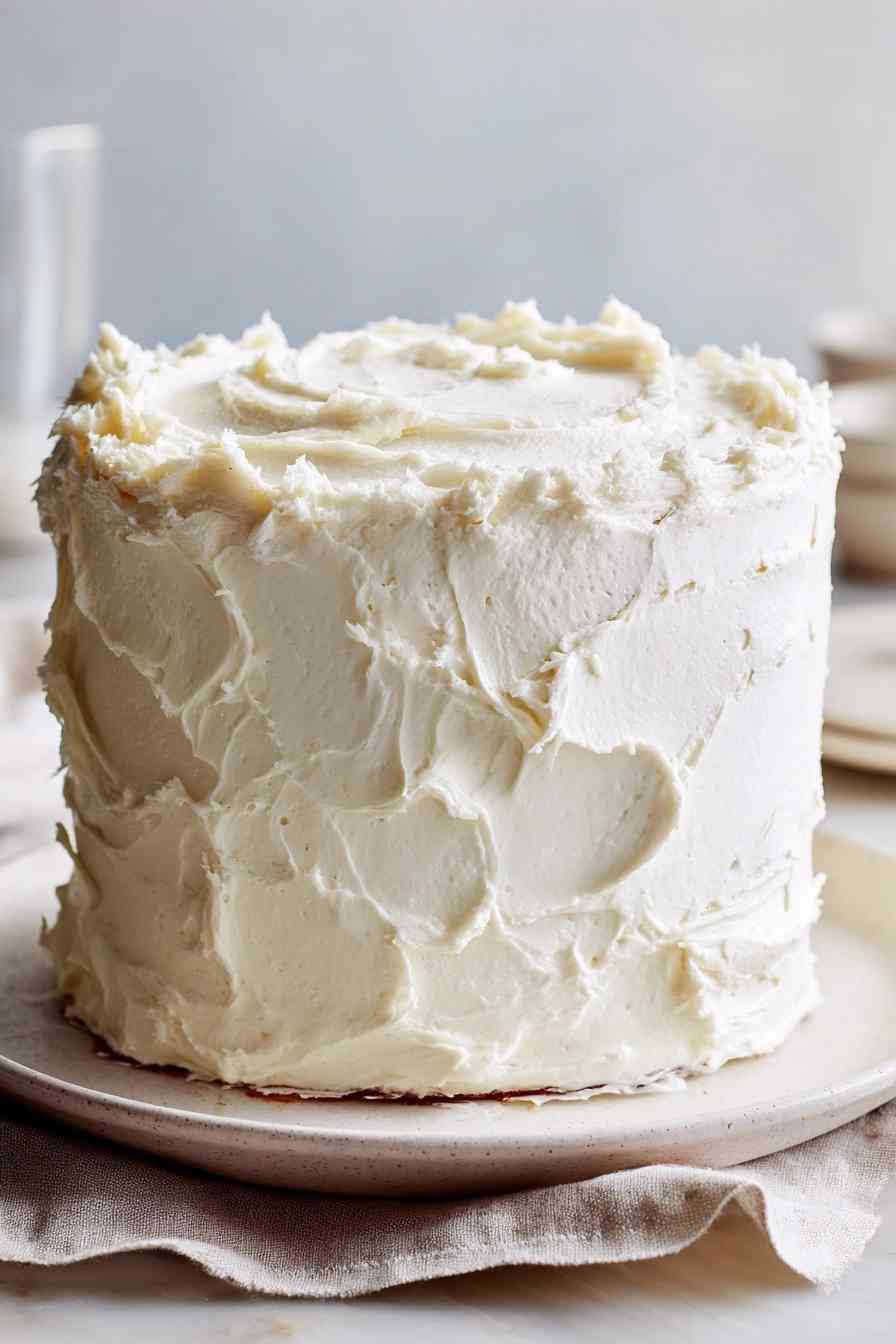
Perfect White Cake with Vanilla Buttercream is a tender, bakery-style cake made with egg whites for pure white color.
This is the kind of cake that makes you look like you know what you’re doing. The crumb is soft but sturdy enough to stack, the color is genuinely white instead of golden, and the vanilla buttercream sits somewhere between silky and cloud-like. It’s a celebration cake that doesn’t require professional equipment or a culinary degree, just a little patience and room-temperature ingredients.
What sets white cake apart is the use of egg whites only, no yolks. That choice keeps the color bright and the texture delicate without sacrificing structure. A touch of almond extract adds signature depth, while sour cream and a small amount of oil keep the layers moist for days. Clear vanilla extract prevents any unwanted tinting, which matters more than you’d think when you’re aiming for that clean, decorator-friendly base.
The buttercream is equally thoughtful. It’s not cloyingly sweet, and the consistency can be dialed in with cream or milk until it spreads like a dream. Whether you’re frosting a birthday cake or prepping layers for fondant, this recipe gives you control and consistency.
What Goes Into Perfect White Cake and Buttercream
The ingredient lineup here is precise, and each component plays a specific role in texture, moisture, and structure.
- All-purpose flour – sifted to remove lumps and aerate the batter for a tender crumb.
- Baking powder – provides the lift needed for fluffy, even layers.
- Unsalted butter – creamed with sugar to create air pockets and richness in both cake and frosting.
- Granulated sugar – sweetens the cake and helps achieve a light, airy texture when creamed.
- Vegetable oil – keeps the cake moist for longer without adding heaviness.
- Clear vanilla extract – adds flavor without tinting the batter yellow.
- Almond extract – brings subtle depth and a bakery-style flavor signature.
- Egg whites – the defining ingredient for white cake, providing structure and a pure white crumb.
- Sour cream – adds moisture and a slight tang that balances sweetness.
- Whole milk – alternated with dry ingredients to keep the batter smooth and tender.
- Powdered sugar – creates a silky buttercream that spreads easily and holds its shape.
- Whipping cream – adjusts buttercream consistency and adds a touch of richness.
Pro Tips for Bakery-Quality White Cake Layers
- Sift the flour even if the bag says pre-sifted. Clumps lead to dense spots, and aerated flour mixes more evenly into the batter.
- Cream the butter and sugar for the full 2 to 3 minutes. Stopping early means fewer air pockets, which translates to a heavier crumb.
- Use room-temperature egg whites, sour cream, and milk. Cold ingredients don’t emulsify properly, and you’ll end up with a grainy or uneven texture.
- Alternate wet and dry ingredients carefully, and stop mixing as soon as the flour disappears. Overmixing activates gluten and turns a tender cake tough.
How to Make a Fluffy White Cake with Silky Vanilla Frosting
STEP 1: Preheat your oven to 350°F and line the bottoms of two 8-inch round cake pans with parchment, then lightly grease the sides.
STEP 2: Sift the flour, baking powder, and salt together into a large bowl, then whisk for about 30 seconds to distribute the leavening evenly.
STEP 3: In a separate large bowl, beat the softened butter and granulated sugar on medium speed for 2 to 3 minutes until the mixture looks pale and fluffy, then mix in the oil, vanilla extract, and almond extract.
STEP 4: Add the egg whites one at a time, beating after each addition and scraping down the sides and bottom of the bowl to ensure even mixing, then stir in the sour cream.
STEP 5: With the mixer on low, add about one-third of the flour mixture, then half the milk, then another third of the flour, the remaining milk, and finally the last of the flour, mixing just until incorporated after each addition.
STEP 6: Divide the batter evenly between the prepared pans and bake for 28 to 35 minutes, checking for doneness with a toothpick inserted into the center that comes out clean or with just a few crumbs.
STEP 7: Cool the cakes in their pans for 10 minutes, then carefully invert onto a wire rack and let them cool completely before frosting.
STEP 8: For the buttercream, beat the softened butter on medium speed for 2 to 3 minutes until fluffy, then add 3 cups of sifted powdered sugar along with the vanilla extract, almond extract, and salt, mixing on low before increasing to medium speed. Gradually add the remaining powdered sugar half a cup at a time, alternating with tablespoons of cream or milk, until the frosting reaches your desired thickness and sweetness. Level the cooled cake layers with a serrated knife or cake leveler, place one layer on a serving plate, spread about three-quarters to one cup of frosting on top, add the second layer, and frost the exterior of the cake.
Serving Ideas for White Cake with Vanilla Buttercream
Serve slices with fresh berries like strawberries, raspberries, or blueberries for a pop of color and tart contrast. A scoop of vanilla bean ice cream or lemon sorbet makes an elegant pairing, or drizzle individual slices with raspberry or chocolate ganache for a polished presentation.
White Cake with Vanilla Buttercream: Your Questions Answered
Why does white cake only use egg whites?
Egg yolks add a golden yellow color to cake batter, which is fine for yellow cake but not ideal when you want a pure white crumb. Using only egg whites keeps the color bright and the texture slightly more delicate, which is why white cake is a favorite base for decorating and tinting with food coloring.
Can I make this cake in advance for an event?
Yes, you can bake the cake layers up to two days ahead and store them tightly wrapped at room temperature, or freeze them for up to three months. Frost the cake the day before your event and refrigerate it, then bring it to room temperature about an hour before serving for the best texture and flavor.
What’s the best way to get flat, even cake layers?
Use a serrated knife or a cake leveler to trim any domed tops once the layers are completely cool. Cutting while the cake is still warm can cause crumbling, and skipping this step makes stacking and frosting much harder. Flat layers mean cleaner lines and a more professional-looking finished cake.
Is it possible to make the buttercream less sweet?
Start with 5 cups of powdered sugar instead of 6, and add the salt gradually to balance the sweetness. You can also increase the cream or milk slightly to thin the frosting without adding more sugar, or try a Swiss meringue buttercream if you prefer a less sweet frosting overall.
Can I color the cake or frosting for themed occasions?
Absolutely. Gel food coloring works best because it won’t thin out the batter or frosting, and a little goes a long way. Add it gradually, mixing thoroughly between additions, until you reach the shade you want. The white base makes colors appear vibrant and true, which is why this cake is so popular for birthdays and celebrations.
How to Store Leftover White Cake
Store frosted cake in an airtight container or covered with plastic wrap at room temperature for up to two days, or refrigerate it for up to five days. If refrigerated, let the cake sit at room temperature for about 30 minutes before serving so the buttercream softens and the texture improves. Unfrosted cake layers can be wrapped tightly in plastic wrap and frozen for up to three months, then thawed overnight in the fridge before frosting.
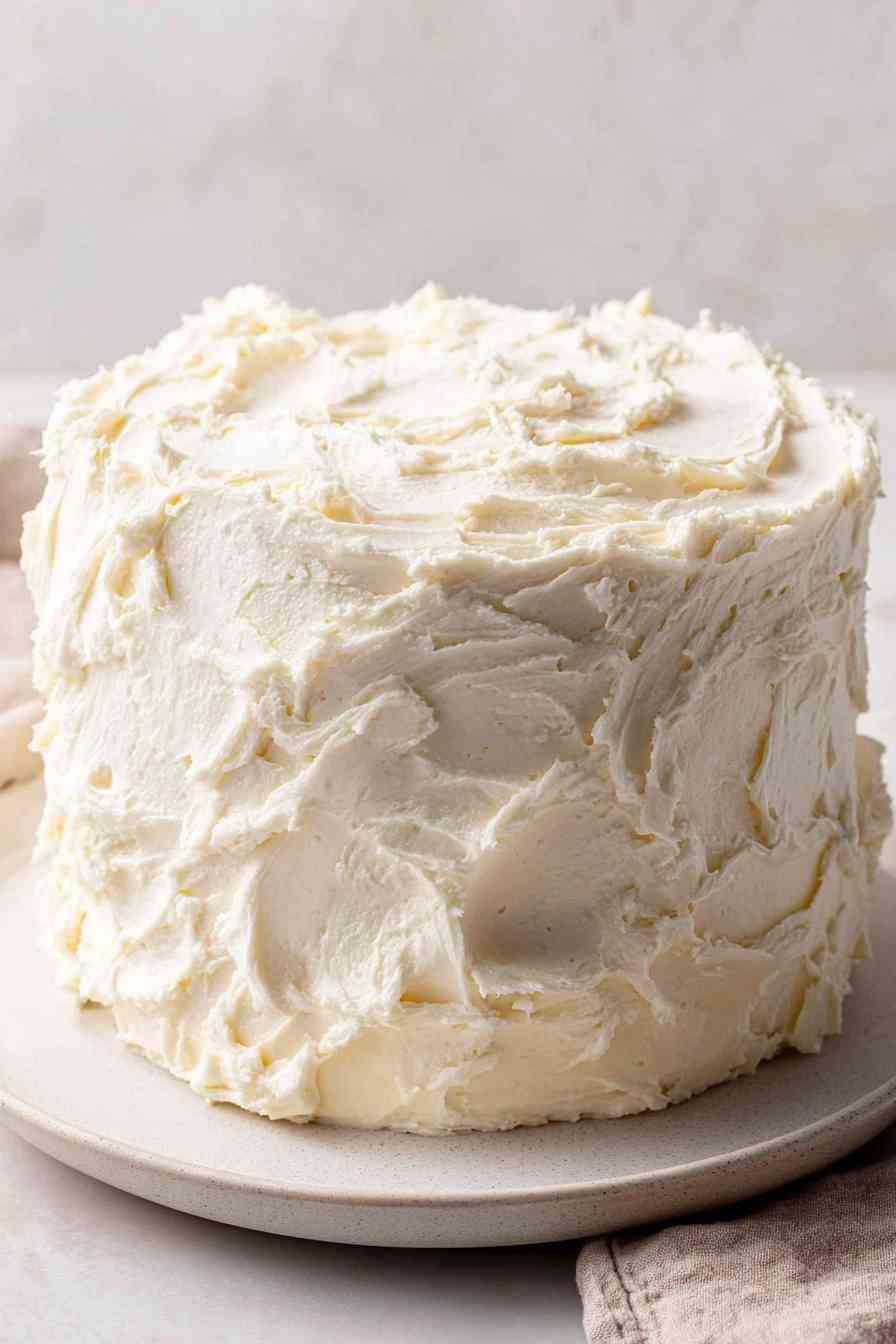
Perfect White Cake with Vanilla Buttercream
Ingredients
Equipment
Method
- Heat the oven to 350°F (180°C). Line the bottoms of two 8x2-inch round cake pans with parchment and lightly grease the sides.
- Sift together the flour, baking powder, and salt in a large bowl, then whisk for about 30 seconds to blend.
- In a separate large bowl, use an electric mixer on medium speed to cream the butter and sugar until pale and fluffy, about 2–3 minutes. Mix in the oil, vanilla extract, and almond extract until fully combined.
- Add the egg whites to the butter mixture one at a time, beating well and scraping down the sides after each addition.
- Stir the sour cream into the butter mixture.
- With the mixer on low, add about one-third of the flour mixture, then half the milk. Repeat with another one-third of the flour mixture and the rest of the milk, then finish with the remaining flour mixture. Mix until just combined; do not overmix.
- Evenly distribute the batter between the prepared pans. Bake for 28–35 minutes, or until a toothpick inserted in the center comes out clean or with just a few crumbs.
- Let the cakes cool in the pans for 10 minutes. Carefully invert them onto a wire rack and allow to cool completely.
- To make the buttercream, beat the softened butter with a mixer on medium speed until light and fluffy, about 2–3 minutes.
- Add 3 cups of powdered sugar, the vanilla extract, almond extract, and salt. Begin mixing on low speed, then increase to medium until combined.
- Gradually add the remaining powdered sugar, 1/2 to 1 cup at a time, alternating with a tablespoon at a time of cream or milk, mixing until you reach your preferred frosting consistency and sweetness.
- Once the cakes are completely cool, trim any domed tops with a serrated knife or cake leveler.
- Place one cake layer on a serving plate and spread 3/4 to 1 cup of buttercream on top. Add the second layer and frost the outside of the cake.