
Easy Dijon Mustard Chicken Marinade transforms simple chicken into juicy, flavorful grilled meat with minimal prep.
The marinade is a simple blend of Dijon mustard, lemon juice, and olive oil, with a touch of honey to round out the acidity. It comes together in about two minutes, and once the chicken is coated and tucked into the fridge, the marinade does all the work. The acid from the lemon juice tenderizes the meat while the mustard and garlic penetrate deep, creating punchy, bright flavor in every bite.
Cutting the chicken into 1-inch cubes ensures even marinating and quick, consistent cooking on the grill. You’ll get a caramelized crust on the outside and tender, juicy meat inside, and the whole process feels almost effortless.
What You’ll Need for Dijon Mustard Chicken Marinade
The ingredient list is short, and each component plays a clear role in building flavor and texture.
- Chicken – cut into 1-inch cubes for even marinating and faster cooking on the grill.
- Olive oil – creates the base of the marinade and helps the seasonings cling to the chicken.
- Lemon juice – provides acidity that tenderizes the meat and brightens the overall flavor.
- Dijon mustard – the backbone of the marinade, delivering tangy depth and a slight sharpness.
- Honey – optional, but it balances the acidity without making the marinade sweet.
- Oregano – adds an earthy, herbal note that complements the mustard.
- Garlic powder – brings savory warmth and rounds out the flavor profile.
- Salt and black pepper – essential for seasoning and enhancing all the other ingredients.
- Water – thins the marinade slightly so it coats the chicken more evenly.
Secrets for the Most Flavorful Mustard Chicken
- Marinate for at least 3 hours, but no more than 12. The lemon juice will tenderize the chicken beautifully in that window, but if you leave it much longer, the texture can turn mushy. Overnight is fine, but don’t push it past that.
- Let the chicken sit at room temperature for 10 minutes before grilling. Cold chicken straight from the fridge cooks unevenly, with the outside charring before the inside reaches temperature. A short rest on the counter fixes that.
- Don’t crowd the grill. If the pieces are too close together, they’ll steam instead of sear, and you’ll lose that caramelized crust. Work in batches if you need to.
- Use an instant-read thermometer to check doneness. Pull the chicken off the grill at 165°F, measured at the thickest part of the cube. It’s the only reliable way to avoid dry, overcooked meat.
Step-by-Step: Marinating and Grilling Chicken with Dijon
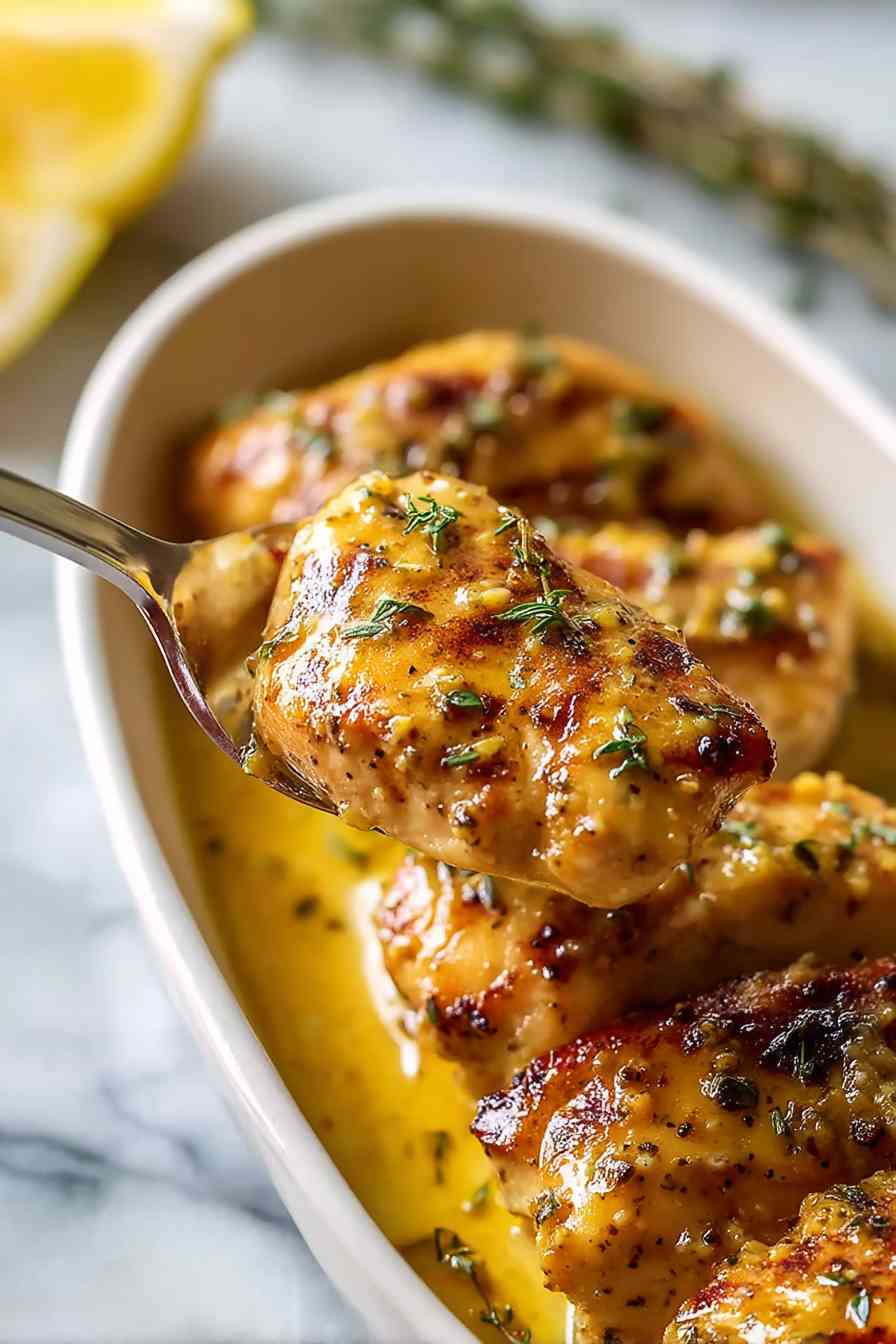
STEP 1: In a bowl or container, whisk together the olive oil, lemon juice, water, Dijon mustard, and honey until the mixture is smooth and emulsified. Add the oregano, garlic powder, salt, and black pepper, stirring well to distribute the seasonings evenly. Taste the marinade at this stage if you want to adjust the salt or acidity before the chicken goes in.
STEP 2: Add the cubed chicken to the marinade, stirring gently to coat all the pieces. Cover the container and refrigerate for at least 3 hours, or up to overnight for deeper flavor. The lemon juice will tenderize the chicken while the mustard and garlic work their way into the meat.
STEP 3: Preheat your grill to 425°F. Remove the chicken from the refrigerator about 10 minutes before grilling so it can come closer to room temperature. Place the chicken pieces on the hot grill grates in a single layer, working in batches if necessary to avoid crowding.
STEP 4: Cook for approximately 5 minutes on the first side without moving the pieces. This develops a caramelized crust and locks in the marinade’s flavors.
STEP 5: Flip each piece and cook for another 5 minutes on the second side. Check for doneness with an instant-read thermometer, looking for 165°F at the thickest part.
STEP 6: Let the chicken rest for 3 to 5 minutes off the heat before serving. This allows the juices to redistribute, keeping the meat moist and flavorful.
What Goes Well With Dijon Mustard Chicken
- Roasted vegetables – carrots, zucchini, or bell peppers pick up the same caramelized char as the chicken and complement the tangy marinade.
- Rice pilaf or couscous – both absorb the juices from the chicken and balance the acidity with a mild, starchy base.
- Simple green salad – arugula or mixed greens with a light vinaigrette echo the brightness of the lemon without competing with the mustard.
Dijon Mustard Chicken Marinade: Your Questions Answered
Can I use chicken breasts or thighs instead of cubes?
Yes, but you’ll need to adjust the marinating and cooking times. Whole breasts or thighs take longer to cook through and may need 15 to 20 minutes on the grill, flipping halfway. The marinade works the same way, but check doneness with a thermometer to avoid guessing.
Is it possible to bake the chicken instead of grilling?
Absolutely. Preheat your oven to 425°F and spread the marinated chicken on a lined baking sheet in a single layer. Bake for 18 to 22 minutes, flipping once halfway through, until the internal temperature reaches 165°F. You won’t get the same char, but the flavor stays strong.
How long can I marinate the chicken without it getting mushy?
Three hours is the minimum for good flavor, and 12 hours is the maximum before the texture starts to break down. The lemon juice is acidic enough to tenderize the chicken quickly, so don’t push it past overnight or the meat will turn soft and unpleasant.
Is there a substitute for Dijon mustard if I don’t have it?
Yellow mustard can work in a pinch, but it’s milder and less tangy, so the marinade will taste flatter. Whole-grain mustard is a better substitute if you have it, as it keeps the sharpness and adds a bit of texture. Avoid sweet mustards, which will throw off the balance.
Does the honey make the marinade sweet?
Not really. The honey is there to balance the acidity from the lemon juice and the sharpness from the Dijon, but it’s such a small amount that it doesn’t read as sweet. If you skip it, the marinade will taste brighter and more tangy, which some people prefer.
How to Store Leftover Marinated Chicken
Store cooked chicken in an airtight container in the refrigerator for up to 3 days. Reheat gently in a skillet over medium heat or in the microwave at 50% power to avoid drying it out.
If you’re storing raw marinated chicken, keep it in the fridge for no more than 12 hours before cooking. Freezing marinated raw chicken works well for up to 2 months, and you can thaw it in the fridge overnight before grilling.
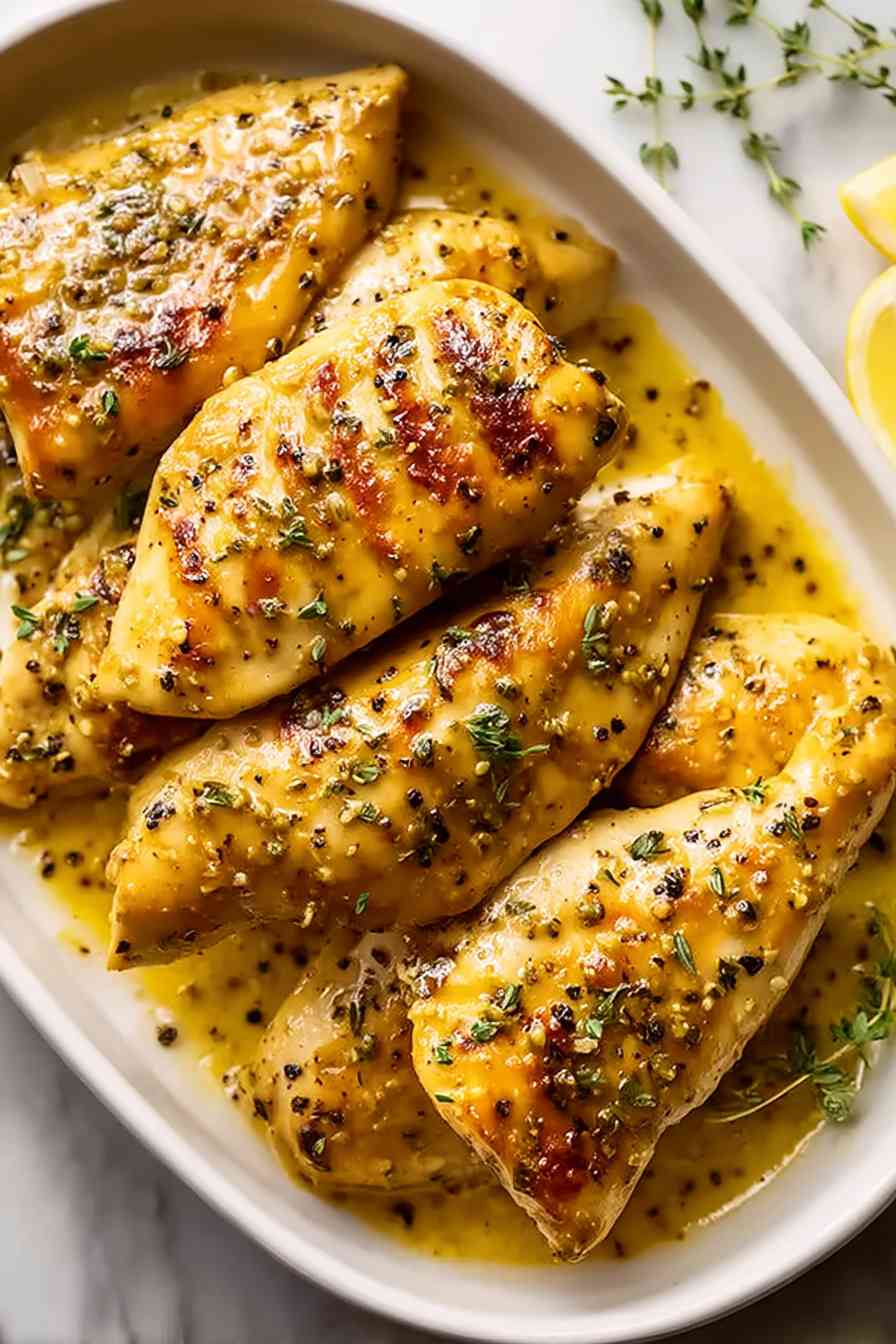
Easy Dijon Mustard Chicken Marinade
Ingredients
Equipment
Method
- In a bowl or container, combine the olive oil, lemon juice, water, Dijon mustard, and honey (if using). Whisk until the mixture is smooth and fully emulsified. Stir in the oregano, garlic powder, salt, and black pepper, making sure the dried seasonings are evenly distributed throughout the liquid. At this point, you can taste the marinade and adjust the salt or acidity as needed before adding the chicken.
- Add the cubed chicken to the marinade, turning and stirring gently to coat every piece evenly. Cover the container and refrigerate for a minimum of 3 hours, or up to overnight for a deeper, more penetrating flavor. During this time, the lemon juice tenderizes the chicken while the mustard and garlic work their way into the meat.
- Preheat your grill to 425°F. Pull the chicken out of the refrigerator about 10 minutes before you plan to grill, allowing it to approach room temperature for more even cooking. Place the chicken pieces on the hot grill grates in a single layer, working in batches if needed to prevent crowding. Cook for approximately 5 minutes on the first side without moving the pieces, allowing a caramelized crust to develop.
- Flip each piece of chicken and cook for another 5 minutes on the second side. Check doneness with an instant-read thermometer — the chicken is ready when it reaches an internal temperature of 165°F at the thickest point. Remove the chicken from the grill and let it rest for 3 to 5 minutes before serving so the juices redistribute and the meat stays moist.