
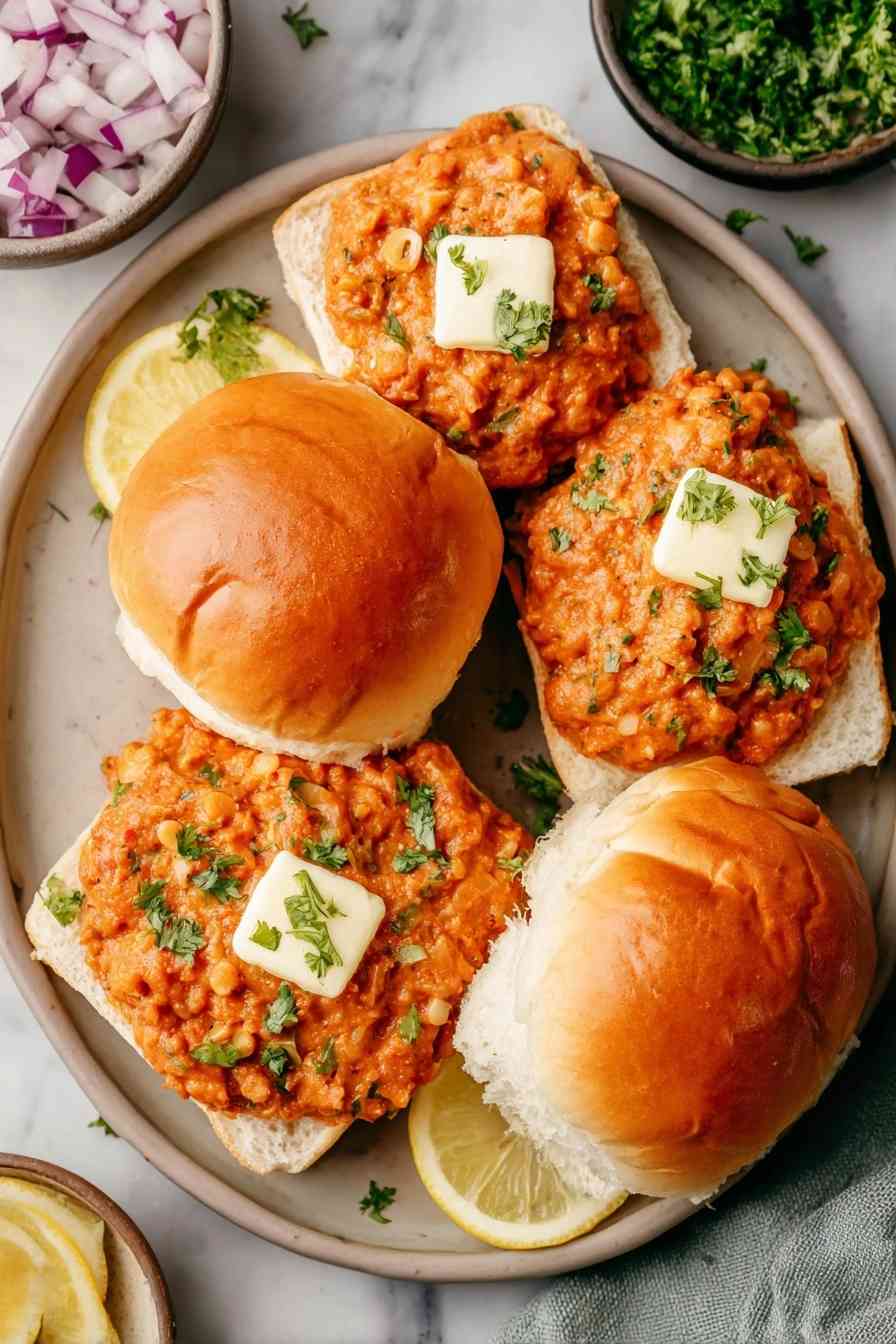
Mumbai Pav Bhaji is a spiced vegetable mash served with buttered toasted rolls.
Walk through any bustling Mumbai street corner at dinnertime and you’ll find vendors working massive griddles, mashing vegetables with theatrical flair, slapping butter onto sizzling pav rolls, and serving up plates piled with this iconic street food. The beauty of pav bhaji lies in its adaptability and crowd-pleasing nature, a fluid but not watery mash of potatoes, cauliflower, peas, bell pepper, and tomatoes that soaks up the signature pav bhaji masala spice blend. It’s the kind of dish that brings families together around the table, feeds a crowd without fuss, and somehow manages to make even the pickiest eaters ask for seconds.
The magic happens in two parts: the bhaji, a deeply spiced vegetable mash that balances salt, fat, acid, and heat in a way that feels both comforting and exciting, and the pav, those golden, buttery toasted rolls that act as edible spoons for scooping up every last bit. Bright garnishes like sliced onions, cilantro, and lemon wedges add freshness and contrast, while a final dollop of butter melting into the hot bhaji seals the deal. This weeknight dinner feels like a celebration, a recipe that cleans out your vegetable drawer while delivering authentic Mumbai flavor.
You’ll find this version stays true to the classic vegetable combination that produces the taste and texture closest to what you’d get in India, with just enough flexibility to make it work in your kitchen.
What You’ll Need for Mumbai Pav Bhaji
The ingredient lineup here is all about building layers of flavor and creating that signature mashed texture that holds together without turning soupy.
- Yukon Gold potatoes – provide the starchy base and creamy body that holds the mash together.
- Cauliflower florets – add texture, mild sweetness, and help create the right consistency when mashed with potatoes.
- Turmeric – gives the vegetables a warm golden color during boiling.
- Red onion – brings sweetness and depth when sautéed until golden brown.
- Green bell pepper – contributes a slight vegetal bite and freshness to balance the richness.
- Ginger paste and minced garlic – create the aromatic foundation that makes the bhaji smell like street food.
- Pureed tomatoes – add acidity, moisture, and help deglaze the pan for deeper flavor.
- Frozen peas – bring pops of sweetness and color throughout the mash.
- Pav bhaji masala – the signature spice blend that defines this dish, with warming, slightly tangy notes.
- Dinner rolls (pav) – soft rolls that toast up crispy on the outside, buttery and tender inside.
- Vegan butter – used both for toasting the pav and finishing the bhaji with richness.
- Sliced onion, cilantro, and lemon wedges – fresh garnishes that cut through the richness and add brightness.
Step-by-Step: Cooking Pav Bhaji at Home
STEP 1: Add peeled potatoes, cauliflower florets, and a pinch of turmeric to a large pot of water, then bring to a boil over medium heat for 15 to 20 minutes until a fork slides smoothly into the potatoes.
STEP 2: Drain the vegetables thoroughly, mash them together until mostly smooth, and set aside while you build the flavor base.
STEP 3: Heat vegetable oil in a deep pan over medium-high heat, add chopped red onions and green peppers, and sauté for about 3 minutes until they turn golden brown and softened.
STEP 4: Stir in ginger paste and minced garlic, cooking for 30 seconds until fragrant, then add pureed tomatoes and deglaze the pan, sautéing on high heat for 3 minutes to concentrate the flavors.
STEP 5: Add the mashed cauliflower and potatoes along with the peas, pav bhaji masala, salt, and 1 to 1.5 cups of water, mixing everything together thoroughly.
STEP 6: Mash again using the back of a spoon or a potato masher until the mixture is fluid but holds its shape, not watery or runny.
STEP 7: Cook on medium heat, stirring frequently, for about 5 minutes until all the components meld together and the bhaji thickens slightly.
STEP 8: Toast the dinner rolls in a toaster or on a pan with salted butter until golden and crispy on the cut sides, then serve immediately with the hot bhaji, sliced red onions, cilantro, lemon wedges, and a generous dollop of butter on top.
Secrets for That True Street Vendor Pav Bhaji Flavor

- Don’t rush the onion and pepper sauté in step 3, that deep golden color builds the flavor foundation for the entire dish and skipping this step leaves the bhaji tasting flat.
- Add water gradually when mixing in the mashed vegetables, you want the bhaji to be scoopable and fluid but not soupy, and you can always add more liquid but you can’t take it back.
- Toast the pav on medium heat with plenty of butter, watching closely to get them crispy and golden without burning, which happens fast once they start browning.
- Use the full amount of pav bhaji masala called for, this spice blend is what makes the dish taste authentic and cutting back leaves it tasting like generic mashed vegetables.
What Goes Best with Pav Bhaji
Pav bhaji is traditionally served as a complete meal on its own, but a few simple additions can round out the experience. A side of cooling raita or plain yogurt helps balance the warmth of the spices and adds a creamy contrast. For a fuller spread, serve it alongside masala chai or a cold lassi, both of which complement the rich, buttery flavors. If you want to add crunch, a simple kachumber salad with diced cucumber, tomato, and onion dressed with lemon juice works beautifully.
Pav Bhaji FAQs: Substitutions, Techniques, and More
Can I use other vegetables in pav bhaji?
You can swap in carrots, green beans, or even beets, but the classic combination of potatoes, cauliflower, peas, bell pepper, onions, and tomatoes produces the most authentic flavor and texture. Straying too far from this lineup changes the character of the dish, so if you do substitute, keep at least four of the original vegetables.
Is pav bhaji vegan?
This version uses vegan butter and contains no dairy, making it fully plant-based. Traditional Mumbai street vendors often use regular butter or ghee, so if you’re ordering out or following other recipes, check what fat is used for toasting the pav and finishing the bhaji.
What’s the best way to mash the vegetables for the right texture?
Boil the potatoes and cauliflower until they’re completely fork-tender, then mash them thoroughly before adding to the pan. Once everything is combined, mash again with the back of a spoon or a potato masher until mostly smooth but with a few small chunks remaining. This creates the signature texture that’s neither chunky nor completely pureed.
Can I use homemade pav bhaji masala?
Homemade spice blends work well if you have a reliable recipe that includes coriander, cumin, fennel, dried mango powder, and Kashmiri chili. Store-bought pav bhaji masala is convenient and consistent, but grinding your own fresh spices adds a brighter, more aromatic quality to the finished dish.
How do I make pav if I can’t find Indian dinner rolls?
Soft white dinner rolls, Hawaiian rolls, or slider buns work as substitutes. The key is finding something with a tender crumb that can soak up butter and toast without getting too hard. Avoid crusty artisan rolls or anything too dense, since the pav should be soft and pillowy inside with just a crispy buttered exterior.
Keeping Leftover Pav Bhaji Fresh
Store leftover bhaji in an airtight container in the fridge for up to 4 days. It actually tastes even better the next day once the flavors have had time to meld. Reheat gently on the stovetop over low heat, adding a splash of water if it’s thickened too much, and stir frequently to prevent sticking.
The toasted pav doesn’t store well once buttered and crisped, so keep any extra rolls untoasted and prepare them fresh when you’re ready to eat. For longer storage, the bhaji freezes well for up to 2 months in a freezer-safe container. Thaw overnight in the fridge before reheating on the stovetop.
Mumbai Pav Bhaji
Ingredients
Equipment
Method
- Place the peeled potatoes, cauliflower florets, and a pinch of turmeric in a large pot filled with water. Bring to a boil over medium heat and cook for 15 to 20 minutes, or until the potatoes are tender and a fork slides in easily.
- Drain the cooked vegetables thoroughly, then mash them together and set aside.
- Heat the vegetable oil in a deep pan over medium heat. Add the chopped red onion and green bell pepper, and sauté for about 3 minutes until they are golden brown.
- Stir in the ginger paste and minced garlic, cooking for about 30 seconds until aromatic.
- Add the pureed tomatoes to the pan, deglazing any browned bits, and cook on high heat for 3 minutes.
- Mix in the mashed potato and cauliflower mixture along with the frozen peas, pav bhaji masala, and 1 to 1.5 cups of water (as needed). Stir to combine everything well.
- Mash the mixture again using the back of a spoon or potato masher until the bhaji is smooth and fluid but not watery.
- Let the bhaji cook on medium heat, stirring regularly, for about 5 minutes until the vegetables and spices are well blended.
- While the bhaji simmers, toast the dinner rolls on a hot pan or in a toaster with salted vegan butter until golden and crisp.
- Serve the warm bhaji in bowls, topped with a pat of butter, accompanied by the toasted pav, sliced onion, extra chopped cilantro, and lemon wedges on the side.