
Quiche with Sausage Gravy combines savory custard filling with rich, peppery gravy for brunch.
Picture a slice of golden quiche, firm in the center and raised at the edges, topped with a ladle of warm sausage gravy that pools into every crevice. The combination of eggs, sour cream, and heavy cream creates a custard that holds its shape but melts on your tongue, while the gravy adds a layer of richness that turns an already satisfying dish into something worth lingering over. This is the kind of brunch plate that makes you want to stay at the table a little longer.
The beauty here is in the dual purpose of the sausage mixture. You cook it once with sweet Vidalia onion, then divide it: two-thirds goes into the quiche filling, and the remaining third becomes the base for a quick stovetop gravy. That split keeps the flavors cohesive while giving you two distinct textures to enjoy in one meal. The quiche bakes until golden and set, the gravy thickens with flour and milk, and when you bring them together on the plate, you get both structure and sauce in every bite.
Whether you’re planning a holiday brunch or just want something a bit more special for a lazy weekend morning, this recipe delivers comfort without requiring advanced technique. The crust can be store-bought, the filling comes together in one bowl, and the gravy takes about five minutes on the stove. You end up with a dish that feels generous and thoughtful, the kind of thing that makes people reach for seconds without hesitation.
What Goes Into Quiche with Sausage Gravy
The ingredient list splits neatly between the quiche itself and the gravy topping, with a few items doing double duty to keep things simple.
- Ground breakfast sausage – provides savory, seasoned flavor for both the custard filling and the gravy base.
- Vidalia onion – adds natural sweetness and a soft, aromatic backdrop to the sausage.
- Eggs – form the structure of the quiche, creating a firm yet tender custard when baked.
- Sour cream and heavy whipping cream – deliver richness and a smooth, creamy texture that holds up during baking.
- Pie crust dough – provides a flaky, buttery shell that supports the filling and adds textural contrast.
- All-purpose flour – thickens the gravy by coating the sausage and absorbing the milk as it simmers.
- Whole milk – creates the body of the gravy, turning the seasoned sausage into a pourable sauce.
- Cooking oil – helps sauté the onion and sausage without sticking or burning.
- Salt and fresh cracked black pepper – season both the quiche filling and the gravy, balancing richness with a bit of bite.
Step-by-Step: Making Quiche with Sausage Gravy
STEP 1: Preheat a cooking pan over medium heat and add the oil. Sauté the diced Vidalia onion until it turns transparent and softens, then add the ground breakfast sausage. Break the sausage apart as finely as you can while it cooks, stirring often until no pink remains. Remove the pan from heat and let the mixture cool slightly.
STEP 2: Preheat your oven to 350°F. Grease a deep dish pie pan lightly, then gently fit the pie crust into the pan, pressing it into the corners without stretching or tearing the dough.
STEP 3: In a mixing bowl, whisk together the eggs, sour cream, heavy whipping cream, salt, and black pepper until smooth and well combined. Stir in two-thirds of the cooked sausage and onion mixture, reserving the remaining third for the gravy.
STEP 4: Pour the egg and sausage mixture into the prepared pie crust, spreading it evenly so the filling reaches all edges. Place the pie pan on a baking sheet to catch any drips, then bake for 40 to 45 minutes. The quiche is done when the top is golden and raised, and the center feels firm to the touch.
STEP 5: While the quiche bakes, make the sausage gravy. Return the pan with the reserved sausage mixture to medium heat. Sprinkle the flour over the sausage, stirring well to coat every piece evenly. Let the flour cook for about a minute to remove the raw taste.
STEP 6: Begin pouring in the whole milk slowly, stirring constantly as you go. The mixture will thicken as the milk heats and the flour activates. Season with salt and black pepper to taste.
STEP 7: Continue cooking and stirring the gravy over medium heat until it reaches a pourable but thick consistency, similar to pancake batter. Remove from heat once it coats the back of a spoon.
Tricks for the Best Quiche and Gravy Combo

- Break the sausage into small pieces while it cooks so the texture stays consistent throughout the quiche and the gravy. Large chunks can make slicing awkward and create uneven bites.
- Check the quiche for doneness by gently pressing the center with your finger. It should feel firm and spring back slightly, not liquid or wobbly. If the edges brown too quickly, tent the quiche loosely with foil during the last ten minutes of baking.
- Stir the gravy constantly once you add the milk to prevent lumps from forming. If lumps do appear, whisk vigorously or use an immersion blender to smooth things out before serving.
- Let the quiche rest for a few minutes after baking so the custard sets fully and slices cleanly. Cutting too soon can cause the filling to run or collapse.
Brunch Pairings for Quiche with Sausage Gravy
A simple green salad with tangy vinaigrette cuts through the richness of the gravy and custard. Roasted breakfast potatoes or hash browns make a hearty starch-forward side that soaks up any extra gravy on the plate. Fresh fruit like berries or sliced melon adds brightness and a touch of sweetness that balances the savory flavors. For beverages, consider fresh-squeezed orange juice, mimosas, or strong coffee to complement the richness of the dish.
Quiche with Sausage Gravy: Your Questions Answered
Can I make this quiche without a crust?
Yes, you can skip the crust entirely by pouring the egg and sausage mixture directly into a well-greased pie dish. The quiche will still bake up firm and golden, though it will lack the flaky, buttery texture that the crust provides. Baking time may decrease slightly, so check for doneness around the 35-minute mark.
What are the best sausage options for this quiche?
Loose ground breakfast sausage is the easiest option, but you can also use sausage links or patties by removing the casings and breaking the meat apart as it cooks. Both pork and turkey sausage work well, though pork tends to be richer and more flavorful. Choose a sausage with seasoning you enjoy, since that flavor will carry through both the quiche and the gravy.
How do I reheat the sausage gravy without drying it out?
Reheat the gravy gently in the microwave in 30-second intervals, stirring between each round to distribute the heat evenly. If the gravy thickens too much as it cools, whisk in a splash of milk to loosen it back to a pourable consistency. On the stovetop, reheat over low heat while stirring constantly to prevent scorching or separating.
Can I make the quiche or gravy ahead of time?
You can prepare the quiche up to the point of baking, cover it tightly with plastic wrap, and refrigerate overnight. Bake it the next morning, adding a few extra minutes if needed since it will start cold. The gravy can also be made ahead and stored in an airtight container in the fridge for up to three days, then reheated gently before serving.
Is there a gluten-free way to prepare this recipe?
Use a gluten-free pie crust and substitute gluten-free all-purpose flour for the regular flour in the gravy. The rest of the ingredients are naturally gluten-free, so those two swaps will make the entire dish safe for gluten-sensitive diners. The texture and flavor should remain nearly identical to the original version.
Keeping Quiche with Sausage Gravy Fresh
Store leftover quiche in an airtight container or wrapped tightly in plastic wrap in the refrigerator for up to three days. Reheat individual slices in the microwave for about 60 seconds, or warm the whole quiche in a 300°F oven for 15 to 20 minutes until heated through. The quiche holds up well in the fridge, though the crust may soften slightly over time.
Keep leftover gravy in a separate airtight container in the refrigerator for up to three days. Reheat it gently on the stovetop or in the microwave, adding a splash of milk if it thickens too much. Freezing the quiche is not recommended, as the custard texture can become watery and grainy when thawed. The gravy also does not freeze well due to the dairy and flour base, which can separate or become grainy after defrosting.
Make-ahead preparation works well for this recipe. Assemble the quiche up to the point of baking, cover it with plastic wrap, and refrigerate overnight. Bake it fresh the next morning, adding a few extra minutes to the baking time since the filling will start cold. The gravy can be made up to three days in advance and stored separately, then reheated gently before serving. This flexibility makes quiche with sausage gravy an ideal choice for holiday brunches or weekend entertaining.
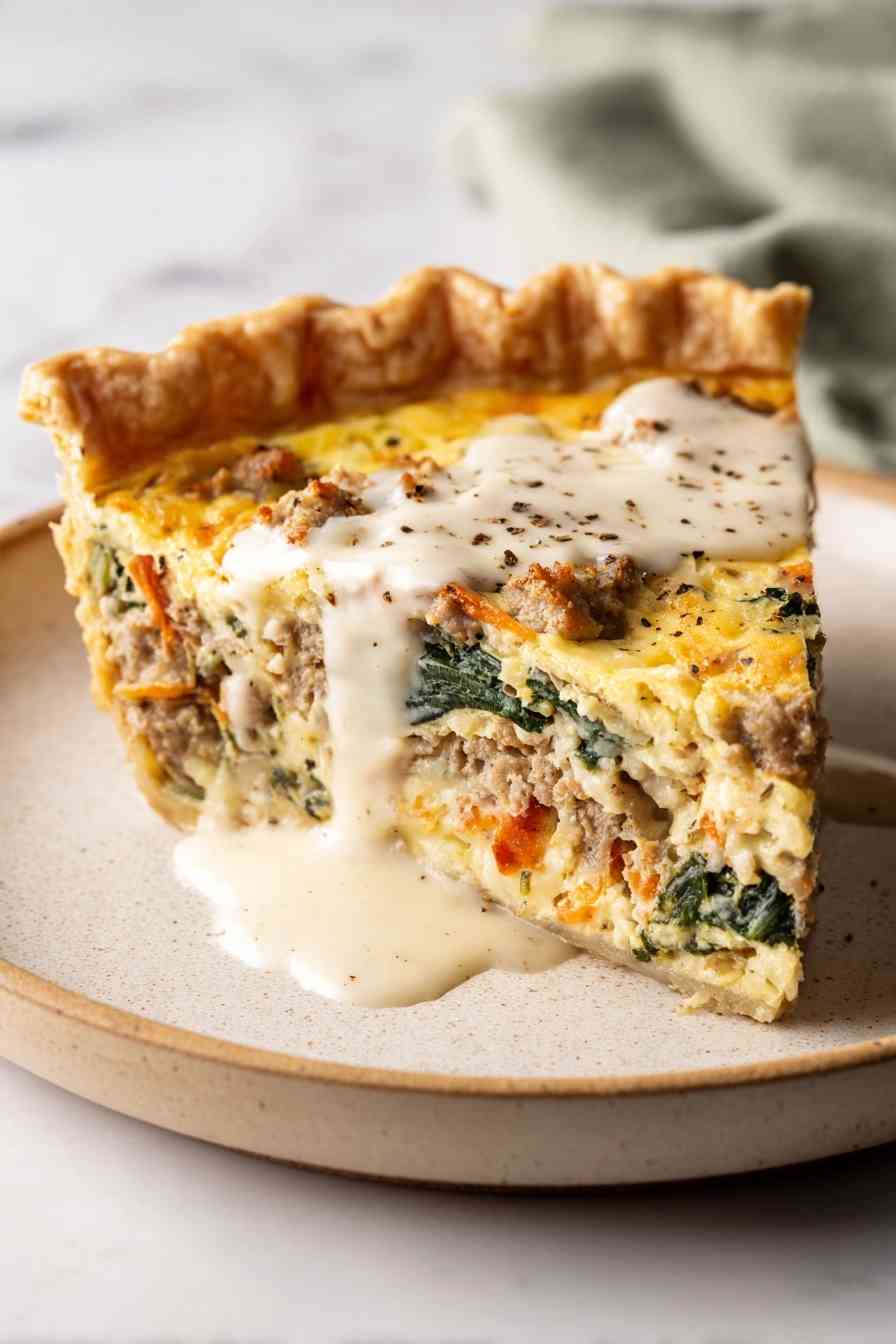
Quiche with Sausage Gravy
Ingredients
Equipment
Method
- Set a cooking pan over medium heat and add oil. Sauté diced onion until translucent before adding the ground sausage. Break up the sausage as it cooks, stirring frequently, until it is cooked through. Remove the pan from heat and allow the mixture to cool slightly.
- Preheat the oven to 350°F (175°C). Lightly grease a deep dish pie pan and fit the pie crust into the pan.
- In a bowl, whisk together the eggs, sour cream, heavy cream, salt, and black pepper until fully blended. Add two-thirds of the sausage and onion mixture and stir to combine, setting aside the remaining third for the gravy.
- Pour the egg and sausage mixture into the pie crust, spreading evenly. Place the pan on a baking sheet and bake for 40–45 minutes, until the top is golden and the center is set and firm.
- Place the reserved third of the sausage mixture back over medium heat. Sprinkle flour over the sausage and stir until the sausage is fully coated.
- Gradually add the milk while stirring continuously. Season the gravy with salt and black pepper.
- Continue to cook and stir the gravy until it thickens. Remove from heat.
- Cut the baked quiche into slices and spoon warm sausage gravy over each serving.