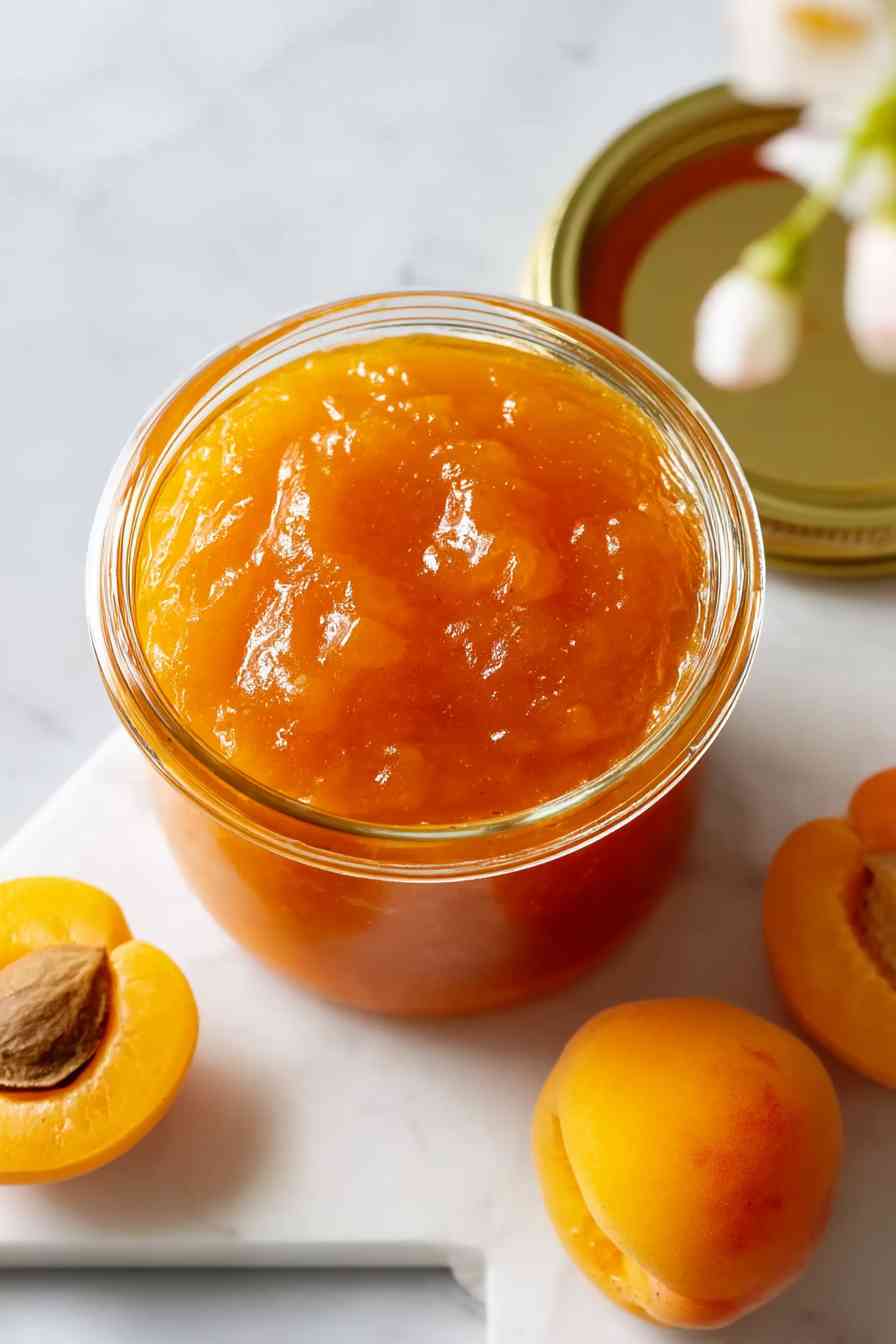
Ingredients
Equipment
Method
- Combine the halved apricots, sugar, lemon juice, vanilla extract, and salt in a large heavy-bottomed pot or jam pan. Mix well, breaking down some fruit pieces as you stir to help the sugar dissolve and release the apricot juices. Set the pot over high heat and bring to a rolling boil, stirring occasionally to keep the mixture from sticking to the bottom.
- Keep the mixture at a vigorous rolling boil and stir frequently for 8 to 10 minutes. The jam will foam and bubble as moisture evaporates. Use a wooden spoon to scrape the pot bottom regularly to avoid scorching, which creates bitter flavors. Look for the mixture to noticeably thicken and darken in color, signaling pectin activation and gel formation.
- Take the pot off the heat and test the jam by placing a small drop on a frozen plate (freeze a plate beforehand). Wait 30 seconds, then gently push the jam with your finger—it should wrinkle and stay in place instead of running back together. If it's still too liquid, return the pot to heat for 1 to 2 more minutes and test again. The jam should register approximately 105°C (220°F) on a candy thermometer for the proper set.
- Pour the hot jam into sterilized glass jars, leaving about 2 cm (3/4 inch) of space at the top. Use a damp cloth to wipe any residue from the jar rims, then place sterilized lids on top and screw the bands on until finger-tight. Work quickly while the jam remains hot, as this promotes better sealing.
- Set a rack or folded towel in the bottom of a large pot and add enough water to cover the jars by 1 to 2 inches. Lower the filled jars onto the rack, making sure they don't touch one another. Bring the water to a rolling boil and maintain it for 10 minutes to create a vacuum seal that kills bacteria and ensures long-term storage safety.
- Use a jar lifter to carefully remove the jars from the boiling water and set them upright on a clean kitchen towel or wooden surface to cool completely—leave them undisturbed for at least 12 hours. You'll hear a pop sound as the lids seal during cooling. Once fully cooled, press the center of each lid to confirm it's slightly concave and doesn't flex. Store the sealed jars in a cool, dark location for up to one year.
Notes
Use a heavy-bottomed pot to prevent scorching, as thin pots distribute heat unevenly and burnt jam cannot be salvaged. Test for set early and often using the frozen plate method, as it's more reliable than guessing by appearance. If your jam is too runny after cooling, return it to the pot and boil for another 1 to 2 minutes before retesting. Keep the heat high during the boil to evaporate enough water and activate the pectin properly. If you'll finish the jam within two weeks, you can skip the water-bath canning and simply refrigerate it. Properly sealed jars can be stored in a cool, dark pantry for up to one year; once opened, refrigerate and use within three weeks.