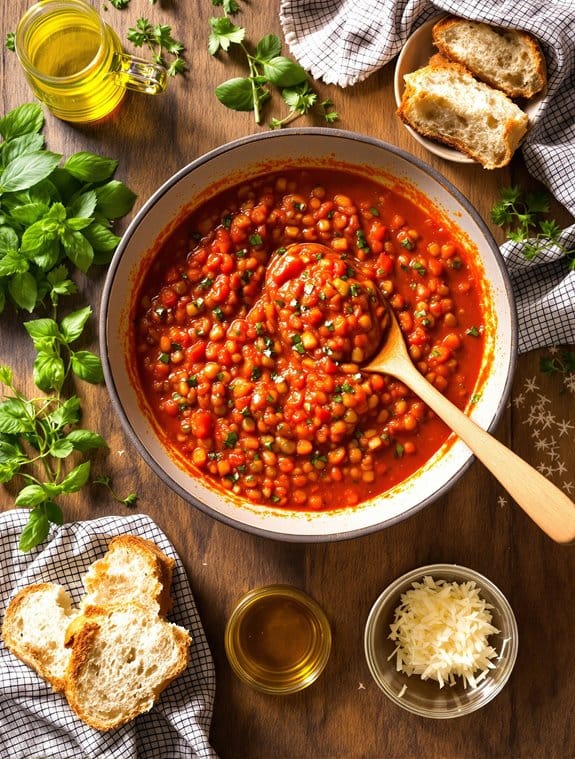
Ingredients
Equipment
Method
- Preheat your oven for roasting the vegetables.
- Cut the tomatoes in half and remove the seeds. Prepare the bell peppers for roasting.
- Place the tomatoes and bell peppers on a baking sheet and roast until their skins begin to blister and blacken slightly.
- Once roasted, steam the peppers briefly, then peel away their skins.
- In a food processor, combine the roasted tomatoes, peeled peppers, broccoli florets, onion, garlic, and carrots.
- Pulse until you reach a semi-smooth consistency - not completely pureed but without large chunks.
- Transfer the vegetable mixture to a large pot and bring to a boil.
- Reduce the heat immediately to maintain a gentle simmer.
- While the sauce simmers, chop your fresh herbs - parsley, basil, and oregano.
- Continue simmering the sauce until it reaches your preferred thickness.
- Add the fresh herbs, salt, and pepper during the final 10 minutes of cooking.
- If the sauce tastes acidic, add a small pinch of sugar to balance the flavors.
Nutrition
Notes
This sauce can be stored in airtight containers in the refrigerator for up to 5 days or frozen for up to 3 months. For best results, use garden-fresh tomatoes when in season - they'll provide significantly better flavor than store-bought varieties. The sauce works beautifully with pasta, as a base for pizza, spooned over chicken parmesan, or even as a poaching liquid for eggs to create shakshuka.
For a smoother sauce, process longer in the food processor. For a chunkier texture, pulse less. The roasting process naturally reduces acidity, but taste before serving and adjust seasonings as needed.