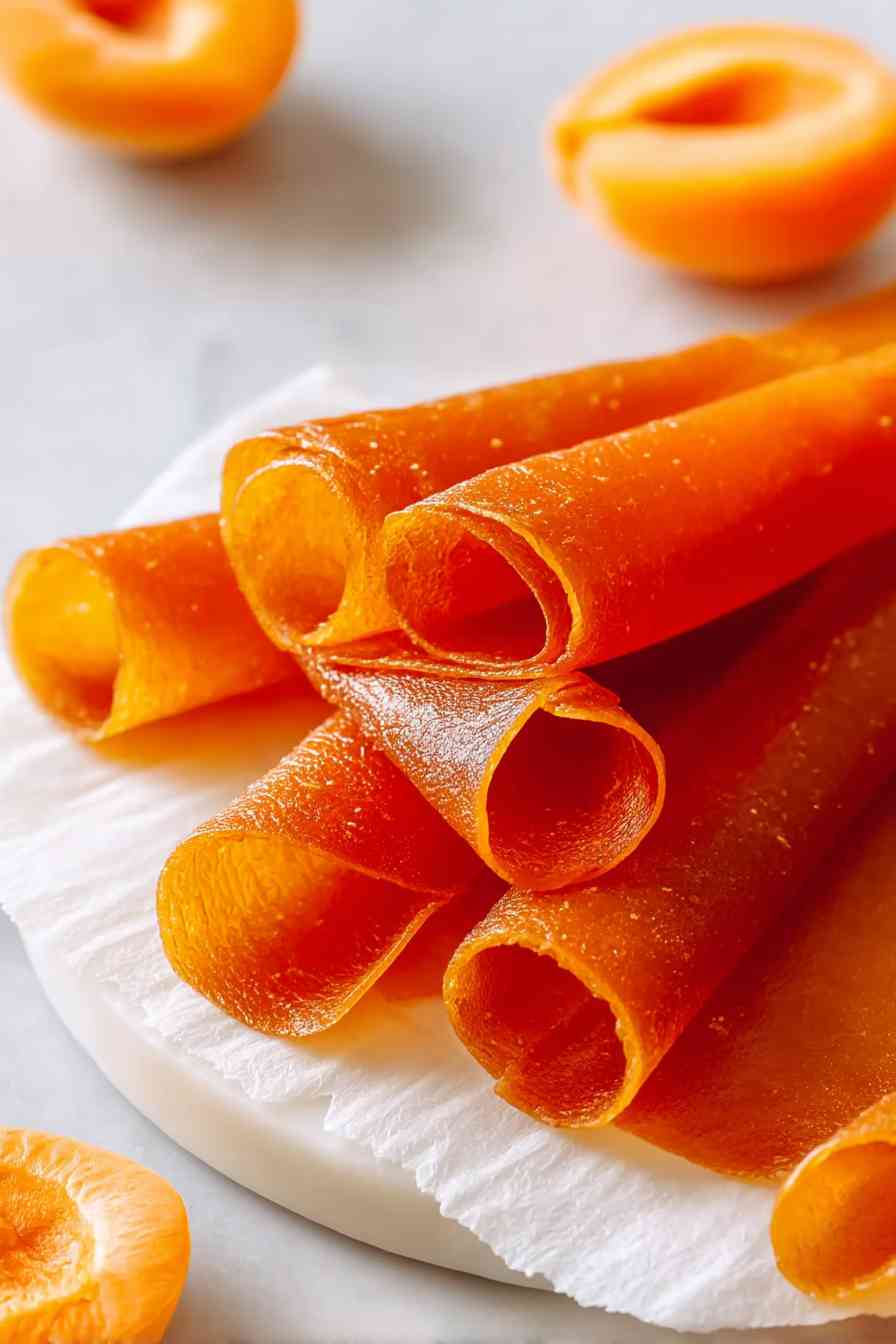

Smooth Apricot Jelly transforms fresh apricots into a jewel-toned, clear spread.
There’s something deeply satisfying about turning a pile of fresh apricots into jars of translucent, glowing jelly that looks like it belongs in a farmhouse pantry. The process involves careful straining and precise timing, but the result is a silky, spreadable preserve that captures the essence of summer fruit without any cloudiness or gritty texture. You’ll press apricot pulp gently through a fine-mesh sieve to extract pure juice, measure out exactly 5 cups of strained liquid for the right pectin ratio, and boil for exactly one minute to achieve that firm, sliceable consistency.
This recipe relies on Ball RealFruit Classic pectin and a careful balance of sugar, lemon juice, and a touch of butter to reduce foam. The method is more involved than a quick jam, but it’s also more rewarding, especially when you crack open a jar months later and taste that clean, bright apricot flavor.
Step-by-Step: Creating a Clear Apricot Jelly
STEP 1: Wash the apricots, halve them, and remove the pits. Cut the fruit into 1-inch chunks, then combine them with water in a large pot. Bring to a boil over medium-high heat, reduce to medium, and simmer for 10 minutes, mashing occasionally with a potato masher to break down the fruit and release juice.
STEP 2: Pour the cooked apricot mixture through a fine-mesh sieve into a large bowl. Press gently on the solids with the back of a spoon to extract liquid, but don’t press too hard or you’ll force pulp through and end up with cloudy jelly. Measure out exactly 5 cups of strained juice for proper gel setting.
STEP 3: Pour the 5 cups of apricot juice into a clean, large pot. Add the pectin and lemon juice, stirring constantly to dissolve the pectin completely and prevent lumping. Make sure there are no visible pectin clumps before moving on.
STEP 4: Increase heat to high and bring the mixture to a rolling boil, stirring frequently. Once large bubbles break through the surface continuously, add the butter and salt. The butter helps break down foam for a clearer jelly, while the salt enhances the apricot flavor.
STEP 5: Stir in all the sugar, making sure it dissolves completely and the mixture returns to a rolling boil. Once boiling again, maintain high heat and boil for exactly 1 minute. This timing allows the pectin to set properly without overcooking.
STEP 6: Remove the pot from heat immediately. Skim any remaining foam from the surface, then carefully pour the hot jelly into sterilized jars, leaving 1/4 inch of headspace. Place lids on the jars and process in a boiling water bath for 10 minutes to ensure proper sealing.
What You’ll Need for Smooth Apricot Jelly
This recipe starts with fresh apricots and a handful of pantry staples that work together to create a clear, firm jelly with bright flavor and reliable texture.
- Apricots – the star ingredient, providing natural fruit flavor and the juice base for the jelly.
- Water – helps simmer the apricots and extract juice without scorching.
- Pectin – the gelling agent that transforms liquid juice into a firm, sliceable jelly with proper structure.
- Lemon juice – brightens the apricot flavor and provides acidity that helps the pectin set correctly.
- Sugar – balances the tartness, preserves the jelly, and works with pectin to create the gel.
- Salt – enhances the apricot flavor without making the jelly taste salty.
- Butter – reduces foam during boiling, making the jelly clearer and easier to jar.
Expert Tips for Perfectly Set Apricot Jelly
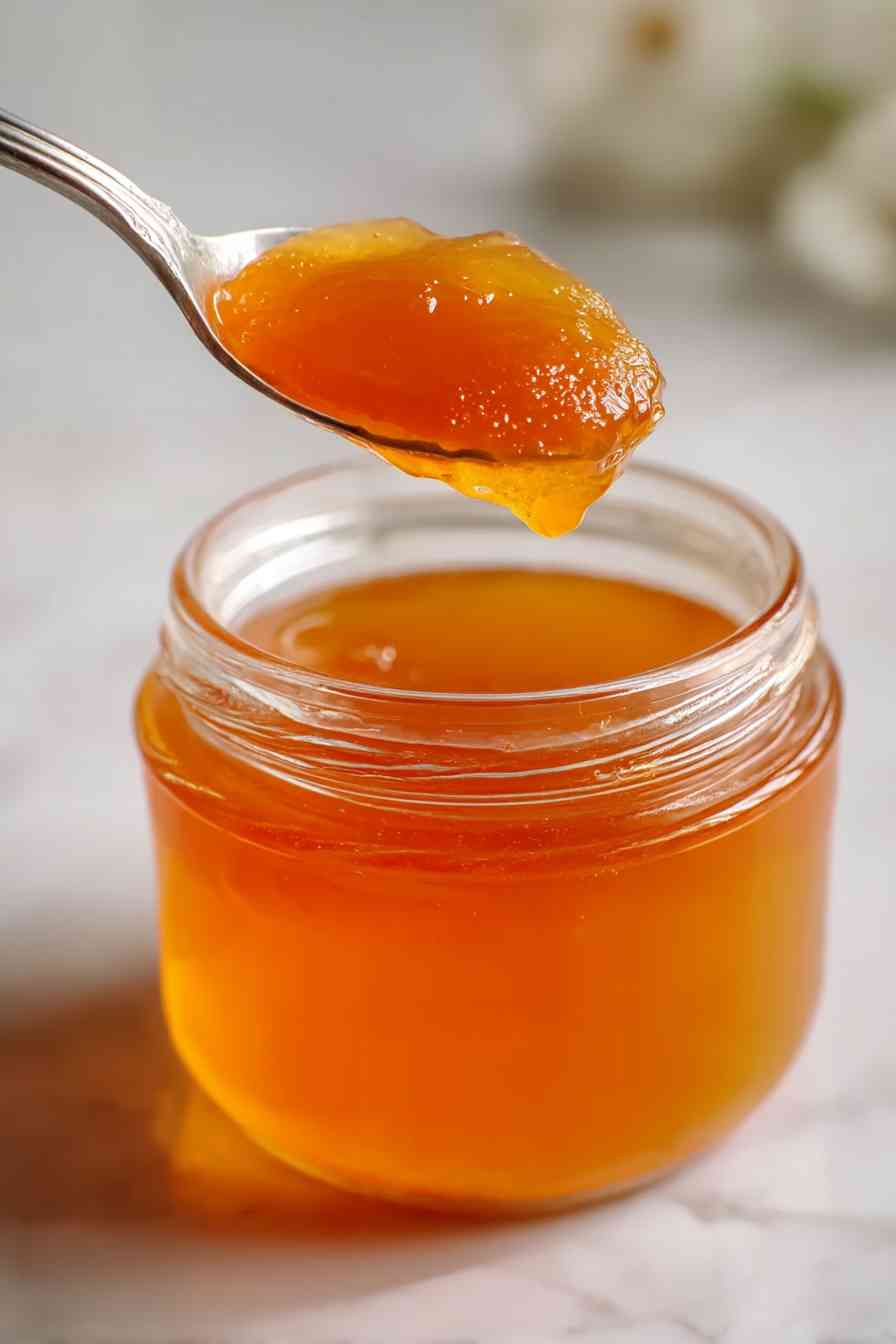
- Strain with a light hand – Forcing too much pulp through the sieve creates cloudy jelly instead of the clear, jewel-like finish you’re aiming for.
- Measure the strained juice precisely – The 5-cup measurement is critical for the pectin-to-juice ratio, and even a half-cup difference can result in jelly that’s too runny or too stiff.
- Stir the pectin thoroughly – Visible pectin lumps won’t dissolve once the mixture boils, and they’ll create an uneven texture in the finished jelly.
- Don’t skip the full 1-minute boil – This timing activates the pectin properly, and cutting it short can leave you with jelly that never sets.
Delicious Ways to Enjoy Smooth Apricot Jelly
- Spread it on warm, buttered toast or English muffins for a simple breakfast that lets the apricot flavor shine.
- Use it as a glaze for roasted pork or chicken, brushing it on during the last few minutes of cooking for a sweet, fruity finish.
- Pair it with sharp cheddar or creamy brie on a cheese board, where the bright fruit flavor balances rich, savory cheese.
Common Questions About Homemade Apricot Jelly
Why did my apricot jelly turn cloudy?
Cloudiness usually comes from pressing too hard on the apricot solids during straining, which forces pulp through the sieve. Press gently and let gravity do most of the work to keep the juice clear and the finished jelly translucent.
Can I use less sugar in this apricot jelly recipe?
Reducing the sugar significantly will affect both the gel and the preservation. Standard pectin relies on a specific sugar ratio to set properly, so cutting it down can leave you with runny jelly that doesn’t keep as long.
What’s the best way to ensure my jelly sets properly?
Measure the strained juice exactly, stir the pectin in thoroughly before boiling, and time the final boil precisely. These three steps control the gel, and skipping or rushing any of them can result in jelly that stays too loose or turns overly firm.
Can I use a different type of pectin?
You can, but you’ll need to adjust the sugar and timing according to the pectin package instructions. Different pectin types have different setting requirements, and swapping them without adjusting the recipe can throw off the gel entirely.
Storing and Preserving Your Apricot Jelly
Sealed jars of apricot jelly can be stored in a cool, dark pantry for up to a year. The boiling water bath creates a vacuum seal that keeps the jelly safe and shelf-stable, so you can enjoy it long after apricot season ends.
After opening a jar, keep it refrigerated and use it within three to four weeks for the best flavor and texture. The jelly will stay firm and spreadable in the fridge, and it won’t separate or lose its clarity.
If a jar doesn’t seal properly after processing, refrigerate it immediately and use it within a few weeks. You’ll know a jar didn’t seal if the lid doesn’t pop down or if it flexes when you press the center.
Making smooth apricot jelly takes a bit of care and attention, but the payoff is a pantry full of bright, clear jelly that tastes like pure summer fruit. The process teaches you the rhythm of preserving, and once you nail the straining and timing, you’ll have a recipe you can turn to every apricot season.
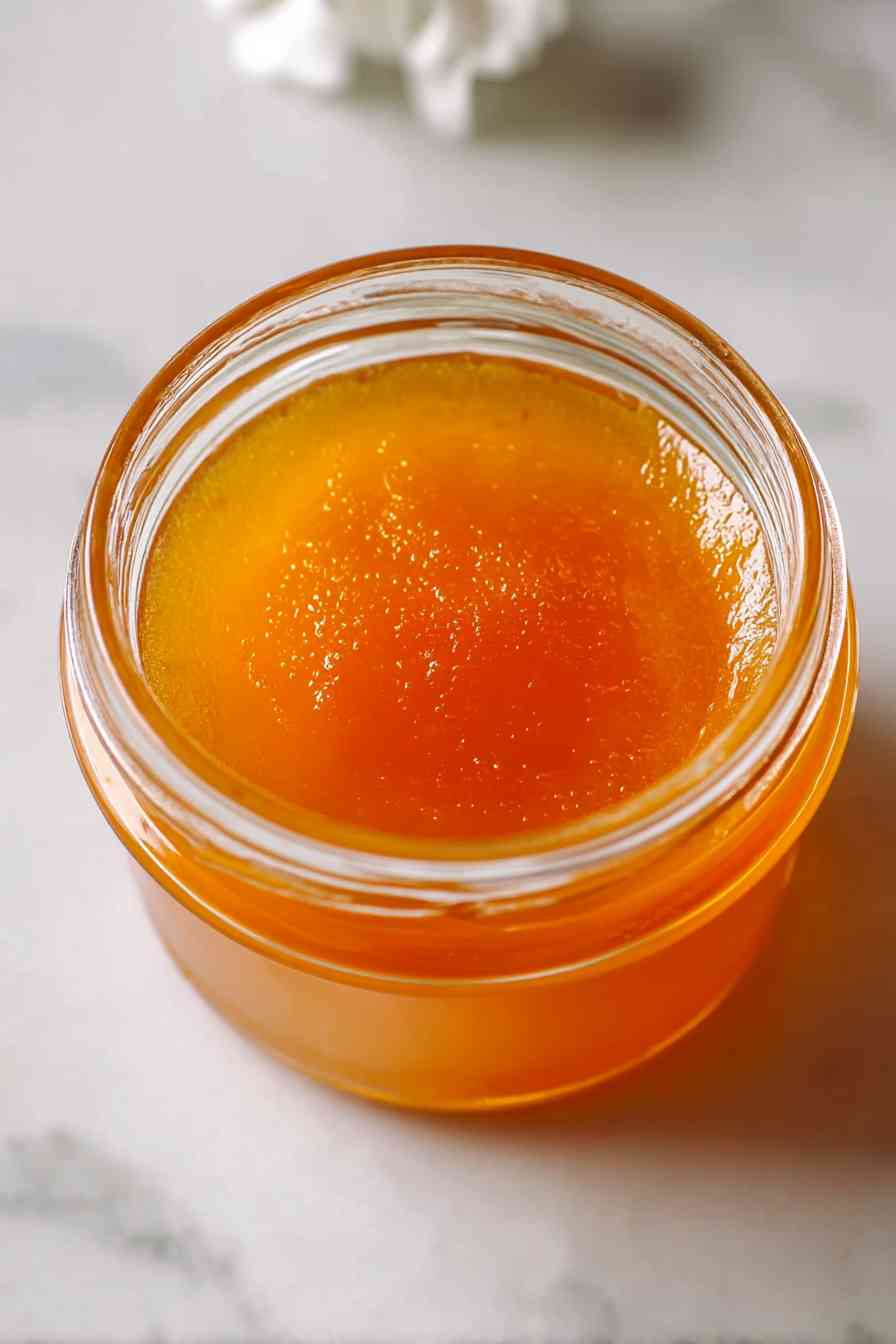
Smooth Apricot Jelly
Ingredients
Equipment
Method
- Wash the apricots well, then halve and pit them. Cut into 1-inch chunks and place in a large pot with the water. Bring to a boil over medium-high heat, then reduce to medium and simmer for 10 minutes. As it cooks, mash the fruit with a potato masher or wooden spoon to break it down and release the juice. The mixture should become soft and pulpy.
- Set a fine-mesh sieve over a large bowl and pour the cooked apricot mixture through it. Use the back of a spoon to press gently on the solids to extract as much liquid as possible — avoid pressing too firmly, as this can push pulp through and make the jelly cloudy. Measure out exactly 5 cups of the strained juice, which is the correct amount for proper gel setting with the pectin ratio.
- Pour the 5 cups of strained apricot juice into a clean large pot. Add the pectin and lemon juice, stirring continuously until the pectin is fully dissolved with no visible lumps. The lemon juice both brightens the flavor and provides the acidity needed for the pectin to set correctly.
- Raise the heat to high and bring the mixture to a rolling boil, stirring frequently. When large bubbles are breaking through the surface continuously, stir in the butter and salt. The butter helps minimize foam for a clearer jelly, and the salt deepens the apricot flavor without making it taste salty.
- Add all of the sugar at once, stirring until it dissolves completely. Allow the mixture to return to a full rolling boil, then keep it at high heat and boil for exactly 1 minute. This precise timing is essential for the pectin to activate and the jelly to set correctly.
- Remove the pot from the heat immediately after the 1-minute boil. Skim off any remaining foam from the surface using a spoon. Carefully ladle the hot jelly into sterilized jars, leaving 1/4 inch of headspace. Secure the lids and process the jars in a boiling water bath for 10 minutes. The lids should pop as the jars cool, indicating a proper seal.